Skip to main content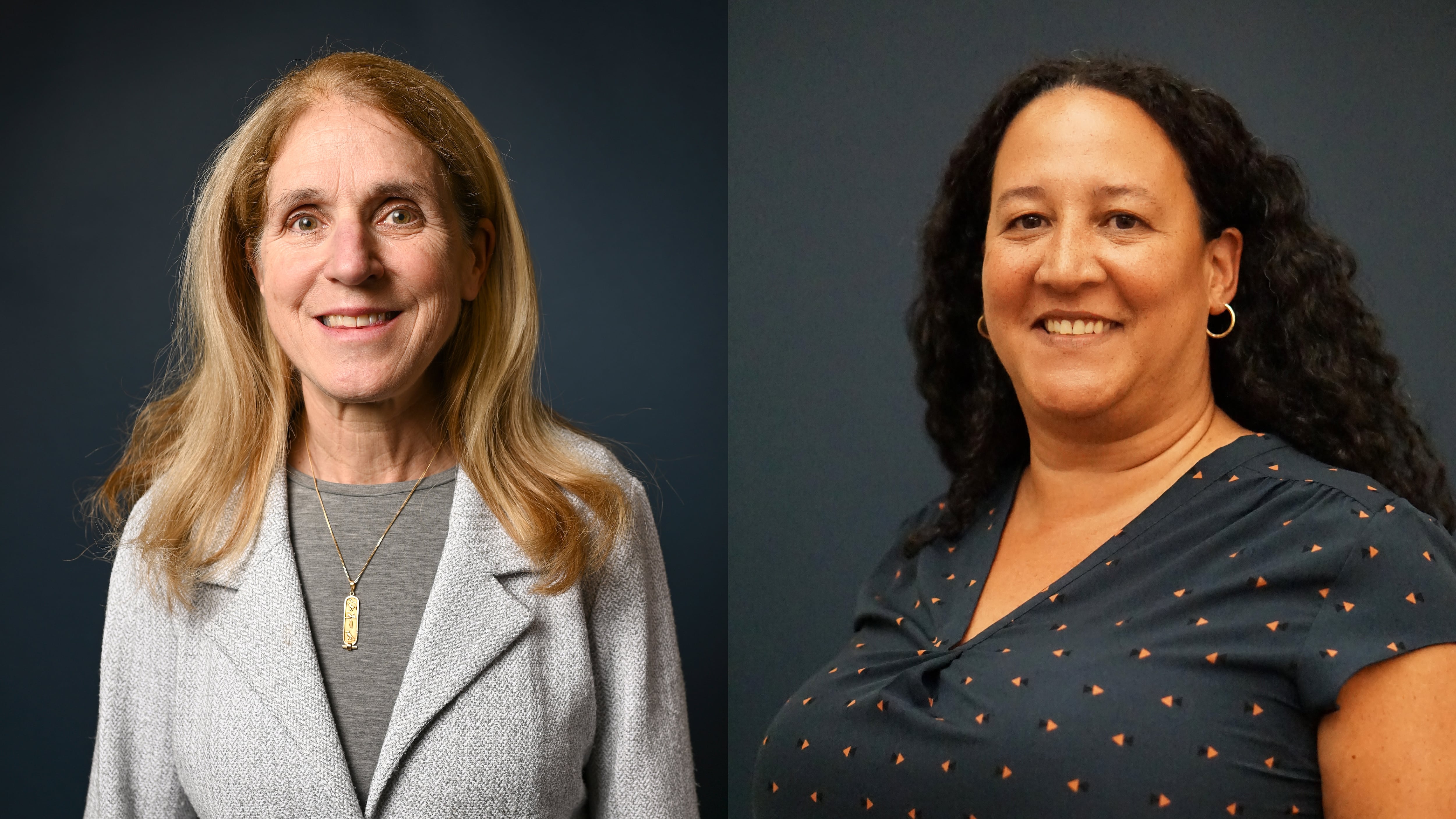
COUNTY FRENEMIES VIE FOR CHAIR’S SEAT: Two allies on the Multnomah County Board of Commissioners are now rivals on the campaign trail. Commissioner Shannon Singleton, 49, declared her candidacy for county chair last week, and Commissioner Julia Brim-Edwards, 64, joined the race on Feb. 9. Last spring, the two teamed up to develop the county’s first-ever reporting requirements for lobbyists, including rules requiring commissioners to disclose their calendars to the public. This year, they’ve been working to reform the county’s “deflection” program, designed to keep drug users out of the criminal justice system after arrest. Singleton has focused on getting deflectees into housing because 9 in 10 of them are homeless, while Brim-Edwards has worked to stiffen what’s required to get arrests quashed. Judging from their endorsements, Singleton is counting on left-leaning voters for victory in the nonpartisan race. Among her supporters are members of the Peacock caucus on the Portland City Council, including Democratic Socialists Tiffany Koyama Lane, Angelita Morillo and Mitch Green. Brim-Edwards, meanwhile, has the support of centrists (by Portland standards) Eric Zimmerman, Steve Novick and Olivia Clark. Singleton and Brim-Edwards are vying to succeed Jessica Vega Pederson, who chose not to seek a second term. Both commissioners have been critical of Vega Pederson’s policies. Brim-Edwards tends to punch harder, criticizing Vega Pederson for excluding commissioners from meetings with city leaders and law enforcement officers about deflection, and for giving commissioners little time to digest materials before important meetings. Former Commissioner Sharon Meieran stoked speculation last month that she’d join the race when she unveiled a “Comprehensive Strategic Turnaround Plan” for the county. “Debating who should run before debating what needs to be done is like asking whose name should appear on the captain’s quarters of the Titanic,” Meieran said at the time. On Tuesday, she said: “Who gets their name on the door isn’t as important as getting Multnomah County to actually help the people it’s supposed to serve. I’m frankly hoping to build consensus on what needs to happen so I don’t have to run.”
SCHOOL-BASED MENTAL HEALTH PROVIDERS GO BACK ON CHOPPING BLOCK: Multnomah County Chair Jessica Vega Pederson faced intense pressure last year from fellow commissioners to reverse proposed cuts to the county’s school-based mental health program. The program, which operates in several metro-area school districts, including Portland Public Schools, provides therapists to work with students who have diagnosable mental health conditions. Now, sources close to the matter tell WW that four employees providing mental health services in schools have been identified as possible cuts in the county health department’s budget for fiscal year 2027 to save $417,809. Sarah Dean, a spokeswoman for the county, says there will be changes between the initial budgets submitted by departments, the chair’s proposed budget, and a final budget approved by the board in June. “Chair Vega Pederson directed departments to submit proposals that include a 5% general fund reduction, providing her a range of options to accommodate a $10.5 million general fund shortfall,” Dean says, adding that the health department faces many challenges with changes in federal, state and local funding. Board members have already voiced concern. County Commissioner Julia Brim-Edwards said at a recent board meeting that commissioners “were very explicit” about the importance of the mental health positions when they restored them the first time. Local school districts will also be keeping a close watch: “These services are especially vital in areas across the county where families face limited provider availability, transportation challenges, and shortages of culturally specific mental health providers,” says Lisa Merrick of the Multnomah Education Service District.
MONKEY LAB TALKS APPROVED: In a specially called meeting, the Oregon Health & Science University board approved a plan Feb. 9 to negotiate with the federal government over the future of the Oregon National Primate Research Center. With the vote, OHSU formally launches a process that could—though by no means certainly will—one day culminate in the transformation of a nationally significant scientific research center into an animal sanctuary. Determined to end animal-based experiments they describe as immoral and ineffective, animal rights activists declared a major victory. “This is a glorious day for monkeys and for science,” said senior vice president Kathy Guillermo of People for the Ethical Treatment of Animals. Yet opponents counter that the board is being swayed by misinformation-peddling fearmongers, and they fiercely oppose the resolution on moral grounds of their own: the lifesaving value of primate research. The board, meanwhile, tried to assure ONPRC’s backers that the conversation was by no means over, even as a changing political climate hostile to animal research forced their hand. The resolution authorizes OHSU leaders to launch a 180-day negotiation with the National Institutes of Health, establishing the conditions for the primary center’s potential transformation. “The question before us is not whether ONPRC is at risk; it is,” said board member Chris Abbruzzese. “The question is whether we manage that risk by engaging with NIH or by refusing to engage.”
LEWIS & CLARK LAUNCHES NEW SCHOLARSHIP AMID FEDERAL CUTS: The Trump administration made waves in higher education last fall when, as part of the Big Beautiful Bill package, the administration took an ax to Grad PLUS loans. The loans made borrowing for graduate school more accessible to students, allowing many to borrow the total cost of their going to school. New aggregate borrowing caps provide up to $100,000 for graduate programs and $200,000 for professional programs, but the latter applies to only a narrow list of degrees. Lewis & Clark’s Graduate School of Education and Counseling has launched an initiative to replace those loans. The Bridge the Gap Scholarship program, announced earlier this month, aims to support all students entering the college with financial need. (Education was not included among the 11 degree fields the Trump administration deemed unquestionably “professional,” resulting in a lower borrowing cap.) Lewis & Clark dean of education Andy Saultz tells WW he anticipates students could receive awards between $1,000 and $3,000, but the fund still has time to expand. The college is also working to develop a preferred lender list to help students obtain private loans at lower, negotiated rates. That list will be available in April. Saultz says reduced Grad PLUS loans could impede education careers that require master’s degrees, such as school counseling, school psychology, and addiction counseling. “We had to do something proactively,” he adds. “My worry is a couple years from now, we’ll have more of a shortage than we already do in some of these fields.”