Skip to main content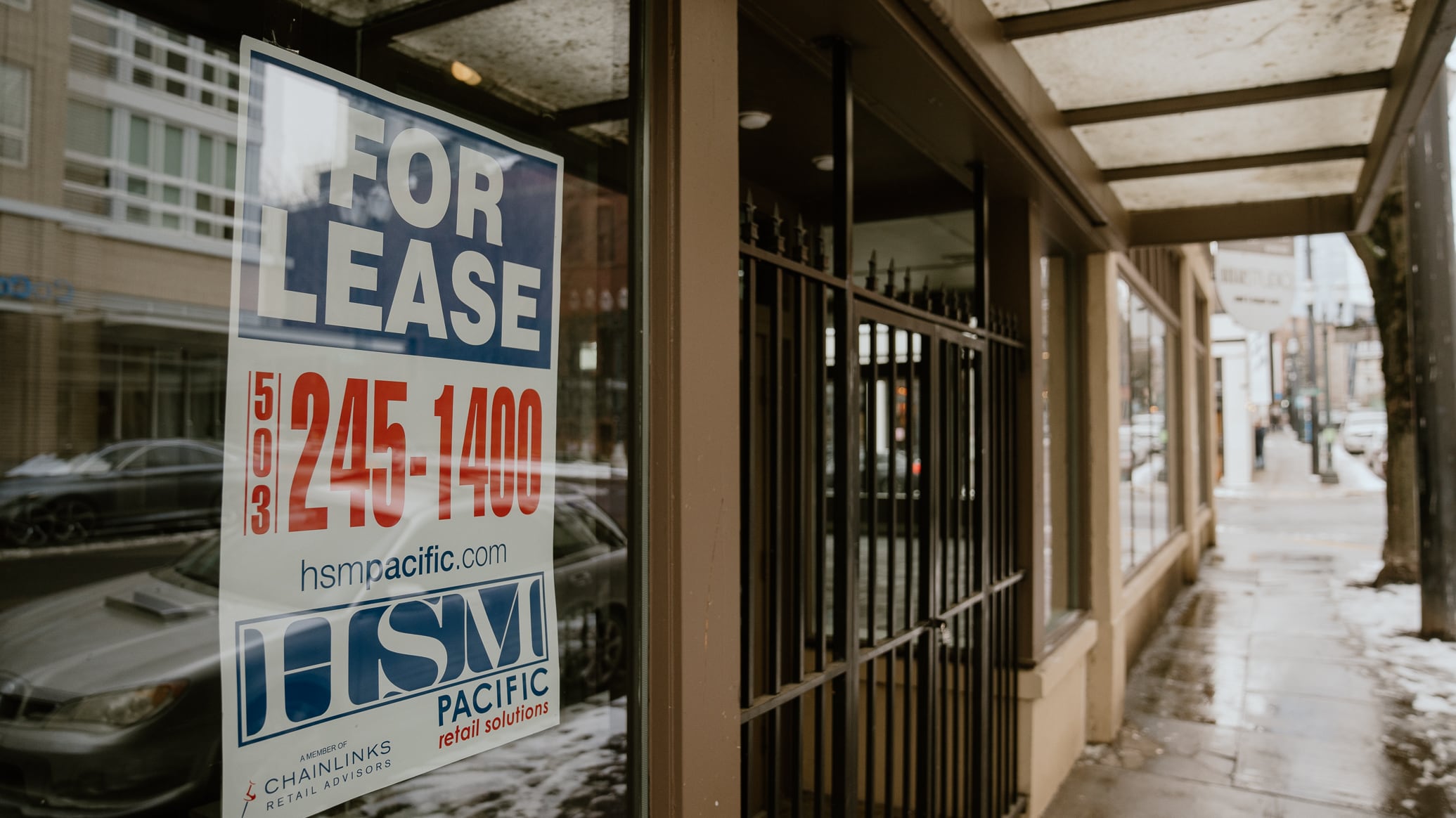
A decade ago, central Portland was abuzz with rising property values, high demand for storefronts, and the third-most construction cranes in the U.S. hovering overhead. These days, it seems, the only one making moves downtown is Jeff Swickard.
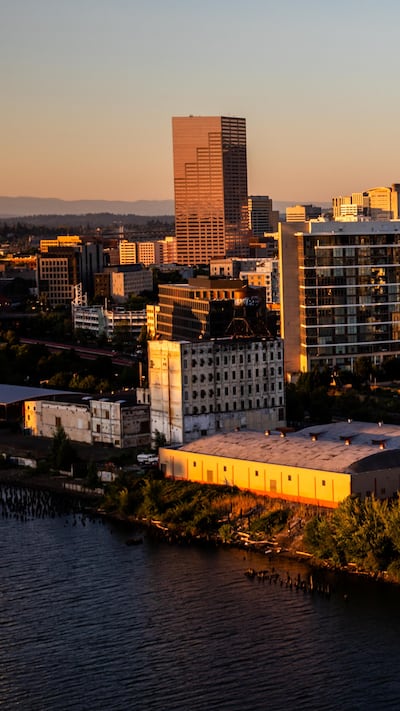
In July, the West Linn auto exec bought Big Pink, the second-tallest building in Oregon, for a fire-sale price of $45 million—12% of its 2015 sale price of $372 million. And earlier this month, a partnership of Swickard and Melvin Mark Investors purchased the 19-story 200 Market Building, another prominent downtown property that had teetered for years on the edge of foreclosure.
Swickard, a University of Oregon alum, says he’s fully committed to Portland despite everything—the current economic downturn, public safety concerns, the great work-from-home shift and, in the case of Big Pink as of April 20, a 75% vacancy rate.
But some on the Portland City Council want him to move faster. To reduce blight and revitalize downtown, a trio of progressive councilors wants to explore penalizing owners of long-vacant commercial and retail properties. But a vacant property tax or fee, should it ever reach the council chamber, would likely draw considerable pushback, as interviews with local business leaders bear out.
“We are trying incredibly hard to find tenants,” Swickard tells WW, “making insane deals and taking a lot of risk to do it. I promise a tax won’t help us create demand for the space.”
Last June, City Councilor Sameer Kanal added a note to the 2026 city budget requesting a study to provide projections for a possible tax or fee on vacant residential and commercial spaces. He was joined in support by Council President Jamie Dunphy and Councilor Candace Avalos. But the earmark drew little notice until late last month, when a Portland Business Journal story on the tax idea launched a wave of TV news segments and online griping.
Dunphy tells WW he’s motivated by accounts he’s heard of local owners sitting on derelict properties for tax purposes or in hope of securing higher-paying tenants later on. He notes public safety problems associated with vacant spaces and a domino effect of vacancies causing more shuttered properties.
“My primary interest right now, and I think the primary interest of the City Council broadly, is around vacancies of commercial retail spaces,” he says. “Vacancies in commercial spaces are very different from vacancies in residential spaces and are very different from vacant lots. We really want to make sure we are framing the right problem to solve in order to make sure this is the right solution.”
The city’s office vacancy rate has hovered near 25% for several years with rates as high as 34% in parts of downtown. Less is known about retail vacancy. Dunphy says the study should help councilors understand the problem and come up with options to chart the best path forward. He says he’s seen preliminary information that puts retail vacancy north of 40% in some parts of downtown and rates of 25% in outlying neighborhoods.
Avalos and Kanal declined to comment.
For nearly three years between 2022 and 2025, WW tracked and studied Portland’s glut of vacant buildings, from a downtown bank-turned-fentanyl den to a onetime Kmart that eventually caught fire and spewed chunks of asbestos across the Argay Terrace neighborhood. On multiple occasions, observers wondered if a vacancy tax might spur absentee landlords to act with a little more urgency.
Now Dunphy says a vacant property tax could act as a “stick” in a carrot-and-stick approach to downtown revitalization. Carrots could include a revolving loan fund that would offer below-market loans to people who want to activate empty retail spaces.
He said he expects a vacancy tax or fee won’t be popular with the business community.
“They’re going to grumble that we are interfering with their business model and, instead of holding them accountable, we should be doling out public dollars to incentivize them to get more money,” Dunphy says. “But I’m deeply disinterested.”
Greg Goodman, whose family’s Downtown Development Group owns more than 2 million square feet of property in the central city (much of it surface parking), calls the idea “beyond ridiculous,” saying it fails to account for basic economics.
“I don’t think vacant properties are the issue at all. The lack of demand is the issue,” Goodman says. “Remember, all these properties used to be full.”
Portland’s demand problem is well known at this point. Tenants and businesses here are subject to a high tax burden that has caused flight to communities and states outside the urban core.
Goodman doubts the vacancy tax plan will get far, but he worries it could send the wrong message to potential investors at a time when Portland is slowly rebuilding momentum (see: two live music venues under construction and a new WNBA team).
“Nobody—zero people—who understands real estate would suggest this,” Goodman says. “People read one paragraph and think it’s a good idea. It would be like asking me how to get a nuclear power plant running—I don’t know shit about nuclear power plants.”
Business leaders say the proposal also fails to consider the cost to improve a property before a tenant takes over.
By way of example, longtime Portland developer John Russell could face a potential penalty for the vacant Hallock-McMillan Building at 237 SW Naito Parkway. Built in 1857, it’s the oldest commercial building in Portland, completed before Oregon was even a state. Russell has spent $1 million in upgrades, but he tells WW bringing it up to occupancy would cost at least another $1 million.
If the council approves a vacant property tax, Russell says, he would merely pay it.
“It would have no effect on [my decision to rent out] whatsoever,” Russell says. “That’s why I say it’s just kicking someone when they’re down.” (It was Russell who recently sold 200 Market to Swickard and Melvin Mark, after struggling for years to keep up with tenant improvements.)
Michael Andersen, a Portland-based urban policy analyst, says part of the problem is that Portland officials favored storefronts at the expense of residential tenants and first-time homebuyers.
Until 2024, Portland essentially required new builders on many close-in commercial streets to include a retail storefront, despite warnings the city already struggled with empty storefronts.
“If the city were to now start taxing someone for not being able to fill a storefront that they didn’t want to build in the first place, I can definitely understand why they’d be upset,” Anderson writes to Willamette Week. “If nothing else, Portland should stop requiring the city’s renters to pay for the construction of even more, probably empty, storefronts.”
The mandatory storefront rule is temporarily suspended but is scheduled to restart at the end of 2028.
The matter of why properties lie fallow is not a simple one, either. For one, what qualifies as “vacant” is not easily defined. The U.S. Census Bureau identifies seven types of vacant units, including “vacant related to a move” and “maintained for occasional use.”
Vacant property taxes, or VPTs, are rare in North America, though precedent exists. In 2017, Vancouver, B.C., voters imposed a first-of-its-kind tax on vacant second homes. The next year, Oakland voters approved annual flat fees of $3,000 to $6,000 for owners of vacant residential and commercial properties and vacant lots. And over the past decade, San Francisco, Berkeley, and Washington, D.C., have experimented with various penalties on vacant properties.
The city’s study is being completed by ECOnorthwest for $62,000. A separate but related study by Portland State University’s Center for Real Estate is polling local commercial real estate professionals about the vacancy problem and the possible vacancy tax, as first reported by the Portland Business Journal.
PSU associate business professor Julia Freybote, a leader of the second study, tells WW the anonymous survey will capture data such as why owners have kept properties vacant and what they’ve done to reduce vacancies. The Center for Real Estate will deliver results of the independent study to city leaders as they consider a possible VPT.
As of April 18, two days after the survey opened, Freybote says, 340 respondents had filled one out.
As for Swickard’s plans for Big Pink, he says his team is nearly finished selecting an architecture firm to “reimagine” the building.
“I didn’t buy this because it’s a short-term flip or because of the value,” he says. “I bought it because I believe in the city. I want to be part of the revitalization of the city. I want to invest in places that are meaningful for me. So it’s more like a personal interest investment than it was a value interest investment.”