Skip to main content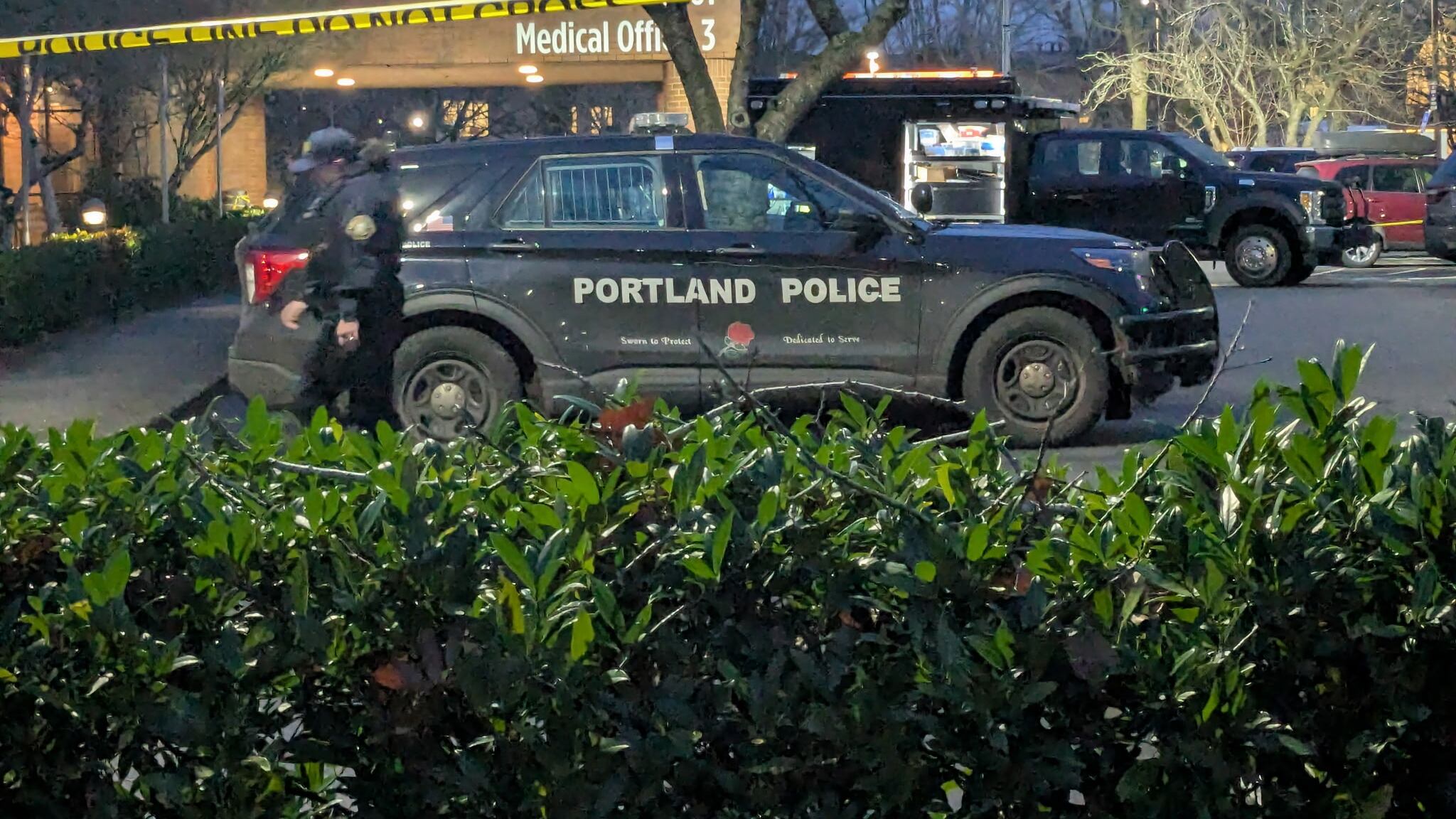
One of the people shot by a federal agent in a high-profile January incident in East Portland pleaded guilty Monday to damaging federal property, the lesser of two charges leveled against him following an altercation that put Portlanders on edge amid one of the tensest phases of the Trump administration’s immigration crackdown.
As part of the plea deal, Luis Nino-Moncada, a Venezuelan national, admitted he was in the U.S illegally and was subject to a prior deportation order.
Meanwhile, federal officials pledged to drop the far more serious charge of assaulting a federal officer with a deadly weapon.
The feds also acknowledged—months after a Trump administration spokesperson accused Nino-Moncada, 33, of being a member of a “vicious” gang—that though he has a history of traffic violations, he has no criminal history, and as such should be subject to the least serious criminal history category in federal sentencing guidelines.
Under the deal, the parties would recommend Nino-Moncada be credited for the time he has served in prison. If the judge agrees, this would mean his prison sentence would end at the time of sentencing, scheduled for Sept. 11—though Nino-Moncada also pledged not to contest his removal from the country upon completion of his sentence in this case.
He also agreed to pay $24,413 in restitution.
The plea deal stems from an incident Jan. 8, an anxious period for the nation, just after a federal agent shot and killed the protester Renée Good in Minneapolis in what the Trump administration claimed—dubiously, to many—was self-defense.
The Portland incident had begun, according to the FBI, when U.S. Border Patrol agents in several unmarked vehicles were conducting a “targeted enforcement operation” near a primary care clinic tied to Adventist Health.
Immigration agents said they were seeking a Venezuelan woman named Yorlenys Betzabeth Zambrano-Contreras. She was in the passenger seat of a red Toyota Tacoma. Nino-Moncada was the driver.
The agents parked one of their cars, a black Hyundai Sonata, behind the Toyota Tacoma, blocking it in. In his plea agreement, Nino-Moncada said he knew they were federal immigration agents. And he acknowledged that he “backed up his pickup truck forcefully into, and made contact with, the black Hyundai several times in an attempt to flee.”
“Then,” the plea agreement says, “a federal officer fired his service weapon at defendant after defendant had backed into the Hyundai Sonata and caused damage.”
It says the Hyundai Sonata was declared a total loss as a result of the damage from the Tacoma. And, it noted, “Defendant’s conduct placed others at risk of serious bodily injury, and defendant was conscious of or recklessly disregarded that risk.”
The shots hit both Zambrano-Contreras and Nino-Moncada, who, after driving away, called 911 to seek medical help. A grand jury indicted him on the assault and property damage charges while he was recovering in the hospital. Zambrano-Contreras, who was also hospitalized, faced no charges directly tied to the incident, but on Jan. 9, the federal government charged her in Texas with having entered the U.S. illegally more than two years previously. As The Oregonian reported earlier, she was sentenced to probation.
Court filings say the officers wore no body cameras, and at the time no surveillance video was said to exist (later, distant surveillance video emerged showing part of the incident.) This left a vacuum in which many were deeply distrustful of the Trump administration’s narrative of events.
Ultimately, the court record suggests, the Trump administration could not support its most serious claims against Nino-Moncada.
U.S. Department of Homeland Security spokeswoman Tricia McLaughlin had said in January that Nino-Moncada “was believed to be a member of the vicious Venezuelan gang Tren de Aragua” and that he “weaponized his vehicle and attempted to run over the law enforcement agents.”
But as The Guardian first reported, prosecutors had backed off from the gang narrative by February. “We’re not suggesting—and we didn’t make an argument to the court—that he’s a gang member,” a federal prosecutor told a judge in one hearing.
And now, the plea agreement filed in court this week makes no claim that Nino-Moncada attempted to run over law enforcement agents.