Skip to main content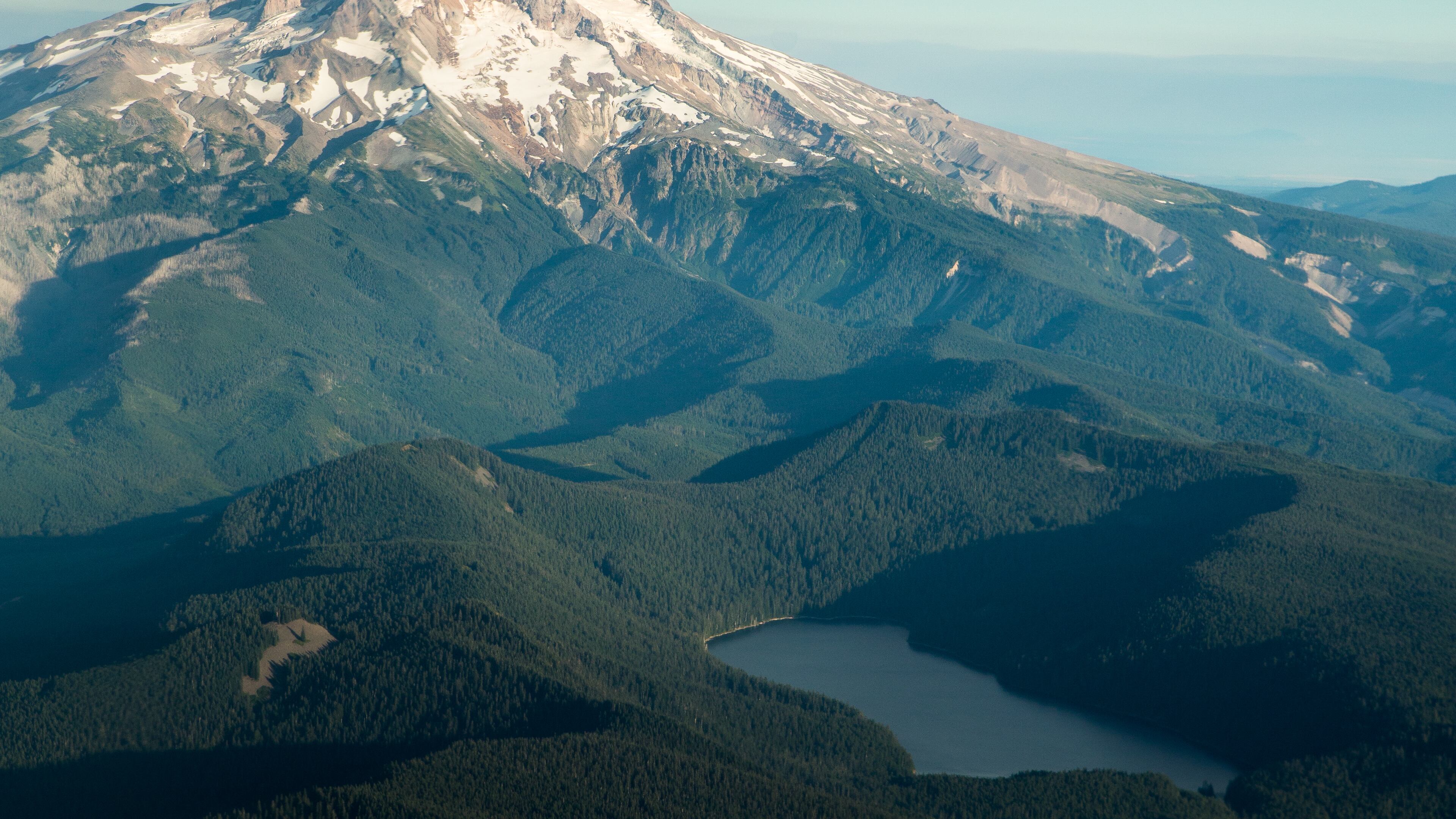
Since June, Gresham residents have been adapting to a new reality: hard, smelly, metallic-tasting tap water. Some online commenters liken it to drinking pool water.
But Portlanders—who are subject to exploding water bills thanks to cost overruns at the city’s Bull Run Filtration Project—might also have reason to feel sick.
Gresham recently transitioned away from the Portland-controlled Bull Run Watershed to its own groundwater system. And in Portland, the loss of 110,000 Greshamites has meant less revenue to help shoulder burgeoning utility costs.
Beginning July 1, partly as a result of Gresham and the neighboring Rockwood Water People’s Utility District leaving the customer base of the Bull Run Reservoir, water rates in Portland increased 8.1% while sewer and stormwater rates increased 5.15%, according to the Portland Water Bureau. The latest bills in Portland reflect an average rate increase of 6.36% or around $10.20 a month.
Both factors—cost overruns at Bull Run and the loss of wholesale revenue from Gresham’s departure—are now reflected in Portland water bills, public utilities spokesman Andy Kiemen tells WW.
“We are projecting rate increases for the next several years, and Bull Run is just one factor in that,” Kiemen says. “There’s rising construction costs, and we have large capital infrastructure programs beyond Bull Run. There’s inflation, the cost of chemicals, electricity—all those costs are going up. That’s why it’s not specifically Bull Run and it’s not specifically the loss in wholesale revenue. Yes, those are contributing factors, but neither is the full reason why rates are going up.”
Next up, the Tualatin Valley Water District—by far Portland’s largest wholesale customer, with 166,000 residents—will also depart the city’s water system. After that, the Lusted Water District and its 1,612 customers also plan to leave.
The Portland Water Bureau has known for years these departures were coming, and officials say they budgeted for them. TVWD was the first district to notify Portland informally of its plans to construct an alternative water supply seven years ago. Gresham and Rockwood formally disclosed their plan to develop alternative water sources two years after that.
“We incorporated these considerations into our financial planning and forecasts,” Water Bureau spokesman Daniel McArdle-Jaimes writes to WW. “We are always planning for and forecasting water use, trends, and other factors throughout our service area.”
This summer, as in nine previous years, WW examined the water use by some of the city’s largest residential properties (“Hydro Hogs,” Aug. 19). But the exodus of the suburbs from Portland’s increasingly expensive water supply has created a perverse incentive for the Water Bureau: It is increasingly dependent on the sprawling estates of Dunthorpe to pay for a project wholesale customers want no part of.
Located below Mount Hood at 3,100 feet, Bull Run Lake is the source of all of Portland’s drinking water. The 102-square-mile Bull Run Watershed is protected by a one-of-kind anti-trespassing law signed by conservationist President Teddy Roosevelt in 1904. Logging, camping and all other human uses are banned.
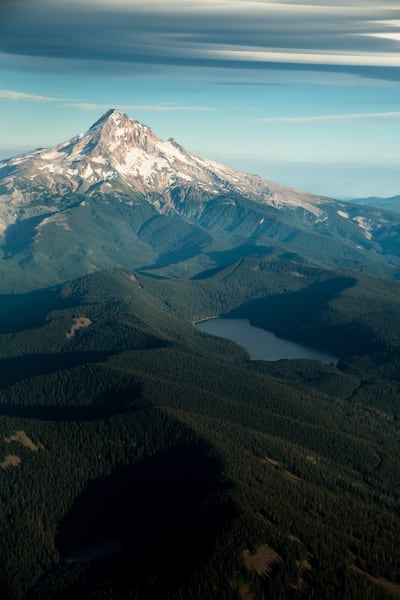
Only a handful of major cities have similar arrangements. San Francisco draws most of its water from a reservoir in Yosemite National Park; New York City gets its water from far upstate. But Portland doesn’t have to pump nearly as far as those cities.
With a clean and abundant source in the Bull Run Watershed, the Portland Water Bureau supplies H₂O to around 840,000 people. The city has long sold drinking water to outlying communities. In addition to 620,000 Portland residents, the bureau today serves cities and districts around the metro area, from Burlington northwest of downtown to Sandy in the foothills of Mount. Hood. Until Gresham’s and Rockwood’s departure, Portland served 17 wholesale customers representing a combined 220,000 people.
To comply with federal health standards, Portland is building a new filtration facility at Bull Run to remove the disease-causing parasite cryptosporidium from drinking water. But since it was approved by the Portland City Council in 2017, the Bull Run Filtration Project has been plagued with cost overages and delays. It’s now expected to conclude by 2029 at a cost of $2.58 billion, though the Water Bureau has defended the cost increases as necessary. The costs have found their way into water bills with rates projected to increase just under 10% a year for the next several years, according to Kiemen.
Gresham officials tell WW the cost increases at Bull Run were only one reason leaders opted to build out Gresham’s groundwater system, which is intended to provide Oregon’s fourth-largest city an independent, financially stable, and seismically resilient water source.
The Gresham City Council voted in 2020 to move to a groundwater system after receiving water from Bull Run for more than a century. Around that time, Rockwood’s board of directors partnered with Gresham to form the Cascade Groundwater Alliance and develop a regional groundwater supply system based on a sand-and-gravel aquifer. Their main goals were financial stability and independence from the Bull Run project and its rapidly increasing costs.
At the moment, though, water bills in Gresham have increased as a result of the switch away from Bull Run water. To address resident concerns about rising rates—and, to some, the new water’s unappetizing taste—Gresham leaders have held well-attended listening sessions.
“The switch to local groundwater was always meant to ensure smaller, more predictable rate changes as they are needed,” Jones says. “It was not going to put us into a position to decrease the cost of service delivery.”
For its part, the board of the Tualatin Valley Water District voted in 2012 to join with several water districts to form the Willamette Water Supply System, a major effort to secure an independent water supply in Washington County. TVWD’s latest long-term contract with Portland ran out in June 2026. Thanks to its own project delays, TVWD is now on a short-term wholesale contract with Portland until its new Willamette River water supply comes online.
Justin Dyke, TVWD spokesman, said an argument can be made that the process started in the 1970s when the district’s precursor secured a senior water right on the Willamette River.
“It’s not because we’re dissatisfied with the water or the service in Portland,” Dyke says. “It’s because as a water utility in Washington County on the west side of the metro, we have long had a goal of having our own water supply that we can have an ownership stake in.”
Portland’s larger wholesale customers like Tualatin Valley have long complained the city gives itself priority over smaller users, especially when flows get low. This arrangement led a young city commissioner named Erik Sten to try to regionalize ownership of the Bull Run Watershed after he was first elected in 1996. Author and longtime Water Bureau employee Casey Short tells WW this effort would have given more voice to Portland’s wholesale customers though the idea was ultimately scrapped.
Whatever the reason districts are leaving, the result for Portland is the same: It is spreading the cost of Bull Run filtration among fewer customers. In light of ballooning costs, some on the City Council have pushed the city to look for cheaper ways to meet federal standards. Three councilors voted against authorizing additional debt to pay for Bull Run upgrades.
Earlier this year, land use nonprofit 1000 Friends of Oregon launched a coalition, Together for an Affordable Portland, to encourage local leaders to prioritize water affordability and “alternatives that work,” according Sam Diaz, executive director of 1000 Friends.
“We realized that, unfortunately, there wasn’t an active campaign around this issue—former city officials and staff had tried to silence, override, and discredit community concerns,” Diaz writes to WW. “It’s a serious issue that’s going to upend hundreds of thousands of people and threaten the viability of our local businesses.”
In Gresham, officials will continue to tweak chemical mixtures to improve the taste of the city’s new water. But they say it’s unlikely to ever taste like it used to. And there is no going back.
“The transition is essentially complete at this point, so the taste and odor will likely have stabilized for most customers,” Gresham spokesman Nate Jones says. “There is a chance there are still small pockets of residual surface water in the system, but by now most of our customers should only be seeing our local water source.”
Correction: An earlier version of this article incorrectly described the Portland City Council’s vote to authorize additional debt for the Bull Run Filtration Project. That measure was opposed by councilors Angelita Morillo and Mitch Green and Council President Jamie Dunphy.