Skip to main content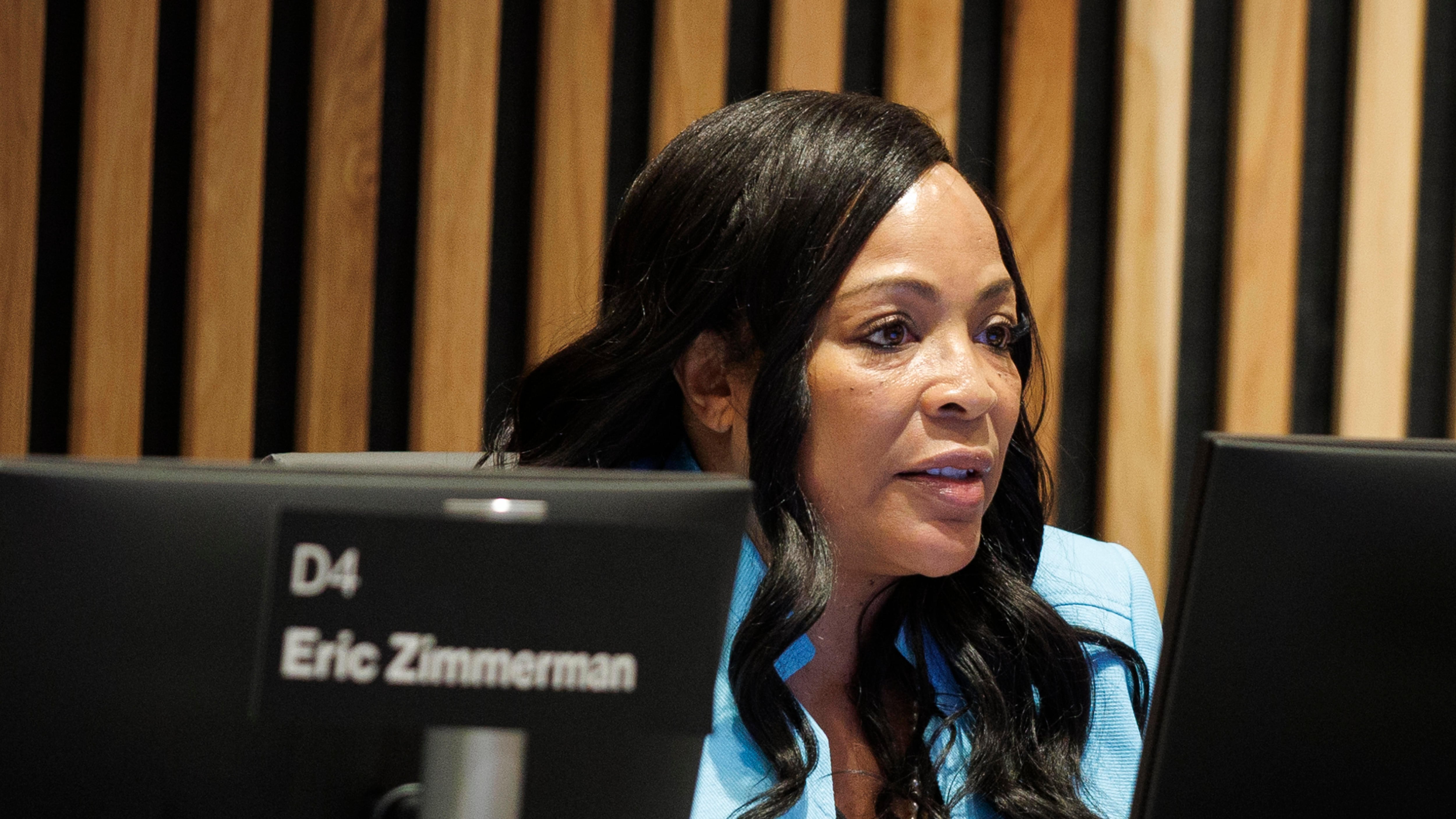
The Portland City Council passed a technical adjustment ordinance Wednesday evening, a midyear budget adjustment that accounts for unexpected revenues or losses. Most notable in the TAO the council approved is a housing package that directs $56 million in unused housing dollars to rent assistance, a revolving loan fund, rent buy-downs for affordable housing providers, eviction prevention, and gap financing for a few specific housing projects.
The vote marks an end to a monthslong, often contentious discussion among councilors about how the unspent housing dollars should be allocated. The discovery of those funds sparked alarm in City Hall this winter.
Council members Candace Avalos, Jamie Dunphy, Mitch Green and Angelita Morillo introduced the housing package that was eventually passed. It was the latest iteration of a proposal that’s changed drastically multiple times—and has seen changing champions on the council—in recent months.
The package includes $8.8 million to “buy down” rents at affordable buildings across the city so rents for some units can be permanently lowered; $17 million for a revolving loan fund for affordable housing projects and for the city to acquire property as part of a new push for a “social housing” model; $9 million for rent assistance; $1.9 million for eviction defense; $5.6 million in gap funding for the Broadway Corridor housing project in Northwest Portland; and $3.5 million in gap funding for an affordable housing project by Hacienda CDC.
The package also sends back $8.6 million to the city’s general fund as the city prepares to contend with a deep budget shortfall in the upcoming year.
At issue across the months of discussion was whether the council should handpick affordable housing projects for funding or avoid being a grant-making body for specific projects.
Councilor Loretta Smith lobbied hard to give $2.5 million to two Black-led nonprofits: a housing project by Williams and Russell CDC and a homeownership program by Self Enhancement Inc. But the council narrowly shot that down 6–5, with more councilors saying it didn’t feel appropriate for the council to select projects without a process. Loretta said the exclusion of the two projects “reeks of institutional racism,” a charge that other councilors appeared to bristle at. (Council President Dunphy told Smith she shouldn’t impugn her colleagues’ motives.)
Morillo said she wasn’t comfortable backing specific projects if she didn’t have a clear understanding of the projects’ feasibility or financing.
“In order for me to understand if I’m going to give out $3 million or more during a time when we’re cutting core government services and staff, I need to see the pro forma, the gap financing structure, if the unit costs are competitive, if this is shovel ready,” Morillo said. “I need to see proof. Because if we’re giving out millions of dollars in one fell swoop as a body, if these projects don’t generate affordable housing quickly, that falls on us and nobody else.”
Smith later pointed out that the council had, in fact, chosen two specific projects to offer gap financing in its package: the Hacienda CDC project and Broadway Corridor.
Councilor Elana Pirtle-Guiney noted, pointedly, that when all three District 1 councilors—Avalos, Dunphy and Smith—first proposed a funding package in December 2025, it included a $9 million earmark for the city’s housing authority, Home Forward, to provide additional emergency housing vouchers. That allocation did not make it to the final version, but Pirtle-Guiney said it undermined councilors’ claims that they weren’t picking specific projects.
“I find that suspect,” Pirtle-Guiney said. “I want us to all be honest about what we’ve done in the ebbs and flows of the many proposals we’ve had before us. When I hear people say they will not invest specifically in these projects...that they won’t invest in named organizations, when a named organization was part of the original, I find that suspect.” (Avalos later told WW the comparison was an unfair one because Home Forward is a “key implementer of federal housing dollars, and therefore it’s not comparable to other projects.”)
The council approved the technical adjustment ordinance by an 8-3-1 vote.
Correction: A previous version of this story incorrectly said that this was the first reading of the technical adjustment ordinance. This was the final vote on the TAO.