Skip to main content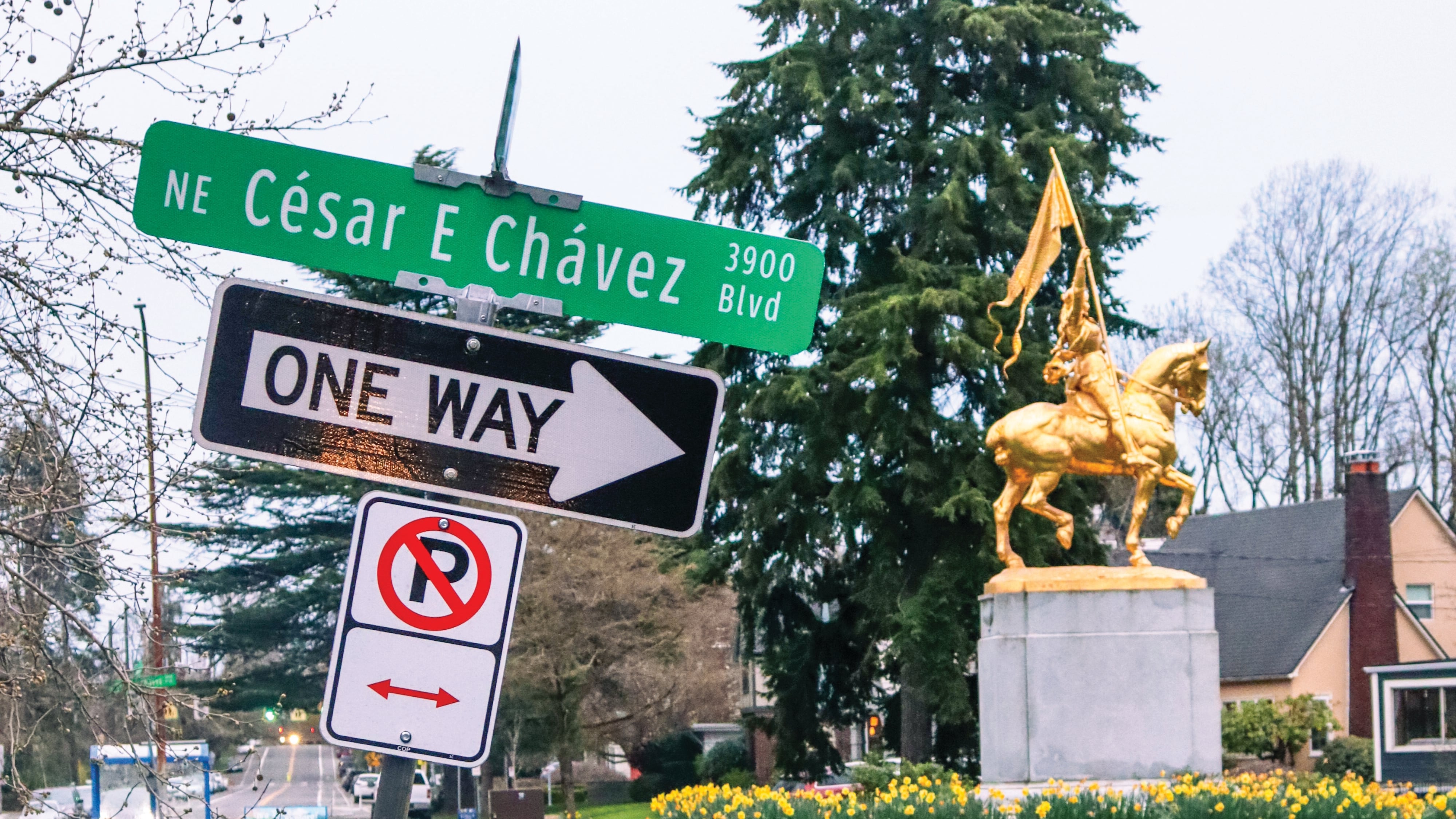
The Portland City Council will consider an ordinance Tuesday, May 26, to rename Northeast and Southeast César E. Chávez Boulevard to Campesinos Boulevard.
The renaming effort, introduced by Councilor Loretta Smith, comes in light of a New York Times investigation published in March that found Chávez, a co-founder of the United Farm Workers union, had sexually abused multiple young girls and women throughout his career. A number of prominent locations in the city carry his name, including the street and a K-8 school in Portland Public Schools.
If passed, the effort would rename the boulevard within Portland’s city limits after farmworkers, otherwise known as campesinos. The ordinance states the City Council thinks it prudent to rename César E. Chávez Boulevard to continue honoring labor rather than erasing it altogether in light of the allegations.
“Credible and substantiated revelations of abuse and violence attributed to labor leader César Chávez have led the city of Portland to grieve with La Causa supporters and survivors of sexual assault,” it reads. “Widespread consensus across the community has coalesced around a shared desire to swiftly rename Portland’s César Chávez Boulevard in a manner that befits and honors La Causa, Latinx labor leaders, and farmworker organizations.”
Smith tells WW she engaged with a number of groups who’d rallied around the new street name. She says Pineros y Campesinos Unidos del Noroeste, or PCUN, was central to the name selection. Smith says she worked with the same people who first advocated to rename 39th Avenue to César E. Chávez Boulevard in the late 2000s.
Smith says that once other councilors heard of her work with major stakeholders, they expressed support for the proposal. She says Councilors Olivia Clark and Tiffany Koyama Lane have both voiced interest in cosponsoring the ordinance.
“I think there’s broad support,” Smith says. “After listening to the community, they told me this is what they wanted, so that’s the direction I led with when drafting this, this ordinance.”
The renaming would have financial and logistical implications. The Portland Bureau of Transportation would be responsible for installing street signs with the new name, with costs expected to be absorbed by PBOT’s current budget. There might be other “limited but direct financial impacts associated” with public notice and emergency services.
Businesses, property owners, residents and institutions located on the corridor would also experience administrative impacts, largely from address updates.
Tuesday’s public hearing will allow councilors to hear public comment as they move the ordinance forward.
“This ordinance is intended to respond to community concerns and advance an equitable approach to street renaming that honors farmworkers, immigrants, Latinx labor leaders, and the broader labor movement rather than centering recognition on one individual,” the ordinance’s impact statement reads. “The ordinance also recognizes the need to act in solidarity against discrimination, deportations, and federal overreach affecting Latinx and immigrant communities.”