Skip to main content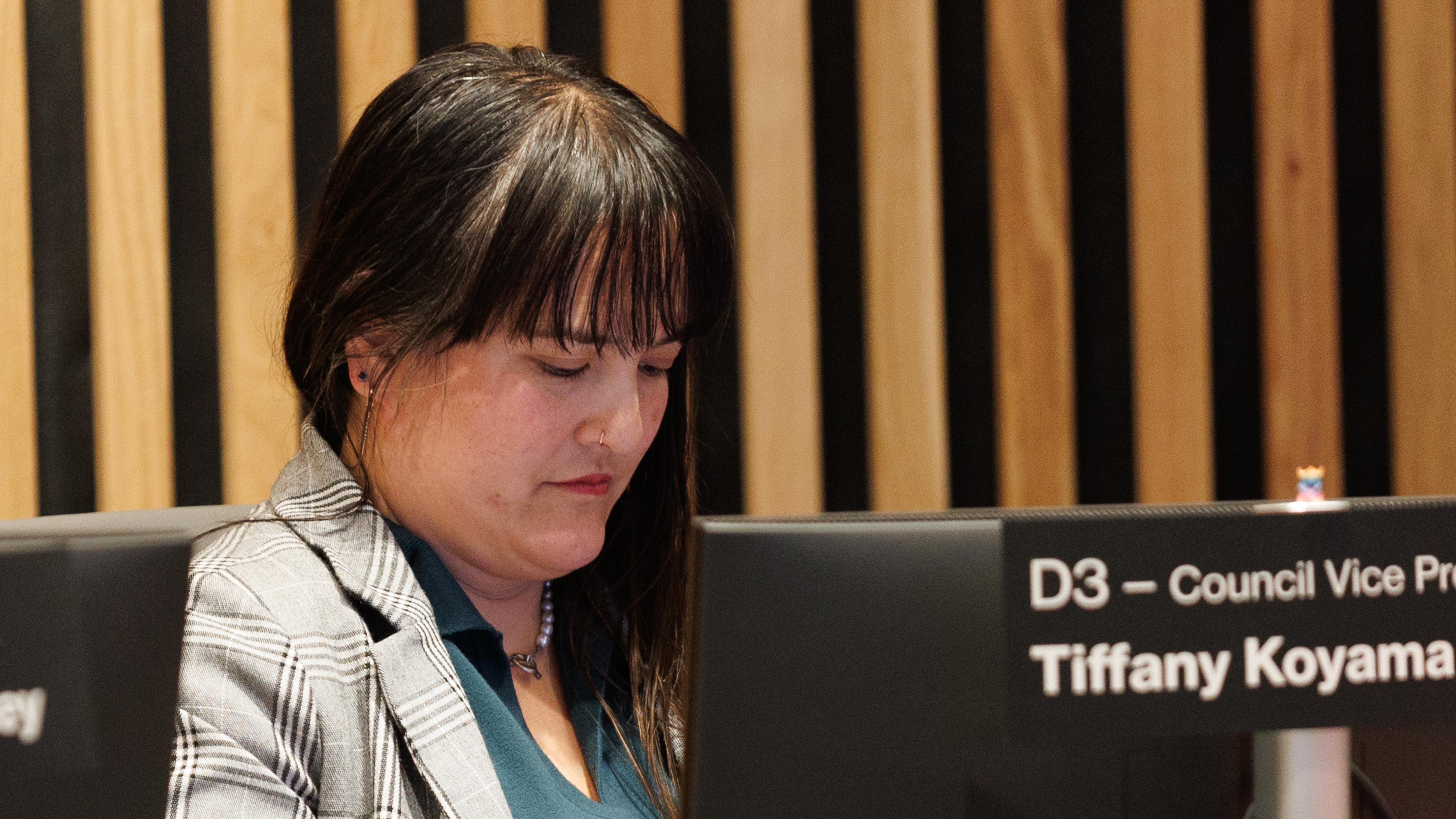
Six members of the Portland City Council are up for reelection this November, in contests that could dramatically alter the council’s current dynamics.
The election cycle will test the council’s current ideological balance—it’s currently deadlocked with six moderates and six progressives. The two caucuses are each eyeing if they can gain more members by ousting incumbent councilors and bringing in newcomers.
Councilors Olivia Clark, Mitch Green and Eric Zimmerman from District 4, which covers the entire westside and a sliver of the eastside, are up for reelection this year. So are Councilors Tiffany Koyama Lane, Angelita Morillo and Steve Novick of District 3, which covers most of Southeast Portland west of 82nd Avenue.
Clark, Zimmerman and Novick have primarily voted as part of the moderate caucus, while Green, Koyama Lane and Morillo have mostly voted with the progressive caucus. Interest groups trying to get a seventh vote for either the moderate caucus or the progressive caucus will likely take a keen interest in the November elections.
While each of the six incumbents’ campaigns are in their nascent stages, early figures from the city of Portland’s elections match program offer preliminary insights into their fundraising capabilities.
The city’s Small Donor Elections program matches small donations under $25 by a 10-to-1 ratio—meaning a $25 contribution becomes a $250 one. Larger donations get matched with a lower ratio, as the program aims to encourage small-donor campaigns.
A look at each candidate’s funding so far shows who is leading in the early stages of fundraising before campaigning ramps up.
In District 4, Clark has unlocked a total of $130,330 from the city’s matching program (There’s one caveat to that: To unlock more than $100,000 in matching funds, a candidate must receive contributions from 750 people. Right now, Clark has just 666 donors.) Just behind Clark is Green, a member of the council’s progressive caucus and a member of the Democratic Socialists of America. He’s unlocked $110,913 in matching funds. Notably, Green has accumulated the most funds from micro-donations of under $25, with 888 contributions—500 more than any other incumbent candidate for the district. Zimmerman has unlocked $52,350 in funds thus far.
Yet leading in District 4 matching funds is not an incumbent at all, but a candidate who ran for one of the district seats in 2024 but just narrowly lost. Eli Arnold is the Portland Police Bureau bike cop who garnered support from business associations and public safety unions last time around but lost; so far this cycle, he’s unlocked $148,600 in matching funds.
In District 3, Koyama Lane has unlocked the most funds by a fairly significant margin. With $168,396 in matching funds, Koyama Lane has received more than 1,000 micro-donations.
Morillo has unlocked $113,470 so far, and Novick—alongside first-time candidate for office Kellie Torres, a longtime City Hall staffer who currently works for Portland Parks & Recreation—are neck and neck with about $50,000 apiece in matching funds.
The Small Donor Elections program faced several issues in 2024 because of the sheer number of candidates—close to 100—that participated in the program. Facing a funding crunch given the volume of candidates, the program capped its match for council candidates to $120,000 or less.
This year, the program will cap a candidate’s matching funds at $300,000, divided into tiers based on the number of donors. After the election, candidates must return any unspent funds to the program.
The filing deadline for candidates to enter the race is Aug. 18 for incumbents and Aug. 25 for nonincumbents.