Skip to main content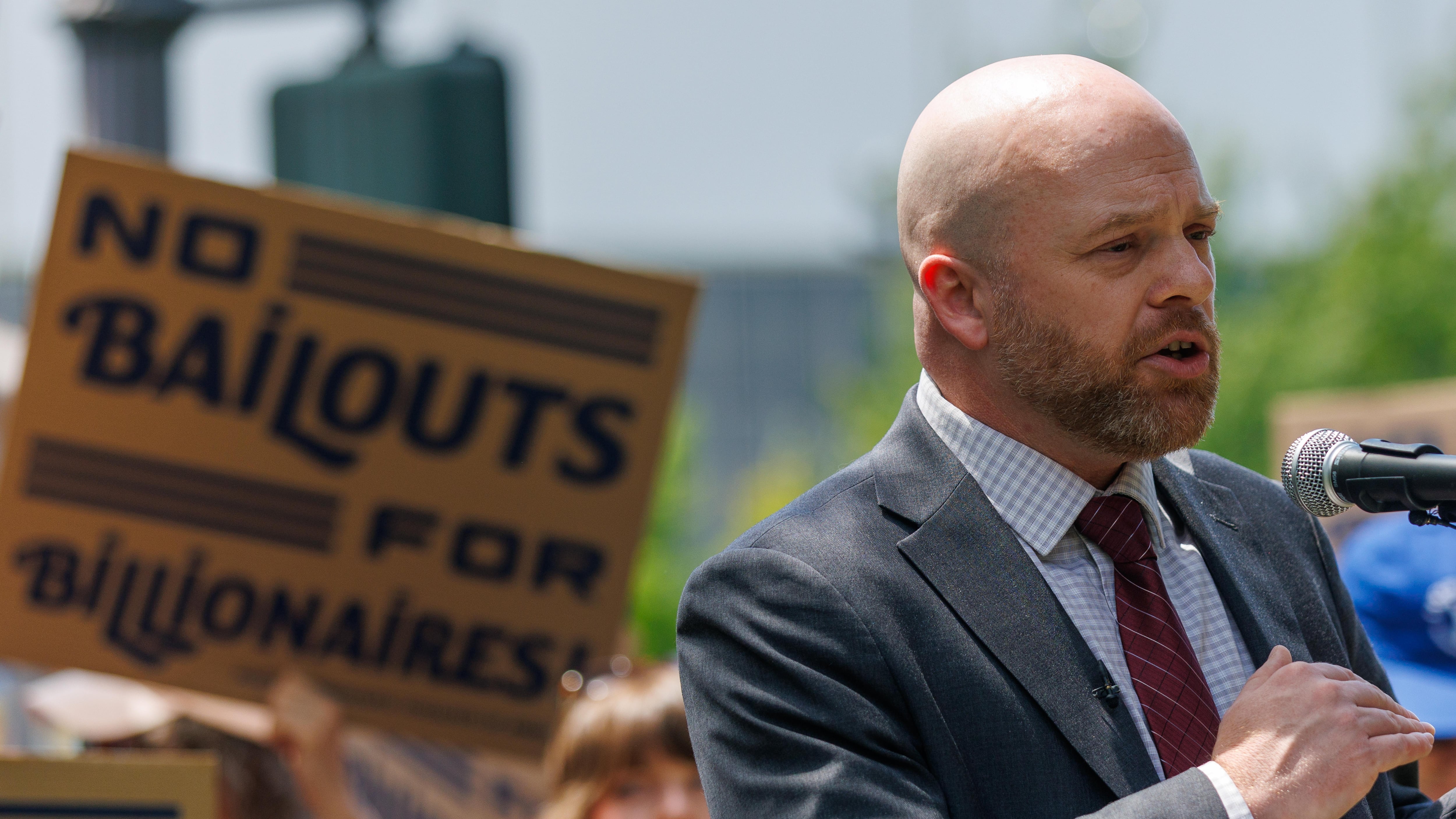
Polling results released last week show Portland voters split on the question of whether the city should contribute at least $120 million in public subsidy to renovating Moda Center, a project widely understood as requisite to keeping the Trail Blazers in town. After hearing arguments for funding the arena overhaul, 44% of voters supported the idea, and 45% were opposed.
Much rests on what the City Council decides in the coming weeks. State lawmakers dedicated $365 million to the project, but that funding is contingent on the city and Multnomah County each approving their share. (County officials appear poised to spend $88 million.) New Blazers owner Tom Dundon has publicly rejected the notion that his franchise might chip in, and has done nothing to assuage fears he will go shopping for another city if Portland doesn’t meet his terms.
But the decision also could shape the political prospects of several city councilors. Six of them are on the ballot in November in Districts 3 and 4. As it happens, polling shows those are also the districts with the most deeply held views on Moda Center funding.
District 3, which covers Southeast Portland and parts of Northeast, is fiercely opposed to the arena proposal. It’s the only district where support for the project never reached 40% in the survey, even after pollsters read arguments in favor of the deal. Fifty-one percent still said no.
District 4 is a different story. That district, which encompasses all of the westside and a sliver of Southeast Portland, is the only one with majority support for the arena upgrade. After hearing arguments for the proposal, 59% of District 4 voters said they were in favor. Just 35% were opposed.
It might not be a coincidence that all six councilors up for reelection this fall have vocally staked out positions on Moda Center.
In District 3, Councilors Tiffany Koyama Lane and Angelita Morillo picketed outside the arena last month as Dundon made his pitch for public dollars to a business forum.
“The poll confirms what I hear from many District 3 residents: Portland should maintain the Moda Center’s essential life-safety systems, but luxury upgrades must deliver a clear return on investment for the public,” Morillo tells WW. “If it doesn’t, we’re just doing welfare for the rich and austerity for the poor.”
In District 4, Councilors Olivia Clark and Eric Zimmerman have pledged to vote for the arena funding. “The state’s largest gathering place and busiest entertainment venue draws visitors from every corner of Oregon and far beyond,” Clark tells WW. “It’s a cultural hub and an economic engine.”
That’s four councilors closely aligned with voter sentiment in their district.
Councilor Steve Novick, also seeking reelection in District 3, has criticized public financing for the arena but in recent weeks signaled he’s open to compromise. “I’m developing a couple of different scenarios for a deal,” he told WW over the weekend, “based on the principle that the city shouldn’t put any more money into the Moda than it expects to get out of the Moda.”
Novick’s office paid for the polling, along with the office of Councilor Sameer Kanal, who represents District 2 and isn’t up for reelection until 2028. (Kanal didn’t respond to a request for comment by WW deadline.)
Cutting a deal risks Novick alienating the voters of District 3. Meanwhile in District 4, Councilor Mitch Green has loudly condemned Moda Center funding—placing him at odds with the majority of his district’s voters. (He’s also drawn the ire of two trade unions that stand to benefit from the project—IBEW Local 48 and Ironworkers Local 29—who on Monday rescinded their endorsement of him.)
In a statement, Green tells WW that the citywide skepticism shown in the polling reflects what he’s hearing in District 4. “I’m confident that even those who support a deal would want their elected officials to negotiate the best one possible on taxpayer’s behalf,” he wrote in a statement.
“I want the Blazers here,” Green added. “I want a renovated arena. But if this process looks like a backroom deal between billionaires and a few powerful people, it’s going to fail. We need transparency. We need to ask regular Portlanders what they want out of this. We need a contract that doesn’t treat [the Portland Clean Energy Community Benefits Fund] like an ATM for billionaires. And, we need a real reset on this rushed timeline that works against the interest of the people and our democratic process.”
Novick cautions that the poll has a small sample size—300 voters were surveyed citywide—and that the mood of the electorate is hard to predict.
“Assuming we take the variations at face value,” Novick wrote to WW, “it will likely reinforce the positions Morillo, Koyama Lane, Zimmerman and Clark have already taken. For Green and me, if we were going to base our positions purely on electoral politics, it sets up an interesting question in the context of ranked choice voting—‘are the people in the minority in my district the kind of people who might support me anyway, so taking the minority position in my district will actually help me solidify the 25% I need, or is there no correlation between my likely voters and positions on this issue, in which case taking the minority position is politically dumb?’ I don’t really know the answer for myself, so I think I’m stuck with just doing what I think makes sense on the merits and hope for the best.”