Skip to main content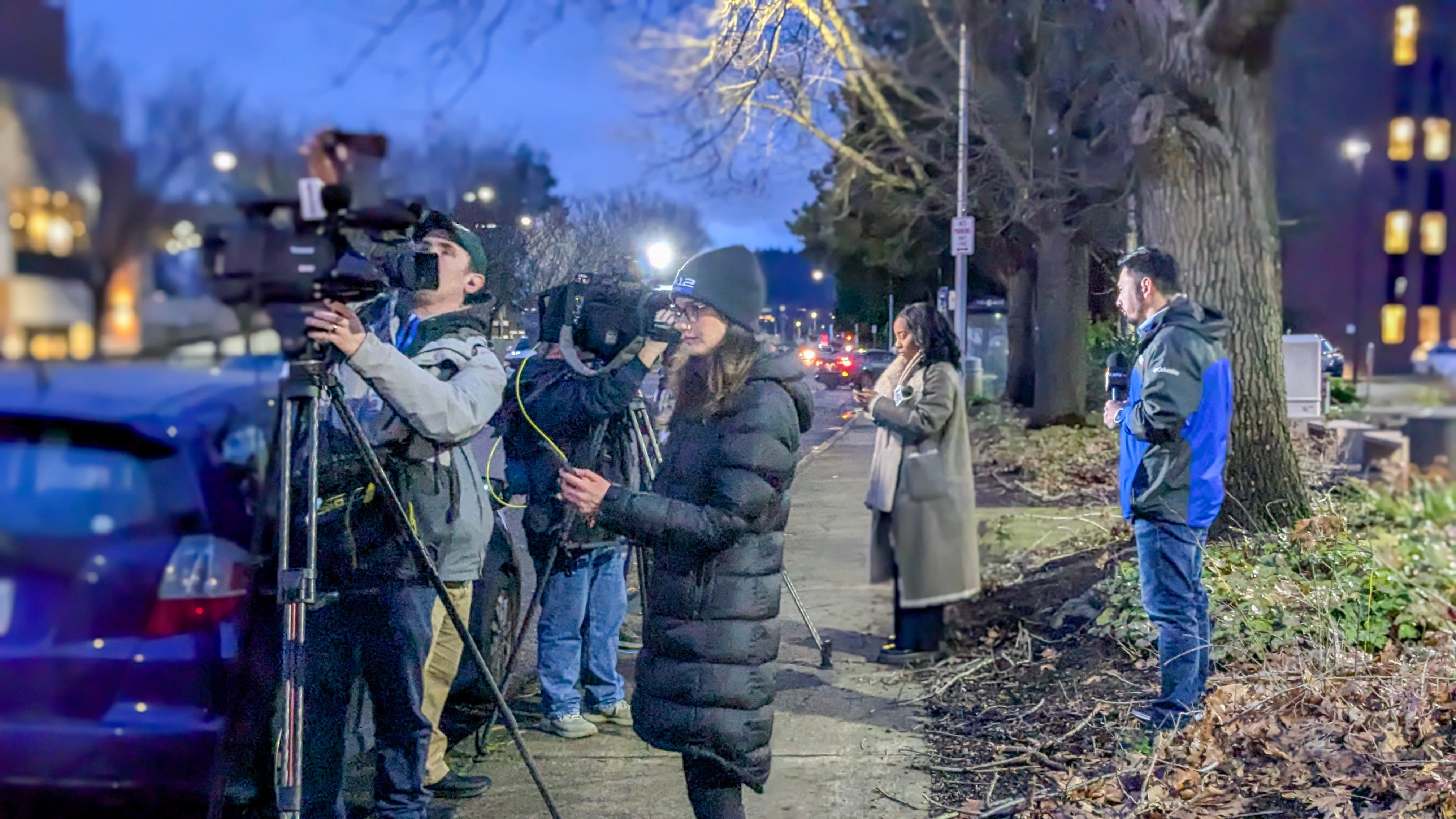
In an emotional press conference Friday afternoon, Portland Police Chief Bob Day said the two people shot by a federal Border Patrol agent at a Thursday traffic stop had been linked by police to the Venezuelan gang Tren de Aragua after a shooting in outer Northeast Portland last July.
Day said Luis David Nino-Moncada, the driver of the vehicle, and Yorlenys Betzabeth Zambrano-Contreras, his passenger, were in federal custody at local hospitals and are expected to survive. “They appear to be on the road to recovery,” he said, “and I’m grateful for that.”
He then revealed information about the couple’s past that he acknowledged would be painful to hear and which he said was difficult to deliver: “They do have some nexus to involvement with TDA.”
Day said the couple’s gang association had emerged during the investigation of a July 11, 2025, shooting at Northeast Mason Street and 181st Avenue. The shooting victim, a Venezuelan immigrant, told detectives the people who shot at him were Tren de Aragua members. Following that tip, Day said, detectives spoke to law enforcement in Washington County and learned of a potential connection between Nino-Moncada and Zambrano-Contreras and the gang.
“They have not been confirmed as the shooters,” Day said.
Day’s acknowledgement came at an unusually delicate moment, as Portlanders reeled from the news that a Border Patrol agent had wounded two people in a parking lot outside Adventist Health Portland. In the wake of that shooting, Portland and Oregon elected officials demanded a halt to immigration crackdowns in the state. In response, U.S. Department of Homeland Security assistant secretary Tricia McLaughlin described the couple as “two vicious Tren de Aragua gang members” who “weaponized their vehicle against Border Patrol in Portland.”
Day had said Thursday night he knew of no Tren de Aragua activity in Portland. Less than 24 hours later, he said he felt compelled to correct that account, even if the news could cause pain.
The chief appeared shaken by the weight of the moment. In the same room where he had stood beside the mayor and the governor as they condemned the actions of immigration agents, he wiped tears from his eyes with a handkerchief and his voice cracked as he addressed Portland’s Latino community.
“I hesitated to even share this information initially,” he said, “because I’m very aware of the historic injustice of victim-blaming oftentimes by law enforcement, including this very agency that I represented so proudly for so many years. But I felt that it was imperative because I was asked yesterday in the news conference what information we have. This is information we have. This in no way draws a through line to the actions or the behaviors that occurred yesterday.”
Few public records shed light on Nino-Moncada and Zambrano-Contreras’ time in Oregon. Washington County court records reviewed by WW show Nino-Moncada was arrested there last November on a charge of driving under the influence. The court file in that case lists Nino-Moncada as living in Vancouver, Wash., at the time.
The charging document says he was using Zambrano-Contreras’ red Chevrolet Camaro without her permission.
Assistant Chief Rob Simon offered a bit more detail on the scene that police encountered at Adventist Health on Friday afternoon. Simon said seven or eight federal officers were still at the scene of the shooting when Portland cops arrived, and that more showed up soon after. (It wasn’t clear from Simon’s account if the agent who fired his weapon was among them.)
But nothing Day or Simon said Friday shed more light on the “targeted vehicle stop” of Nino-Moncada and Zambrano-Contreras, or the circumstances in which the Border Patrol agent fired his weapon. It’s those actions that drew regional outrage on Thursday—just one day after an immigration officer killed a woman in Minneapolis under some similar circumstances—and will remain the subject of scrutiny in coming days amid growing fury over immigration crackdowns in American neighborhoods.
Day said that Portland police would be keeping in close touch with the FBI as it conducted an investigation, but that the Portland Police Bureau would not be running a separate, parallel investigation. Oregon Attorney General Dan Rayfield said Thursday night that he would open a state investigation of the Border Patrol agent’s actions. The Portland chapter of the Democratic Socialists of America—which counts four city councilors among its ranks—called Friday for the City Council to instruct District Attorney Nathan Vasquez “to obtain a warrant to arrest the federal agents who committed the shooting.”
The council doesn’t have that authority, Vasquez told WW. “The district attorney does not issue arrest warrants,” he said in a statement. “Arrest warrants are issued by the court after a determination that the facts submitted by this office establish probable cause that a crime has been committed. I may not apply for an arrest warrant based on speculation, conjecture, or public calls for action.”
Vasquez pledged to “conduct a thorough and timely review of all investigative materials submitted to us by the criminal investigators in this case.”
In his remarks, Day noted that the number of protesters at the U.S. Immigration and Customs Enforcement facility on the South Waterfront had grown Thursday night. The scene around the building had largely quieted in recent weeks. “We did see an increased amount of energy and intensity, which we anticipated given the events of yesterday and on the heels of what occurred in Minneapolis,” he said. “And appropriately so.”
Portland police arrested six people Thursday night, including Seth Todd, the originator of the Portland Frog. Most of them were blocking the street and refused to move.
At least two protests are expected this weekend: a vigil tonight at the site of the Border Patrol shooting and a Saturday march through downtown.
Sophie Peel contributed reporting to this story.