Skip to main content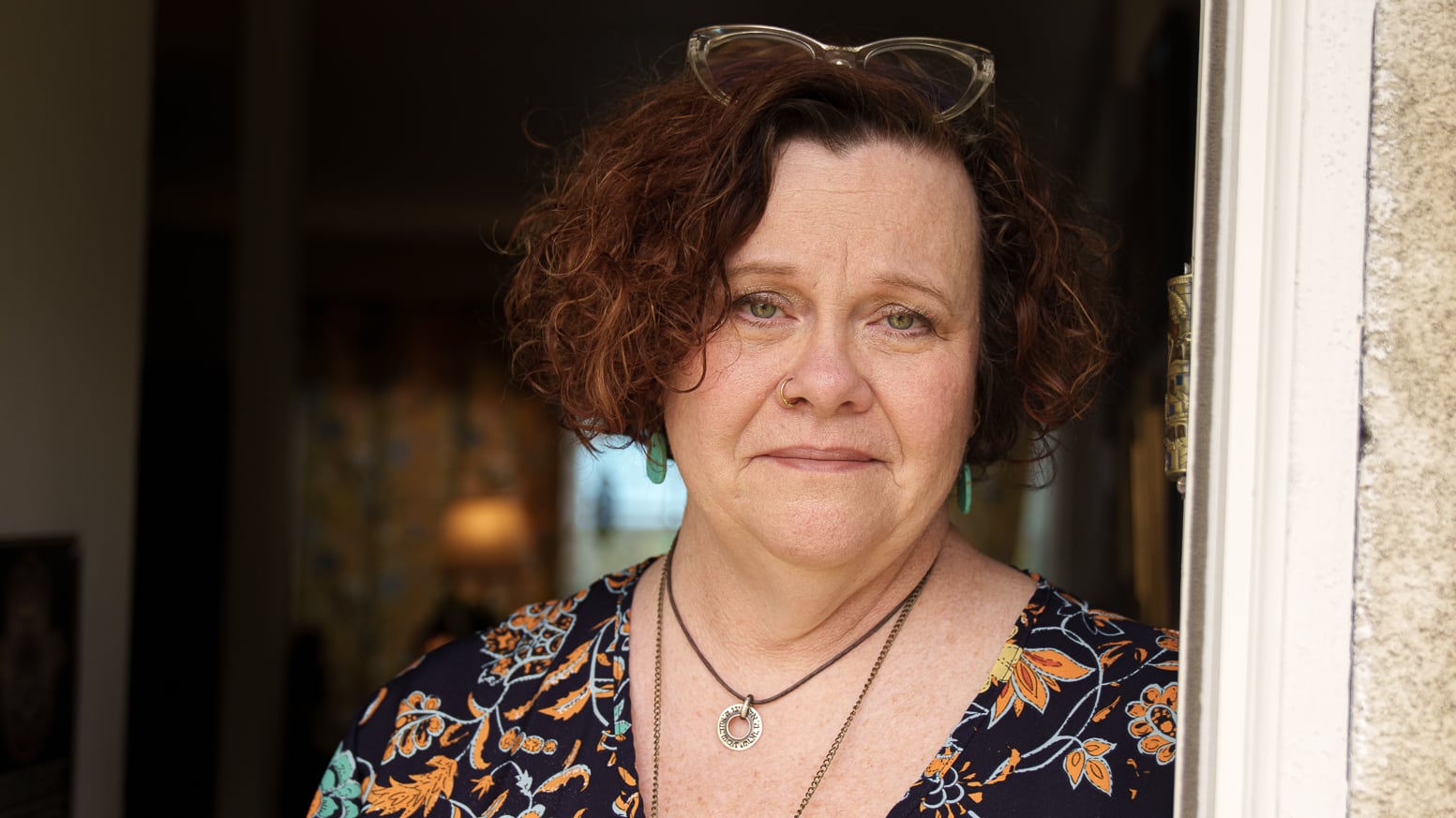
Lisa Miyamoto was lecturing federal officers.
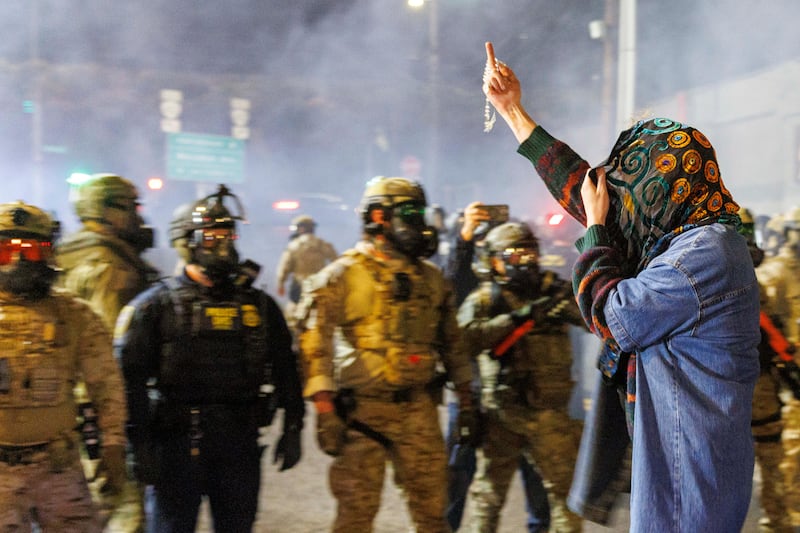
It was a cold, clear night in October 2025. A small group of protesters stood around the driveway of the U.S. Immigration and Customs Enforcement facility on South Macadam Avenue. It was peaceful compared with many prior evenings—no tear gas or riot shields.
“What are you doing?” Miyamoto, a 56-year-old charge nurse in a senior psychiatric unit, remembers calling up to the officers on the building’s roof. “What are you going to answer to your children someday? Is this what you want to be your legacy to your families?”
Fifteen minutes later, Miyamoto was in custody for felony assault of a federal officer, facing a maximum sentence of eight years in federal prison.
When officers deployed to clear the building’s driveway Oct. 19, “Miyamoto forcefully struck an officer with a wooden tambourine and was arrested by officers,” a U.S. Department of Justice statement declared.
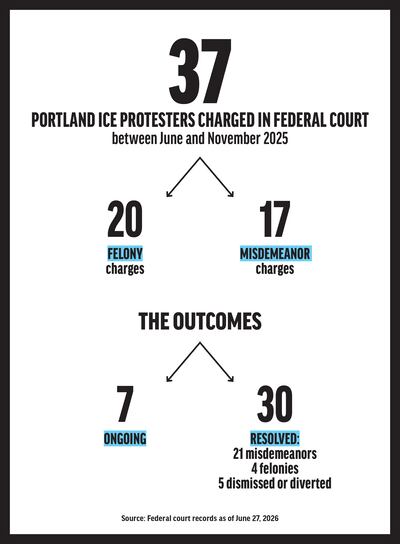
In the months between June and November 2025—when protests took place most days outside the ICE facility—the feds put out a good number of press releases of this sort. Miyamoto was among 37 protesters charged in that period with crimes allegedly committed outside the South Portland ICE office. They faced a variety of charges, from felony depredation of federal property for damaging security cameras to misdemeanor failure to obey a lawful order.
Some allegations were particularly serious. Twenty-four defendants were accused of assaulting or attempting to assault a federal officer—17, like Miyamoto, faced felony charges, crimes with maximum sentences between eight and 20 years in federal prison.
The accused were brought before federal judges and told they could spend years in federal prison. But then, a WW review of the cases has found, most of them came to nothing. Of the 30 protesters whose cases have been resolved, 28 walked free with only probation or supervised release if not an outright dismissal.
The disposition of the cases suggests the federal rhetoric of officers facing physical peril—from musical instruments or other such weaponry—wasn’t backed by much evidence. Certainly, the governmental appetite for prosecuting its critics evaporated once President Trump no longer needed to make an example of them.
Nonetheless, says Tung Yin, a law professor at Lewis & Clark Law School, the felony charges served the purpose the feds intended: thinning crowds. “If it weren’t for these prosecutions, maybe you would stand your ground where you’re allowed to stand,” Yin says.
Miyamoto spent 36 hours at Columbia County Jail, 25 miles from Portland, from Sunday night to her arraignment on Tuesday morning. She says she had never been to jail. She says she was deprived of her blood pressure and antidepressant medications. After a day and a half, she says, she was finally given the PIN number required to make phone calls, but it didn’t work. Meanwhile, she says, her 17-year-old child was calling hospitals, the police, the sheriff, even ICE’s main number, trying to find her.
Shivering in the harsh lighting of her cell, Miyamoto berated herself. “Lisa, what the fuck are you thinking? You just ruined your whole life, just like that,” she recalls thinking, her voice breaking at the memory. “What are they going to do to my kids? Are they going to take them away from me?”
Miyamoto, who is white, grew up in a farming community in Central California. (Her husband is Japanese; when federal agents looked at her ID, she says, they questioned whether she was using her real name.) Most of her childhood neighbors were Latino migrant workers. She saw the abysmal living conditions, the backbreaking labor. She recalls filling out green card paperwork for her neighbors at church workshops. Those people were on her mind as she was brought to her arraignment. “Think of all the people, all the mamas that are going through this,” Miyamoto told herself.
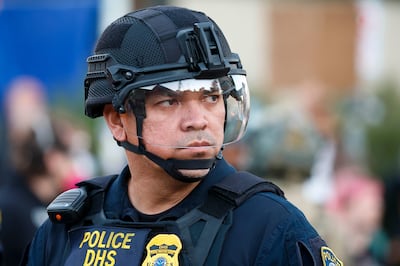
Why she was appearing before a judge was a matter of dispute. Here is what the feds say happened: About 10 federal police officers deployed to clear the ICE building’s driveway for an exiting vehicle. Miyamoto was standing “directly in front of the driveway on the right side,” and an officer walking past her pushed her away with one hand. A second officer commanded her, “Move away from the driveway,” to which she responded, “Where am I supposed to go?” The officer responded, “Move to the sidewalk, please.” Miyamoto then “took a wooden tambourine she was holding in her right hand and struck [the officer] in his chest forcefully with it.”
Miyamoto recalls things differently. She says she was standing well out of the driveway’s path, on the sidewalk and about 5 feet behind the thick blue line painted at the driveway’s entrance that reads, in white block letters, “U.S. Government Property, Do Not Block.” Security camera photos from the building, included in court documents reviewed by WW, corroborate this.
She says the first officer pushed her with his whole arm, hard enough that she shuffled backward. After the second officer told her to move, she says she responded, “Where am I supposed to go? I am behind the line. I am out of the way.”
Then, she says, the second officer shoved her even harder than the first one had. In a knee-jerk reaction, Miyamoto stuck her right arm out, “like swatting a fly. It was like, ‘Oh, my God, get away from me.’”
Lisa Miyamoto did not go to prison. Nor did the vast majority of protesters arrested by federal agents outside the ICE office.
The U.S. Attorney’s Office for Oregon, which prosecuted the cases, declined to comment for this story, but the court record offers a glimpse into how its prosecutions went.
In court filings, the federal government describes its agents’ and protesters’ actions in starkly different terms. Officers “push” protesters. The protesters “shove” back. Officers do not tackle protesters. They “guide” or “escort” them to the ground.
On this basis, prosecutors filed their charges. Then, in case after case, officers’ accusations of serious misconduct petered out into reduced charges and almost no punishment.
One man was charged with a felony for spitting at an officer. He pleaded guilty to a misdemeanor and got time served and a year of supervised release. Another got a felony charge for throwing a water bottle at a group of feds: misdemeanor, time served, one year of supervised release. A third got a felony charge when a federal police officer pushed him with a riot shield and he pushed back. Six months’ probation. All three were offered plea deals within two months of their charges being filed.
Only two protesters were sentenced to any prison time at all. Robert Hoopes was sentenced to 30 months for striking an officer in the head with a rock. Trenten Barker got 18 months for arson after he threw a flare and ignited a pile of debris. The remaining cases were diverted or transferred, or are ongoing.
This many plea deals are not in themselves surprising, says Yin, the law professor. Some 98% of all federal cases end in plea bargains. But he says the leniency of the deals, and the speed at which they have been resolved, suggests prosecutors are trying to make the cases go away quickly.
It seems likely, Yin says, that prosecutors have faced pressure from the Trump administration to go hard on protest cases to send a message. Yin says prosecutors can’t just ignore the cases, but they seem to have been inclined to call up protesters’ defense attorneys and say, “I know your guy just shoved an ICE agent, and they were probably shoved in the first place or got pepper-sprayed, so how about you just get your client to plead out and I’ll go along with the recommendation of no prison time and six months of probation?”
Courts traditionally put great stock in the claims of law enforcement, but not all have found federal police agencies to be trustworthy narrators. Less than a month after Miyamoto was arrested, in an order barring the deployment of the National Guard to quell anti-ICE protests, U.S. District Judge Karen Immergut wrote that federal officers “overstate the degree of physical danger they faced at the ICE facility” and were frequently unreliable in their descriptions of protests.
The Trump administration, however, continues to emphasize the perils the protests posed.
“DHS is taking appropriate and constitutional measures to uphold the rule of law and protect our officers and the public from dangerous rioters,” a Department of Homeland Security spokesperson wrote to WW. “DHS is authorized to do what is appropriate and necessary in each situation to diffuse violence against our officers in the most appropriate manner possible.”
That disjunct was reflected in the minutes after Miyamoto’s arrest, as officers in the ICE facility laughed at her, in her account. “You guys should be ashamed of yourself for treating your fellow human beings like this,” Miyamoto recalls saying. “And remember, your children are going to know what you did.”
“You should be ashamed of yourself,” an officer retorted.
Her attorney would later state in court that Miyamoto sustained bruising on her arms and a shoulder injury from the arrest. She says she worried she’d lose her job.
In fact, Miyamoto was called into her manager’s office the morning after her arraignment. “The hospital doesn’t know what to do with you,” she remembers being told. Even though her union, the Oregon Nurses Association, and the State Board of Nursing had told her her job wouldn’t be affected, Miyamoto was placed on administrative leave for a week. Miyamoto worried, once again, what would happen to her sons if she lost her job. Ultimately, she says, the ONA and state board stood behind her, and she went back to work the following week.
In the end, her class D felony was dropped to a misdemeanor, and she was sentenced to only a year of probation.
Miyamoto says her federal public defenders tell her they, as well as judges and probation officers, think the cases against protesters are a waste of everyone’s time and taxpayers’ money. Prosecutors clearly aren’t pressing for prison time. And Miyamoto says her probation officer hasn’t contacted her in months.
So then why file such serious charges to begin with? “It’s to prove a point,” Miyamoto argues. The federal government, she says, is essentially saying: “Don’t protest. Don’t fight back. Shut up…We’re going to scare the shit out of all of you so that you do what we want.”