Skip to main content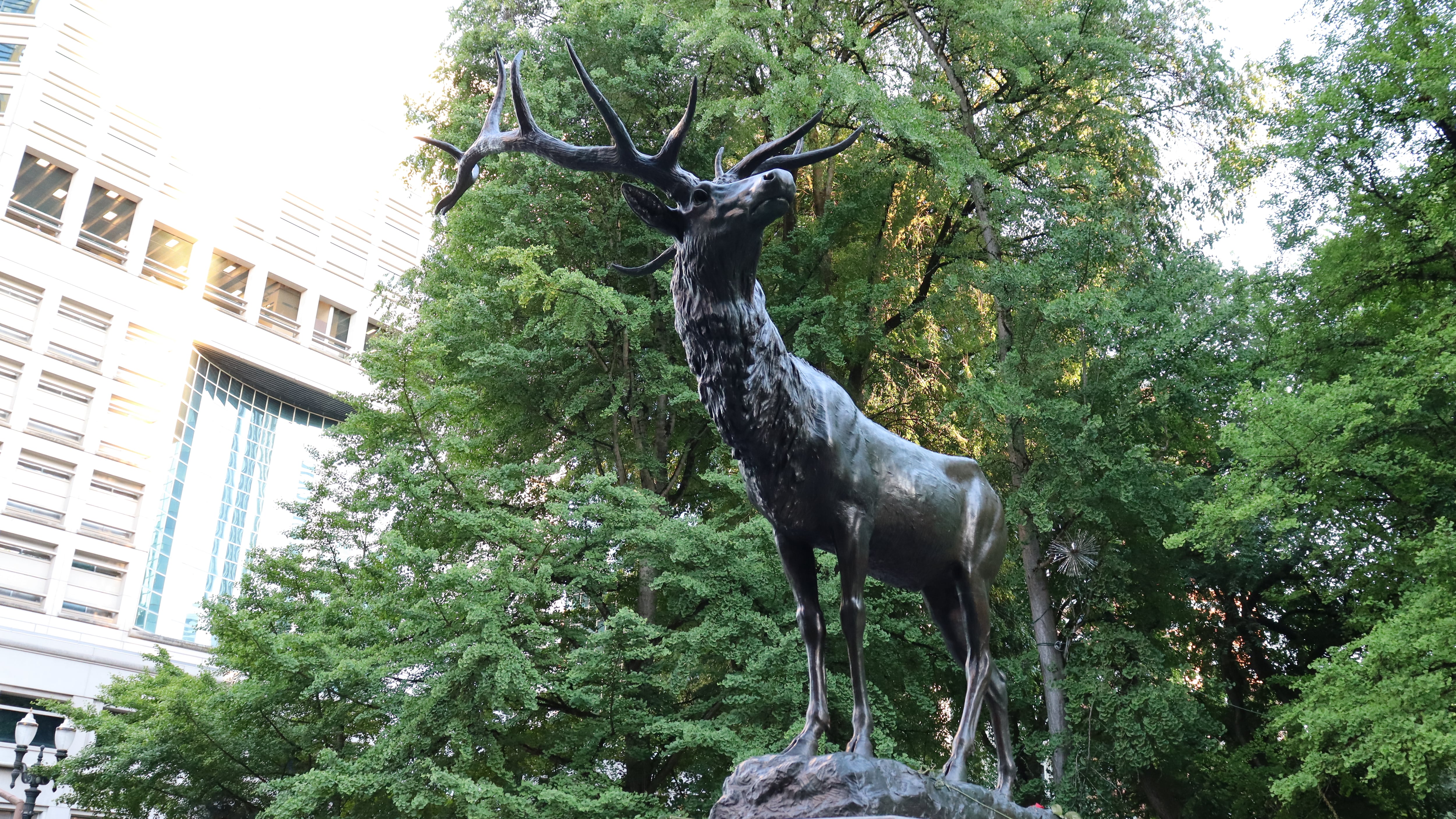
BETTER CALL THE SLEDGEHAMMER
The unchallenged pull quote for your ludicrous puff piece about electroshock [“Saving Mrs. Brown,” WW, June 17] says it’s “miraculous,” “a laying on of hands.” I think the appropriate analogy (suggested to me by a neurologist) would be a laying on of a sledgehammer. The brain damage/memory loss may help you forget why you are so miserable.
Jeremy Szold Ginzberg
Northeast Portland
VIENNA WAITS FOR YOU
I applaud Councilors Avalos, Dunphy and Green for making a trip to Vienna to observe and learn about the social housing that the city of Vienna provides for a substantial percent of the city’s population [“Getting Away,” WW, June 17]. With a 100-year head start, Vienna is leagues ahead of Portland, but a late start better than what reporting shows for Home Forward’s efforts. Let’s get it done!
Larry R. Steuben
Northeast Portland
TRAIN SLOW? GET LOW
Thank you for publishing those recent news articles about potential solutions to the traffic congestion problem at the places where the railroad track intersects with Southeast 8th, 11th and 12th avenues [“Railed,” WW, May 20]. I don’t recall seeing this in any of these articles though...up until the 1970s or maybe early 1980s, long slow freight trains on this same railroad track also caused awful traffic jams on Southeast Powell Boulevard (Highway 26). Back then, when I was a boy, I remember being stuck there for what seemed like a very long time sometimes. And then an underpass was built which allowed cars, trucks, bikes, etc. on Powell Blvd to drive under the railroad tracks, which was really nice! So in your future reporting about the traffic congestion caused by the railroad in this same area, I do encourage you to say there was this very significant victory way back then, and I think it might offer some hope for the future as other nearby traffic congestion problems are tackled and hopefully resolved.
Andrew Swanson
Clackamas
THE ELK REMAINS THE SAME
I came across a letter to the editor last week [Dialogue, WW, June 3] that raises a question we hear a lot about the Thompson Elk fountain—what changed when it was reinstalled?
The answer is that nothing has changed, at least that you would notice from the outside. The restored fountain looks identical to the old fountain, with new replacement stones brought in from the same granite quarry in Vermont as the old, damaged ones. The beaver and cougar animal heads look the same, even though many of them were resculpted by hand to match the old ones. It also faces the same direction it always has.
What about changes on the inside? Well, the restored fountain does have a new reinforced concrete foundation, and a modern pump to recirculate the water, instead of continuously draining the water to the sewer like the old fountain did. This new pump will save 18,000 gallons of water a day. That’s enough for 60 homes.
Is the bronze Elk statue the same now, too? Again, the answer is yes. Well, except that the Elk is brighter now, having been cleaned and polished, and stronger too, with extra seismic anchorage to the pedestal. It still points in the same old direction, facing the West Hills, looking back at its home and herd. Today, its home and herd are gone, the natural world the Elk represents lives on beyond our city limits now, making the Elk Portland’s official Ambassador to nature.
David O’Longaigh
Engineering Manager
Portland Water Bureau
Letters to the editor must include the author’s street address and phone number for verification. Letters must be 250 or fewer words. Submit to:
P.O. Box 10770
Portland, OR 97296
Email: amesh@wweek.com