Skip to main content
One day in July 2019, a show about penny stocks welcomed a Lake Oswego man to the program to discuss exciting news.
Nader Pourhassan was CEO of CytoDyn, a Vancouver, Wash., biotech firm trading at 45 cents a share. He described a company charging toward government approval for its proprietary compound—and evoked the riches for investors awaiting beyond.
Bolstering his case was a fresh development: A respected Oregon Health & Science University scientist was joining the CytoDyn advisory team.
Jonah Sacha, who had gained acclaim for HIV investigations conducted at the Oregon National Primate Research Center, had taken an interest in CytoDyn’s lone product, a compound called leronlimab, which some believed could block the virus before it ever took hold.
The show’s host interrupted Pourhassan. “Did I hear you say that you have an antidote that someone can take to prevent getting AIDS or HIV?”
Pourhassan explained himself—if all went as hoped, the answer, in short, would be yes—and the host of StockDay turned to the question of when regulators might approve this thing. Pourhassan said it could be a matter of months. Early 2020, say. “Final approval,” Pourhassan added knowingly. “You will expect the stock to be at a very high level—not 45-cent, 50-cent level. That’s why we believe this company is a gem, hidden under the rocks.”
Six years later, Pourhassan has been convicted of fraud and insider trading for misleading investors about leronlimab’s prospects for FDA approval, which eludes it to this day.
Sacha says he has not followed CytoDyn’s tribulations beyond news reports, and that he never read Pourhassan’s indictment (“not my bag”). Yet he still owns shares in CytoDyn. He remains on its scientific advisory board. He continues to believe in its lone product, leronlimab.
And OHSU continues to believe in him. At 47, Sacha has become a prominent face of a monkey-testing operation that is under increasing pressure to close. In January, an OHSU board member touted his research as an argument to sustain the center’s work. This past August, OHSU touted Sacha’s latest monkey study, published in the peer-reviewed journal Nature Microbiology, suggesting that a three-drug regimen, which includes the leronlimab compound, might be able to clear infected newborns of HIV, permanently. “It’s a remarkable result,” one of his co-authors said.
There is no evidence that Sacha himself deceived the public. And it’s not unusual for a researcher to have a disclosed equity interest in a drug he hopes to produce. It is unusual for the CEO of the company seeking to commercialize the drug to be convicted on federal felony charges of overhyping that drug—even as the researcher’s university, locked in an existential battle over the fate of the researcher’s lab, continues to tout the drug in a way that elides this backstory.
“You have slimy people involved in this research,” says Neal Barnard, president of the Physicians Committee for Responsible Medicine, which has called for OHSU’s primate center to be shuttered. The CytoDyn situation is “six standard deviations out of normal.”
Interviews with more than a dozen experts and CytoDyn insiders, and an examination of scores of court records, regulatory filings and journal articles, illustrate the challenge before the public: When a university scientist takes stock in the firm whose drug he’s studying, can we trust the science as much?
OHSU representatives say the arrangement is standard practice—and, moreover, a recipe for innovation. Critics say just because other people do it doesn’t make it ethical—and that it’s exactly the kind of conflict that lets a CEO’s fraud borrow credibility from real science.
Sacha’s answer is that the treatment works regardless of who might profit from saying so. He waves off the attacks from the animal rights community as bad faith—unworthy of his time. He denies having read, for example, an ethics complaint filed this past April about his CytoDyn ties. “Why would I?” he says. “These aren’t serious people.”
As for Pourhassan, he was a “hype man,” yet this does not negate the potential of the leronlimab treatment he hyped. “Nader and his company did a real disservice to this compound,” Sacha says. “Because it is a very potent drug for HIV. It just is.”
Pourhassan, 63, has appealed his conviction—and persuaded a judge, for now, to delay the beginning of his 30-month federal prison sentence. He wouldn’t talk for this story, but his defense mainly boils down to two points: He didn’t actually say anything to illegally mislead investors; and that if he did, he did so in good faith, on the testimony of scientists and experts he trusted, as a biology layman.
Court records describe a resourceful man of many interests. Born in Iran, Pourhassan arrived with his family stateside at a young age, attended Christian boarding school in Arkansas, got a master’s degree at Brigham Young, a mechanical engineering Ph.D. at the University of Utah. He’s held many jobs; math teacher, martial arts instructor. Some periods got choppy. Pourhassan filed for Chapter 7 Bankruptcy in 1991 and 2001. In 2000, he was indicted in Utah—the federal charges were later dismissed—on accusations he’d sold dream catchers and other wares marketed, fraudulently, as having been produced by Native Americans.
“He had made a lot of money selling pottery, I think,” says Richard Trauger, who joined CytoDyn in 2011. “Buying wholesale pottery and selling it on the road.”
According to Trauger, Pourhassan arrived at CytoDyn as a financial guy—his mission to raise capital from his “Rolodex of high-net-worth people.” He got promoted to CEO in 2012, around the time Trauger took on a chief science officer role. Together the men shaped the firm’s future.
CytoDyn has by this point been putting along for years, powered by a patent it owned for a compound from the 1990s called Cytolin. But it turned out another biotech firm, Progenics, had a similar, more advanced product it might sell.
Like Cytolin, PRO 140 was not a traditional drug but a biologic, derived from a mouse, cloned and “humanized.” Trauger and Pourhassan hit the road, raising millions to acquire rights to the compound—a compound now known as leronlimab.
Trauger recalls that some of Pourhassan’s associates seemed “a little desperate,” like they were doubling down on prior losing investments. But Trauger felt the science was valid.
Still, even with exclusive worldwide rights to PRO 140, CytoDyn’s revenue did not immediately flow. There was much work to be done to reinitiate human trials, safety and stability data yet to be obtained. “We couldn’t just go straight to the clinic,” Trauger says. “And that was the start of my problem with Nader.”
When historians of tomorrow recount the medical advances of our age, HIV treatment will surely stand tall. Dr. Michael Lederman, who founded the AIDS program at Case Western Reserve University, has been researching the disease since 1982—the year before scientists identified the virus behind it. “All my patients would die,” he recalls.
Yet a mighty global effort was underway. By 1985, the blood supply could be protected. By 1995, HIV replication could be blocked. With treatment today, someone infected with a virus that has killed more than 44 million people can live a relatively normal life.
The StockDay host’s question to Pourhassan about an “antidote” belied the advances that biochemical wizardry and public health gumption have already wrought. Still, the virus continues to kill hundreds of thousands of people every year, primarily in the global south, and key objectives remain—for a long-acting vaccine, or even a cure to banish the virus for good.
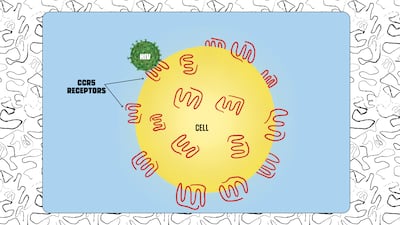
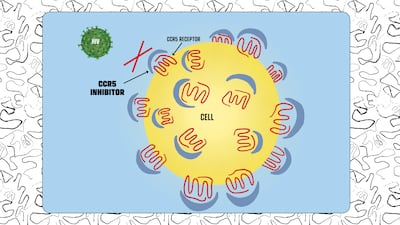
But how? Some seek new ways to attack HIV directly. Others seek new ways to make the host—the human—a less hospitable place for the virus. Sacha, of OHSU, is among those who wants to alter the host. For a decade, he’s focused on a protein in humans and monkeys called chemokine receptor type 5. Like a key into a keyhole, he says, HIV latches into CCR5 and lets itself in.
Sacha, in his office, plopped down a 2017 copy of Newsweek. It was an article about the “Berlin Patient”—a man functionally cured of HIV after getting a bone marrow transplant that inadvertently altered his CCR5 proteins such that the virus could no longer enter. The story described how Sacha’s team had replicated elements of the transplant in macaque monkeys—opening a path to better understand the cure.
Several months later, Sacha says, he heard from Dr. Scott Kelly, a CytoDyn board member who’d read the Newsweek piece. Kelly told Sacha of CytoDyn’s compound—now known as leronlimab—which didn’t alter CCR5 as such but bound with it instead.
“Gum in the lock,” Sacha says. He was intrigued. There was already a CCR5 inhibitor on the market, Pfizer’s maraviroc, but it had limitations leronlimab might transcend. He tested it in the lab. He tested it in an animal. He stopped by the office in Vancouver and met Pourhassan. “He seemed like a nice enough guy.”
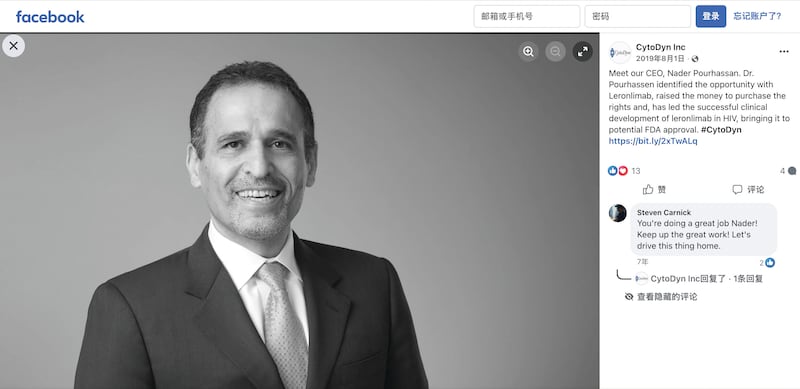
Inside the firm, some had grown disenchanted. Trauger had left years prior, disgusted, he says, with Pourhassan’s tendency to overhype leronlimab’s go-to-market timeline. “He was destined to get in trouble,” Trauger says.
CytoDyn’s longtime chairman of the board, Anthony Caracciolo, resigned in 2018. He tells WW that Pourhassan kept chasing new uses for leronlimab—as the company has often noted, its target CCR5 receptor has tie-ins with cancer, inflammatory diseases and more—when scarce resources should have all been going to clinical trials for its most promising indication: HIV.
Still, in 2019, CytoDyn described HIV as the major play. The prior year, it had concluded a phase-3 leronlimab trial for patients who had tried first-line treatments and found them unsuitable. The company’s plan was to submit an application to the U.S. Food and Drug Administration to bring leronlimab to market for this limited group. This would be a big deal in itself, but, the company emphasized, it might also just be the beginning, not just for use in treating HIV but other maladies. “We see an opportunity,” one Securities and Exchange Commission filing said, “to build a broad pipeline of indications through label expansion.”
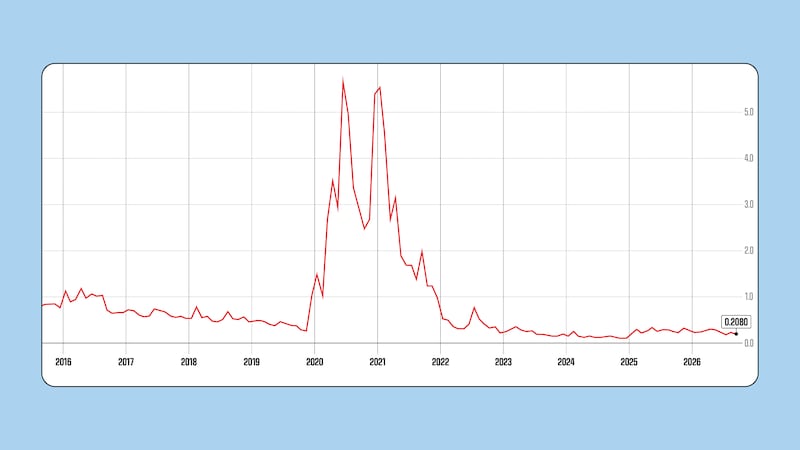
It was a lot of hope for a one-product firm hemorrhaging $50 million a year and counting—losses it was replacing, in part, by rapidly minting new shares, of which the number in circulation doubled between 2018 and 2019.
But Pourhassan projected optimism, keeping up penny stock media appearances, talking up the big FDA application that was on the brink of getting filed. Summer 2019 passed. Then fall.
For Pourhassan’s accusers, the basic crime went like this: Increasingly desperate for money, and eager to cash in shares that would vest at key milestones, he and other company leaders strung investors along by dangling the promise that leronlimab was well on its way to FDA approval.
When the heat grew intolerable, the government said, Pourhassan rushed what he knew to be an incomplete leronlimab application to the FDA and announced it as “completed,” causing the share price to artificially spike. Then, the allegation goes, he sold millions of dollars in stock before the truth—that the application was not complete and leronlimab would not in fact be accepted to go to market—came out.
Early 2020 was, of course, a hectic time. As the coronavirus pandemic bloomed, Pourhassan led the company in a rapid pivot, and soon it was frantically testing leronlimab on COVID-19 patients across the nation. Emails and other records show Sacha in the mix, offering edits to press releases and discrete data analysis. “WOW, God is good,” Pourhassan said in a message sent to Sacha and others after a COVID-19 patient tweeted that leronlimab had saved her life.
But Pourhassan had other things on his mind too. On April 14, 2020, he emailed the Maryland firm that was managing CytoDyn’s clinical trials with instructions to focus solely on the FDA application for HIV. The delays, he said, were leaving investors “very frustrated with me and CytoDyn.” He said to file the application within days, “even if we are short in whatever portion of whatever it is that we are short.” The contractor did as told. The news was announced. Stock soared.
Its return to earth took time. Regulators informed CytoDyn privately that the application had “numerous omissions and inadequacies.” STAT News and other outlets were asking questions, unimpressed with the extraordinary results Pourhassan was now reporting in leronlimab’s COVID-19 trials.
In March 2021, CytoDyn investors filed suit. By May, regulators had rebuked the company publicly. By July, the company announced it was under federal investigation. The board fired Pourhassan in early 2022. He was indicted by year’s end.
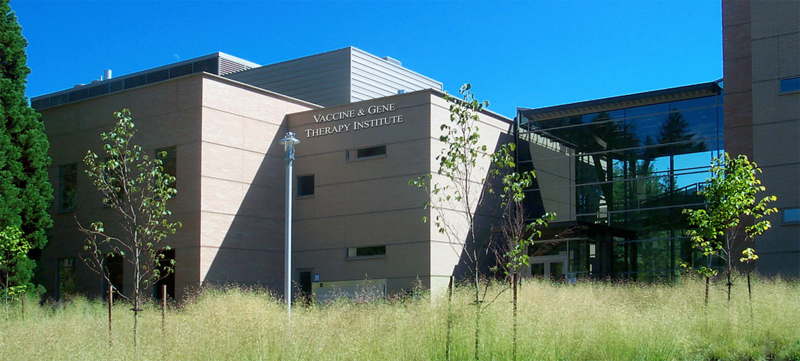
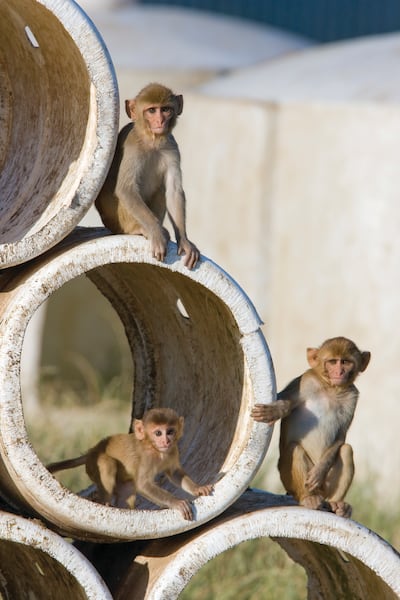
The other day, Sacha greeted a WW reporter in the atrium of OHSU’s Vaccine and Gene Therapy Institute, home to many of the microbiology labs abutting the 154-acre primate center in Hillsboro. Farther into the gated compound live thousands of macaques. They swing from hoops, cling to their mothers, chomp carrots from their confines in big corrals. Some are in smaller cages inside, shielded from natural light. Most were born here and will never leave, destined for experiments that will likely end in their death.
It’s a quiet place. A garden and a volleyball field stand to boost staff morale—which has been dented in recent months as OHSU navigates mounting calls to shutter the institution. Deer lazed on the grass. As he navigated to his office, Sacha asked if I’d seen the fawn.
During the CytoDyn troubles, and since, Sacha’s investigations carried on. His research has spanned wide. He’s proud of his work on Anktiva, which received FDA approval to treat bladder cancer; on a treatment for the West Nile virus, which proceeds with clinical trials.
As for HIV, he remains focused on the CCR5 receptor—the lock he must gum up.
Last year, he got an $8.4 million grant from the National Institutes of Health to study people cured of the virus when a transplant removed the gene. When the Nature Microbiology study involving leronlimab was published last month, he said in the accompanying OHSU article, “The really exciting part is that it could go to clinical trials immediately to eliminate HIV infection in newborns.”
Whether this will actually happen is another question. Critics doubt results of experiments on monkeys, which get a different version of the HIV virus, will actually be translatable to humans. But even if one dismisses this concern, as Sacha and others do, HIV appears to be on the back burner these days at CytoDyn, whose marketing now emphasizes leronlimab’s potential against cancer. (The company did not respond to repeated requests for comment.) Sacha says CytoDyn still provides him with leronlimab for HIV research, but he gets the impression the company thinks the money in HIV isn’t there—or that it’s lost the FDA’s trust on this score.
Sacha distances himself from CytoDyn. Pourhassan and other company officials have appeared as co-authors with him on at least six research papers. But Sacha says their contributions were limited to providing him the compound and talking about its uses. He says he doesn’t attend company calls and no longer receives stock.
In spring 2020, an SEC filing shows, Sacha possessed the right to buy more than 200,000 shares in the company at a certain price—the sort of asset that can be extremely valuable when the price of a share surges on the open market, or worthless if it doesn’t.
Sacha says he ultimately derived little worth from these assets. Legal filings show he exercised 50,000 stock warrants between April and July 2020; he says he, like everyone, was excited about the submitted application. “I thought, ‘Oh, it’s clearly going to get approved, right? It’s clearly going to go up even more in value.’ And then it didn’t.”
He says, with taxes factored in, he actually lost money on that transaction after share prices plummeted. But on net, he guesses he’s come out ahead on CytoDyn equity. “I have no idea,” he says, when asked for specifics. He laughs. “Certainly not enough that would make me want to fudge numbers on data to endanger my career—which is how I make a living.”
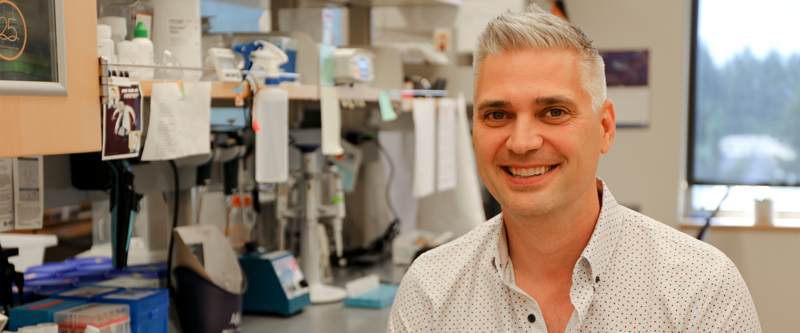
All of us see the world askew. “We love our own ideas like we love our children,” says Lederman, the Case Western researcher. Indeed, for animal rights activists, the CytoDyn saga stands out in part because they already see monkey research as a moral stain and the scientists who do it as compromised.
Yet there are certain conflicts—equity, gifts of a certain value—that the federal government requires be disclosed. The point of such disclosure, says Inmaculada de Melo-Martin, a Cornell University scholar on the matter, is to signal for the rest of us to pay extra attention. Regarding the well-being of the patients, the quality of the research. Having a conflict, she says, is not the same as doing something wrong. Rather, it is a risk that must be managed.
Sacha is not the only OHSU researcher who, as the university puts it, has had a “significant financial interest” in CytoDyn while researching a drug that would serve that interest. Another scientist, Scott Hansen, got stock options too for his work with the firm.
But when OHSU representatives say they’re unbothered by this, it reflects the fact that the university’s leaders see the basic structure as perfectly normal.
Says Kara Drolet, who heads the medical center’s research integrity division, “If it’s industry standard” to make stocks “part of that compensation package, then for us to say that’s not allowed at OHSU would seem fairly punitive.”
To be sure, not everyone in science does it. Lederman says he has advised numerous companies and takes pay for his labors, but would not take equity. “I prize my ability to be unbiased when offering advice,” he says.
Yet it’s undeniable that, where fields such as engineering are downright puritanical about conflicts of interest, academia has long set itself to a different standard. It defends industry partnerships as engines of progress and cites the nature of basic research—full of peer reviews and double-blind studies and regulatory guardrails—as ballasts in the objective pursuit of truth.
There’s also the matter of self-regard. Josephine Johnston, a professor at the University of Otago in New Zealand who studies academic conflicts of interest, recalls giving talks to clinicians and biomedical researchers about research showing anyone could be subject to subconscious bias: “Then they’re going, ‘Yeah, but I’m not.’”
Believing in yourself, however, doesn’t address the optics problem. When a judge recuses herself from a case, it reflects the legal adage that justice must not only be done but be seen to be done. The conflicts from science getting in bed with industry risk not just eroding the quality of research, but also the perceived legitimacy of a field.
Asked about this peril, Sacha pauses for a moment to reflect.
“Typically, I’d say people should have faith in institutions,” he says, “but I guess they don’t anymore.” After further reflection, he settles on one thing he knows for sure. “With science,” he says, “people can repeat what you’ve done.”