Skip to main content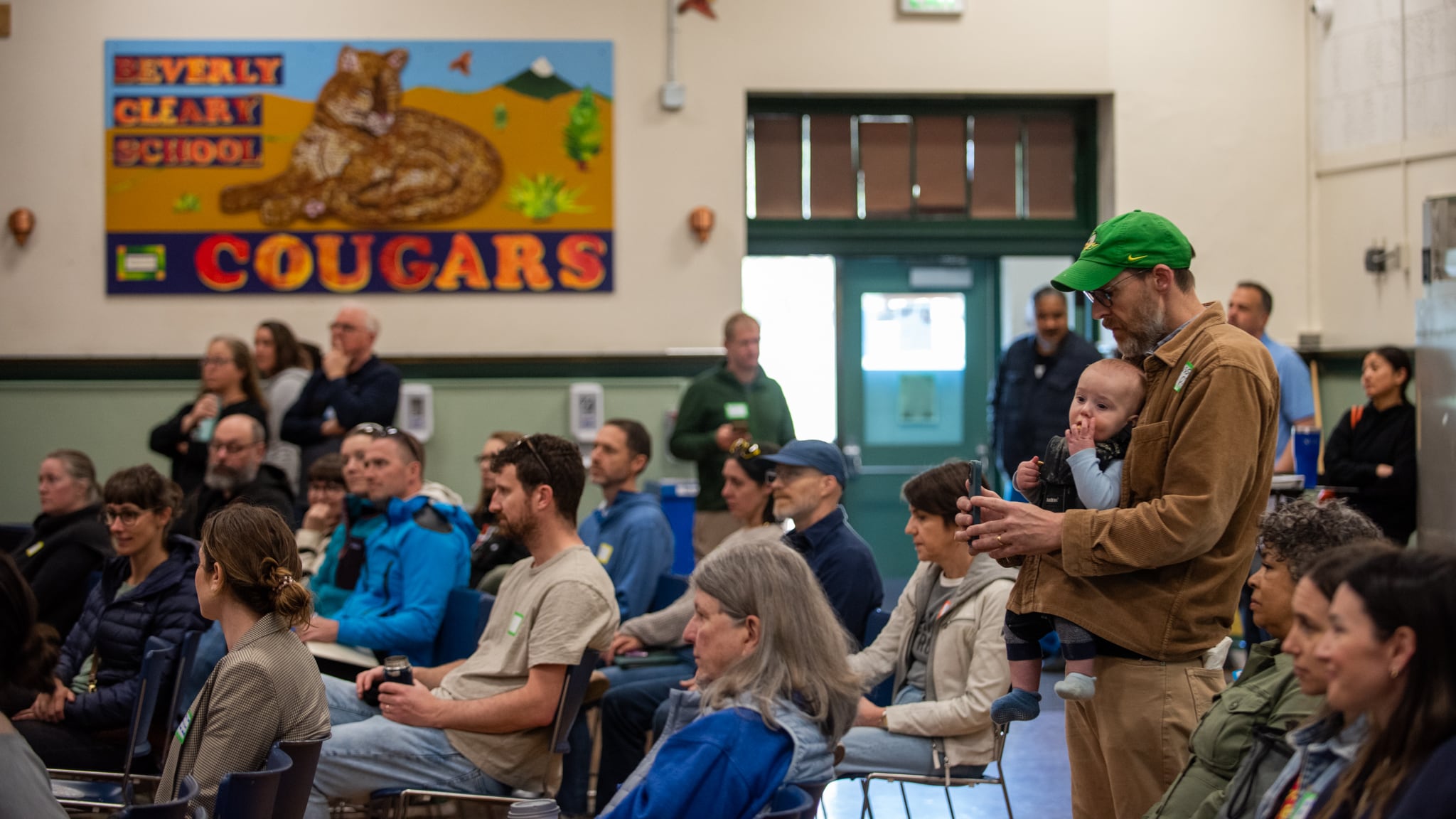
As Portland Public Schools undertakes several seismic retrofit projects across its elementary, middle and K–8 schools, it has promised that it is tackling schools where student safety will significantly improve after upgrades.
An April 29 meeting of the Bond Accountability Committee provides the most explicit insight into the district’s goals for just how safe these buildings will be after multimillion-dollar improvements are completed. (The BAC is a PPS-established volunteer citizens committee that reviews whether bond funds are going toward their assigned purposes.)
After a seismic presentation disclosed some of the latest updates around PPS’s seismic progress following the passage of the 2025 bond—progress WW has previously reported on—committee member Jonathan Trutt asked if the district had a metric of safety it was hoping would stay consistent across all completed projects. Trutt asked if the main mission was just to give students a safe path out of buildings, or if the district was aiming to keep retrofitted buildings safe to occupy immediately after an earthquake.
District officials and contractors replied that PPS’s bare minimum is that it move retrofitted buildings from Risk Category II to Risk Category III. Those risk categories are based on similar classifications from the American Society of Civil Engineers, which puts buildings into four categories. (The classification system is known as the ASCE 7 Risk Categories.)
Under the ASCE 7 categories, temporary structures might be classified in Risk Category I, while essential buildings like hospitals would fall in the IV category (the highest ranking). Risk Category II, where a bulk of PPS school buildings sit, is largely appropriate for standard residential and office buildings. The standard for school buildings under the ASCE 7 is that they should fall under Risk Category III, which is reserved for structures “that represent a substantial hazard to human life in the event of failure,” according to International Building Code. Different risk categories correspond to different safety requirements.
The general intention with most retrofits at PPS is that there are clear and safe paths out in the event of an earthquake, Jennifer Eggers, a structural engineer with Holmes, told CBAC members.
“The intention is to safely egress, not necessarily to be able to reoccupy it right away, but it’s certainly a higher standard than an office building,” she said. “It’s certainly higher, not necessarily operational.”
But as it turns out, some school buildings might end up in Risk Category IV depending on a combination of factors. Eggers said that would mean the buildings are not necessarily fully functional (think all equipment up and running) but that “the intention is that you can house people as emergency shelter after an event because the structure will be occupiable.”
If the district receives grant dollars from Oregon’s Seismic Rehabilitation Grant Program for either of the two schools it submitted, Eggers said the program requires buildings be upgraded to Tier IV. (The grant website notes it might be more flexible on this requirement for schools.) Eggers also mentioned there’s a cost delta between the two upper-risk categories that varies building by building, so the district is evaluating them on a case-by-case basis.
A couple of additional cost details also became more apparent on April 29, though presenters emphasized they were preliminary. Officials informed the BAC that an early cost estimate of retrofit work at Beverly Cleary K–8 came in lower than what they’d expected, at $20 million. IN addition, Eggers shared that while the district was hoping it would receive grant funding (up to $2.5 million per project) for both Beverly Cleary and Ainsworth Elementary School, it is uncommon for districts to be awarded two grants in one cycle.