Skip to main content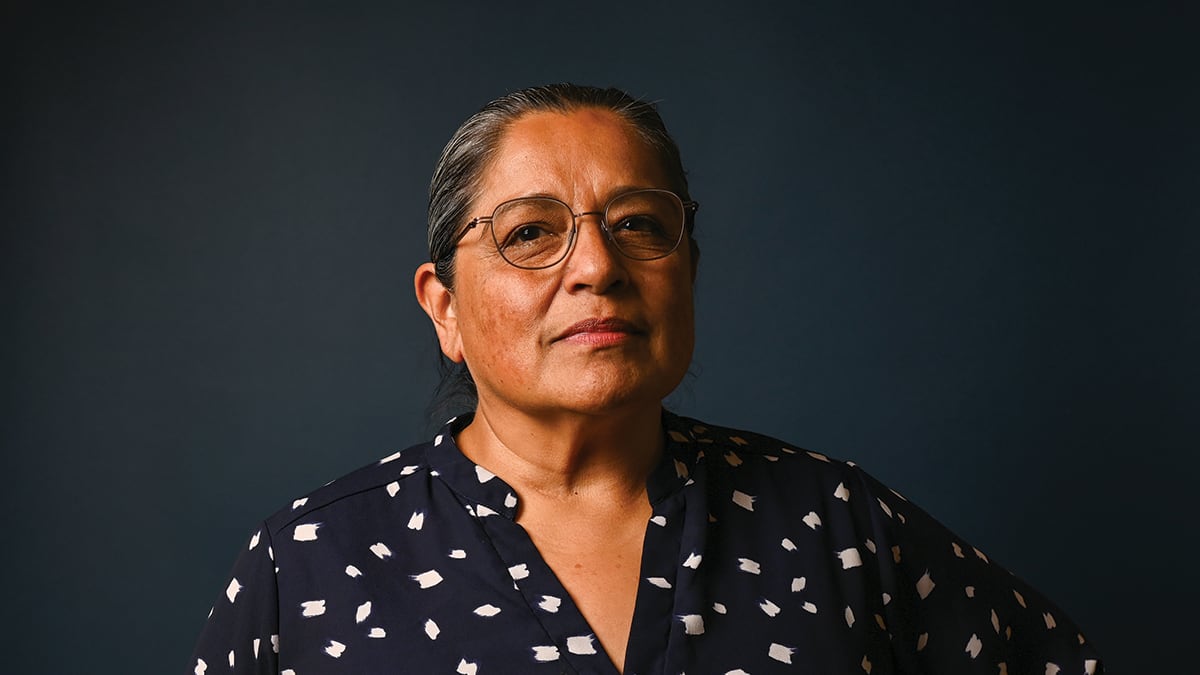
Some of the Oregon Legislature’s top Democrats say they see no reason to tap the Education Stability Fund this year.
At a May 7 school funding forum, state Sen. Kate Lieber (D-Portland) and state Rep. Tawna Sanchez (D-Portland), two of the state’s most powerful lawmakers, cautioned against immediately releasing the fund’s one-time dollars. (Lieber and Sanchez are co-chairs of the Joint Ways and Means Committee, meaning they write the state’s budget.)
School districts, school boards and teachers unions have been among those calling for relief from the fund, which holds about $1 billion in it from lottery funds and is meant for times of economic downturn or budget emergency. Many school districts around Oregon are facing significant budget deficits. That includes the state’s largest district, Portland Public Schools, whose leaders are confronting a $56.3 million deficit in the upcoming fiscal year.
Tapping the fund requires either that specific economic conditions be met (think, for example, revenue forecasts that indicate lower-than-projected general fund numbers) or a declaration of emergency by the governor. In both cases, it is a joint effort: Three-fifths of the Legislature must sign off on any spending.
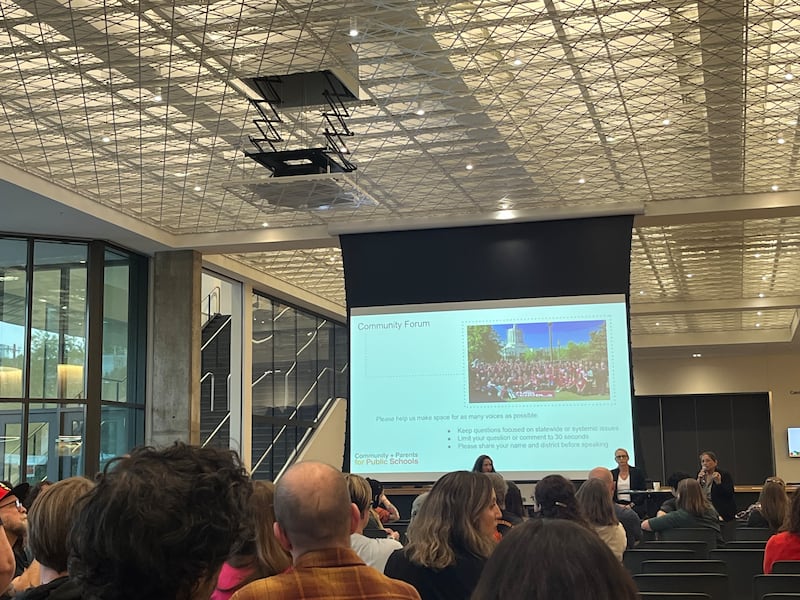
At the funding forum, hosted by education advocacy group Community + Parents for Public Schools, Portland School Board member Rashelle Chase-Miller asked Lieber and Sanchez why they have declined to unleash a pool of money that could alleviate budget crunches for districts across the state.
For Lieber and Sanchez, the answer boiled down to this: They anticipate worse times are on the horizon.
“People are like, it’s raining, it’s raining. It’s actually not raining quite yet. The hurricane has not hit yet,” Sanchez said to jeers from the crowd. (“The house is on fire. We need water!” one audience member shot back.)
Sanchez said she was anticipating massive consequences from H.R. 1, the federal spending cuts package President Donald Trump dubbed “the Big Beautiful Bill.” The state, she said, will be expected to shoulder hundreds of millions of dollars—if not more than $1 billion—in the 2027–29 and 2029–31 bienniums to social services such as healthcare and the Supplemental Nutrition Assistance Program. Sanchez warned of a real possibility that the state legislature would have to look toward the Education Stability Fund in the upcoming bienniums to plug even bigger holes.
Lieber said that in the short session, had the legislature been forced to reduce school funding from the current service level, it might have looked toward the ESF. “But in this last biennia we didn’t make any reductions in school funding,” she said. “So we did not tap that fund.”
Lieber added, “The worry that we have as co-chairs is that that is one-time money. If you use one-time money to pay for ongoing expenses, then you’re still going to have a cliff; the cliff is just going to be potentially bigger.” (WW recently reported on how this dynamic has played out in PPS’s budget deficit.)
Angela Bonilla, the president of the Portland Association of Teachers who has advocated for tapping the ESF, said she understands how using one-time funds to patch ongoing deficits is dicey. But she said she sees the ESF money as a bridge funding mechanism until the long session, where there’s a chance at funding reform.
“Next year the legislature has an opportunity to do the right thing,” Bonilla told WW on Monday. “They can patch the holes of this biennium, and then next year actually commit to doing what they keep saying they will, which is revenue reform to actually sustain the level of public services we need to sustain.”
For its part, PPS has described using the ESF money less as a one-time patch and more as a way to strategically smooth out a budget. Deborah Kafoury, the district’s chief of staff, says PPS has been in conversation about how to use that money to, for instance, strategically lessen its Public Employee Retirement System contributions.
On Thursday night Sanchez emphasized her interest in revenue reform but also underscored that using one-time dollars is a dangerous game. She cited the practice, specifically, of using COVID-19 recovery dollars on routine expenses.
“Now we’re sitting here in a place where we have built up these great, wonderful programs, and now we’re going to have to retract in some kind of way because the current admin wants states to handle all their own stuff,” Sanchez said. “We have got to figure this out going forward.”