Skip to main content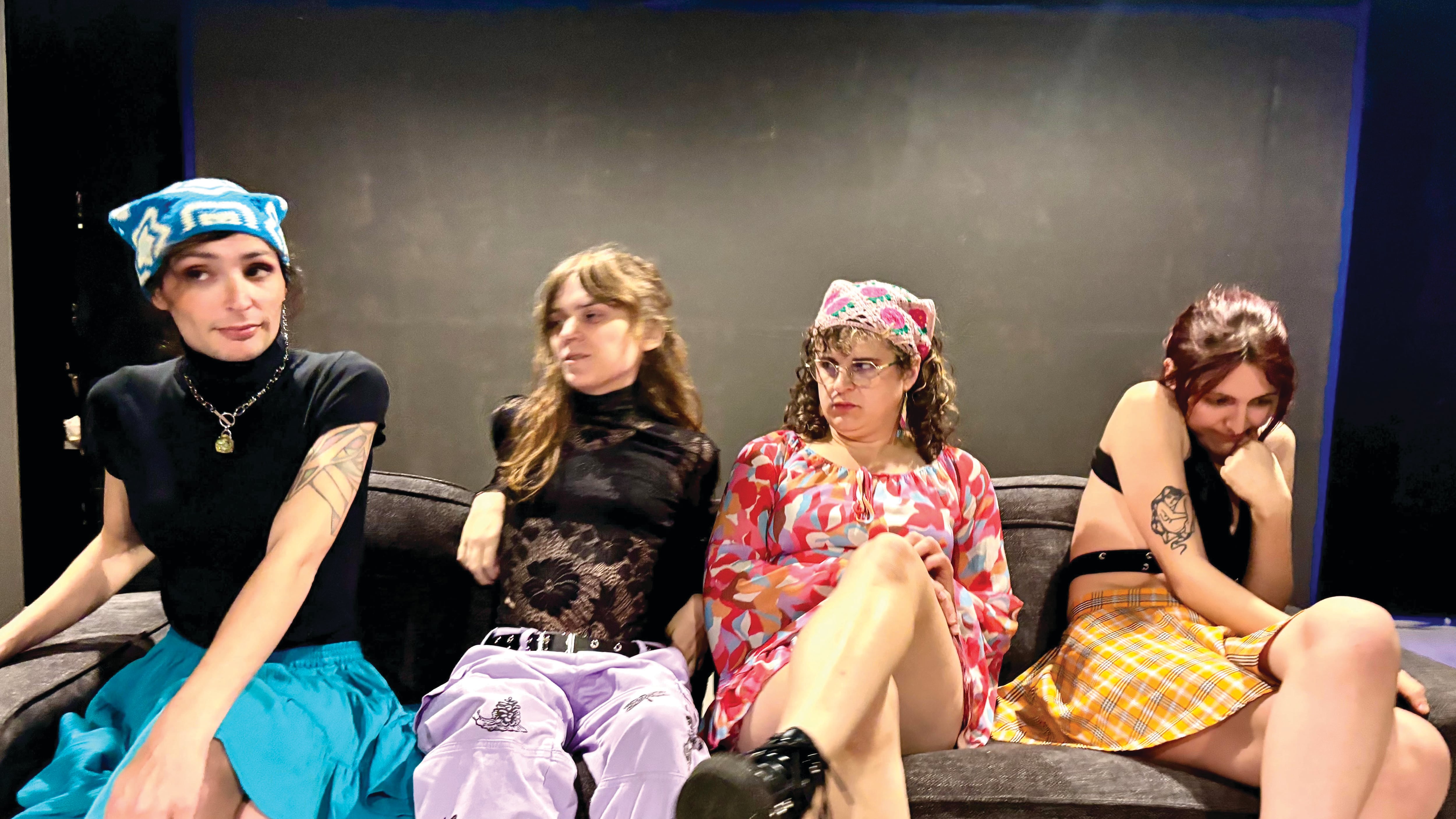
Mikki Gillette’s new play examines a messy social hierarchy.
“This play is kind of based on when I was early in transition,” Gillette tells WW of Trans Femme, premiering at Fuse Theater on Oct. 9. In its way, the drama re-creates Gillette’s experience attending a trans femme support group at the Q Center, a local LGBTQ+ community center.
“The characters are kind of based on people I encountered there and dramas at the time,” Gillette says. “It was nice to be able to look back at it and sort out what was happening—how did I feel about these people who I was meeting?”
Like most of Gillette’s work, Trans Femme is autobiography couched in a time and place so distinct that the setting and period become characters as vital to the narrative as the personal drama—Gillette’s writing shines particularly brightly in prickly interpersonal dialogues.
The events of the play are benign enough. A new member threatens to overtake the group’s long-standing leaders. Another becomes invested in a peer’s potential breakup. But through Gillette’s unique lens, the play becomes a snapshot of the early 2010s trans experience as bickering among the group drags societal prejudices and stigmas around trans identity into its own discourse.
In an era before Laverne Cox, Elliot Page or even the backbiting antics of Caitlyn Jenner—before the conversation around trans identities became zeitgeist—Gillette was navigating the personalities that scaffolded the Q Center, which has since blossomed into an anchor of not just the queer community but also the rapidly gentrifying Mississippi neighborhood.
Gillette remembers most of the time depicted in the play as a blur. “I hadn’t met trans people who I thought were kind of cool and artistic,” she says. “Cool and artistic,” of course, meant people who had studied queer and gender theory, Gillette says. “The character who’s based on me just latched onto gender theory as, like, gospel [laughs]. This explains everything that went wrong in my life.”
Gillette adds: “I have a few plays set then. It was just a really vivid time in my life. My imagination wants to go back to it and find things that happened.”
Outside the theater, Gillette works as a fundraiser for Basic Rights Oregon, the state’s largest LGBTQ+ policy and advocacy group. The throughline between her work on- and offstage, she says, is a “concern for the trans community, and somehow wanting to see how we can make a better world for the young people.” But don’t be mistaken. As much as Gillette’s shows may be infused with political energy, they aren’t necessarily anchored by it.
“I like to describe Trans Femme as one third gender theory symposium, one third grounded relationship drama, one third ‘the claws are out, and these bitches hate each other.’”
The play is directed by Asae Dean, and after seven projects between the two, there seems to be a shared shorthand in their work. Gillette grins while explaining that much of the workshopping took place over brunch. “We’re like an old married couple,” she says. “We understand each other; we know what we’re getting.”
But Trans Femme is something of a return to form for Gillette. She is known for contemporary soapy dramas (Tears and Glitter, Mimetic Desire) and historic reclamations (Riot Queens, American Girl). Though her most recent works were original musicals: Magnetic Electric, directed by Ruby Welch, and The Dark Stuff, which was directed by Dean.
Musical or “straight,” Gillette’s work spans the chasm between the raw, pulpy human drama that compels audiences and the evergreen narratives that tell the real stories of being trans in the U.S.
It might just be this incredible range that keeps Gillette’s work—despite the powerful intentions behind much of it—incredibly accessible. Her audience is hardly exclusive to the queer community. Many of the tribulations her characters face are so plainly relatable, and Trans Femme appears to share that vibe, layering Gillette’s trans experience over the similarly transformative experience of a city experiencing its adolescence, on an avenue gentrified far beyond recognition, in a neighborhood once redlined and segregated, now queerified and celebrated.
SEE IT: Trans Femme at Fuse Theater, 4319 SE Hawthorne Blvd., fusetheatreensemble.com. 7:30 pm Thursday–Saturday, 2 pm Sunday, Oct. 9–24. $25 suggested donation.