Skip to main content
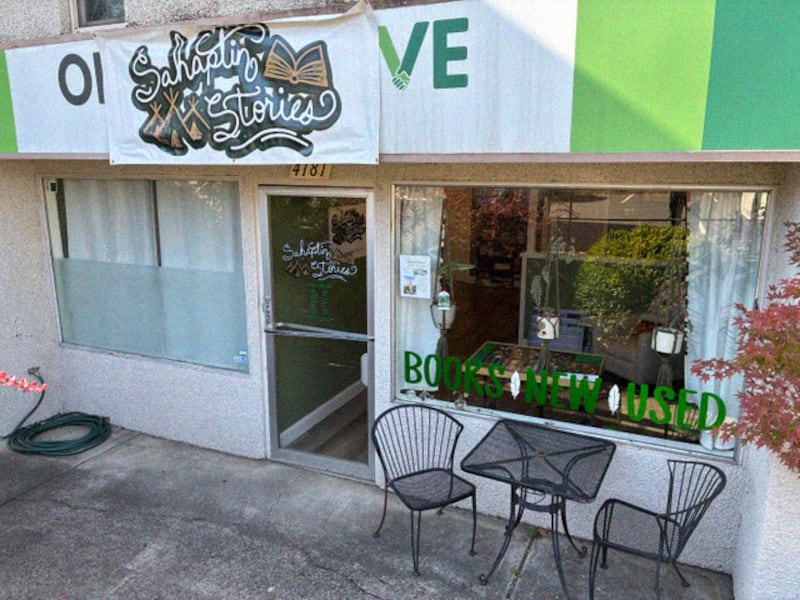
Last month, Casandra Hanson opened Portland’s first Indigenous-owned bookstore, Sahaptin Stories, on Southeast Division Street. A member of the Confederated Tribes of the Warm Springs in north-central Oregon, Hanson lives in Colton, Oregon—about halfway between Portland and Warm Springs—but she set up her bookstore in the city to reach as many people as possible. Its shelves are devoted to books by and about Indigenous peoples and perspectives.
“My goal is to outgrow this space within a year,” Hanson said with a smile. “Last year, when I operated as a pop-up shop, I’d sell out of books every place I went. People want to read these kinds of books, but it can be hard to find them.”
According to community-based organizations like the Native American Youth and Family Center, around 90,000 Indigenous people live in the Portland metropolitan area, giving the city one of the largest urban Native American populations in the U.S.
While Portland’s Indigenous community has built a powerful, interconnected network of culturally grounded spaces, including the Native American Student and Community Center at Portland State University and the Center for Native Arts + Cultures, it can still be difficult to find new and used books written by Indigenous authors around town.
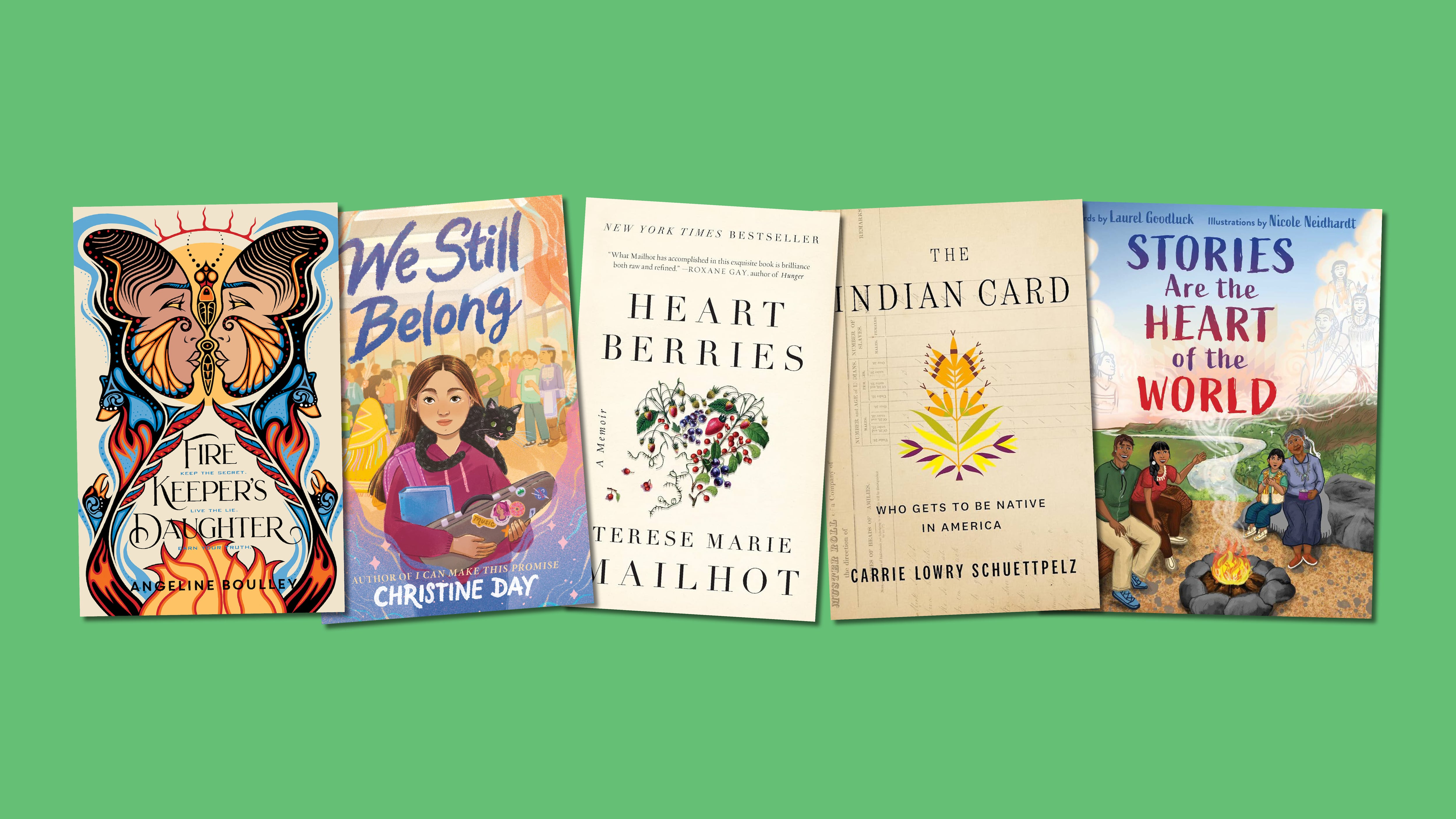
Below, Hanson recommends five books from her shelves at Sahaptin Stories, including a memoir, an investigative nonfiction book, and a YA thriller.
Firekeeper’s Daughter by Angeline Boulley
A debut novel from Michigan-based author Angeline Boulley, a member of the Sault Ste. Marie Tribe of Chippewa Indians, Firekeeper’s Daughter (Macmillan, 2021) follows 18-year-old Daunis Fontaine, an unenrolled Ojibwe teen living in Michigan’s Upper Peninsula who puts her college plans on hold after witnessing a violent murder. Using her background in traditional medicine, Fontaine agrees to go undercover as a confidential informant for the FBI to investigate corruption in her community.
“This book does a great job bringing awareness to Missing and Murdered Indigenous Women, in a way that’s not in your face,” Hanson said. “The other two books in Boulley’s series [Warrior Girl Unearthed (2023) and Sisters in the Wind (2025)] touch on heavy topics too, including the Repatriation Act and the Indian Child Welfare Act. But because it’s fiction, it’s written in a way people can relate to while still giving people enough information to understand the issue.”
We Still Belong by Christine Day
Written by Christine Day, a member of the Upper Skagit Indian Tribe in Washington state, We Still Belong (Heartdrum, 2023) follows 12-year-old Wesley Wilder over the course of a single eventful Indigenous Peoples’ Day. As Wilder navigates middle-school social dynamics and family complications, she also grapples with strict tribal enrollment laws that prevent her from enrolling in the Upper Skagit Nation, leaving her feeling like she’s not “Native enough.”
“For Indigenous children who go to school and juggle real-life problems, We Still Belong helps them understand that those problems are okay to have—that they still belong to their family and community, even if they live far away,” Hanson said. “I have daughters, so this book hits right at home.”
Heart Berries by Therese Marie Milhot
Detailing her struggles with PTSD and bipolar II disorder, author Terese Marie Mailhot, a First Nations Canadian from Seabird Island, traces her experience grieving her activist mother, reconciling with her abusive father, and finding her voice as a writer.
“This is, by far, my favorite memoir,” Hanson said of Heart Berries (Counterpoint Press, 2018). “Milhot goes through a lot of trials and tribulations, between mental health and alcohol abuse. By writing about her struggles, she helps people see that they’re not alone, that when we fail, we pick ourselves up, and we persevere.”
The Indian Card: Who Gets to Be Native in America by Carrie Lowry Schuettpelz
Blending investigative reporting, historical research and memoir, author Carrie Lowry Schuettpelz, a member of the Lumbee Tribe of North Carolina, examines how blood quantum requirements and federal tribal rolls originated as tools of colonization and government intrusion rather than traditional Indigenous practices.
“It’s the best book I’ve read all year,” Hanson said of The Indian Card (Birchbark Books, 2024). “It’s a bit scholarly, but Schuettpelz does a really good job unpacking how descendancy, lineage and affiliation became such politicized issues. It’s very informative, digestible, and really helpful to read about this issue from an Indigenous perspective.”
Stories Are the Heart of the World by Laurel Goodluck
Laurel Goodluck, a member of the Mandan, Hidatsa, and Arikara Nation and an Alaska Native Citizen of the Tsimshian Tribe, collaborates here with illustrator Nicole Neidhardt, a Diné (Navajo) of Kiiyaa’áanni clan. Stories Are the Heart of the World (Simon & Schuster Books for Young Readers, 2026) walks readers through the milestones of a Native child’s life, from birth and childhood to young adulthood, drawing on tribal Nations’ traditions including those of the Mandan-Hidatsa and Navajo/Diné.
“Stories perfectly represents how I want to run my bookstore—the community I want to bring in here, and how I want to uplift and share the stories of these authors,” Hanson said.
GO: Sahaptin Stories, 4181 SE Division St., sahaptinstories.com. 10 am–7 pm Monday, Tuesday and Friday; noon–7 pm Wednesday; noon–5 pm Thursday and Sunday; 11 am–7 pm Saturday.