Skip to main content
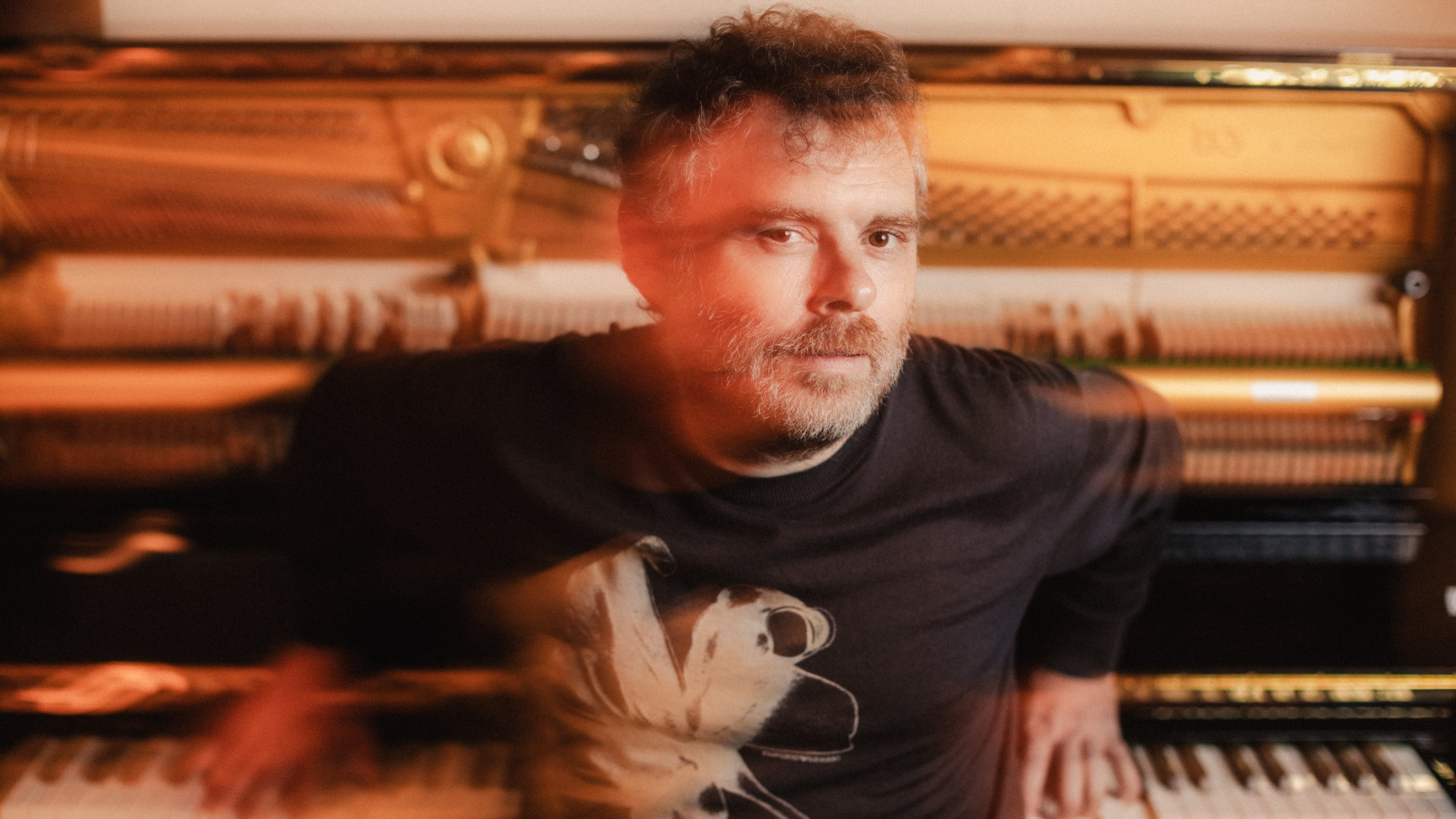
In his collaborations with the Oregon Symphony, Gabriel Kahane has never shied away from confronting the realities of life in the 21st century. The 45-year-old’s first commission for the symphony, emergency shelter intake form, was a 50-minute oratorio concerning the homelessness crisis in Portland, and it was so successful it led to Kahane assuming the role of creative chair for the symphony in 2019. “They don’t censor the artists they commission, which is great,” he says.
Every Love Song is a Protest, Kahane’s newest work for the symphony, is less political than focused on “the spiritual and interpersonal work that undergirds how we do politics.” Inspired by the nonviolent credos of Mahatma Gandhi, Martin Luther King, Jr. and the early-20th-century philosopher Richard Gregg, Every Love Song is a Protest advocates for love and nonviolence as relevant and powerful forces that can be used to help heal the world.
“King and Gandhi are both clear that it’s not just physical nonviolence but spiritual and verbal nonviolence that we’re asked to steer clear of,” Kahane says. “And I think that in contemporary society, we’re really bad at verbal and spiritual nonviolence.”
Every Love Song is a Protest features seven new songs by Kahane—plus one, “To Be American,” recycled from his 2022 album Magnificent Bird. Kahane is at least as well-known for his orchestral works as for his singer-songwriter records, which he’s been releasing since 2005, and Every Love Song is a Protest straddles both worlds.
“In the past, when I’ve done song cycles with an orchestra, I’ve always been mostly playing piano and singing,” Kahane says. “I decided for this piece to omit any instrument other than the orchestra, except in the very last song [in which I play] the guitar.”
Every Love Song is a Protest will be performed alongside two other works by American composers. One is pioneering African American composer William Grant Still’s “Autochthonous” Symphony No. 4, which Still himself described as a tribute to “the warmth and the spiritual side of the American people.” The other is American classical titan Aaron Copland’s Lincoln Portrait, which weaves quotes from the 16th president into its undulating sheets of woodwind and brass; former congressman Earl Blumenauer will perform the speaking parts at these shows.
“It’s a very coherent program,” Kahane says. “All of these pieces are preoccupied with moments of real tension in American life, and also looking for the ray of light during moments of darkness.”
Every Love Song is a Protest will be Kahane’s final work for the Oregon Symphony in the role of creative chair; his contract wrapped up in the summer of this year. Yet the life of the piece is far from over. In February, he’ll perform it at New York City’s Carnegie Hall, widely regarded as the most prestigious music venue in the United States.
“It makes me really happy that an institution like the Oregon Symphony can commission works that go on to have lives beyond the city,” Kahane says “Commitment to new music is really crucial, because the ripple effect goes far beyond one institution.”
GO: Kahane, Still & Copland at the Arlene Schnitzer Concert Hall, 1037 SW Broadway, 503-248-4335, orsymphony.org/productions/2627/kahane-still-and-copland. 7:30 pm Saturday, Oct. 24 and 2 pm Sunday, Oct. 25. $37–$139.