Skip to main content
In the November 2024 election, nine candidates seeking city office hired a canvassing group called the Portland Clean Air Fund to solicit campaign contributions that could then be matched by up to a 9-to-1 ratio by the city’s Small Donor Elections program.
The canvassing group received criticism that it was stretching the boundaries of the public campaign financing program and helping candidates with little voter-level support unlock taxpayer dollars for campaigning. Some candidates who had hired PCAF broke ties after taking issue with its canvassing techniques—including now-Mayor Keith Wilson, who at the time was running for office. Wilson described his agreement with PCAF as “brief, disappointing” and “[lacking] the candor we expect from any individual or organization we engage with in our campaign.”
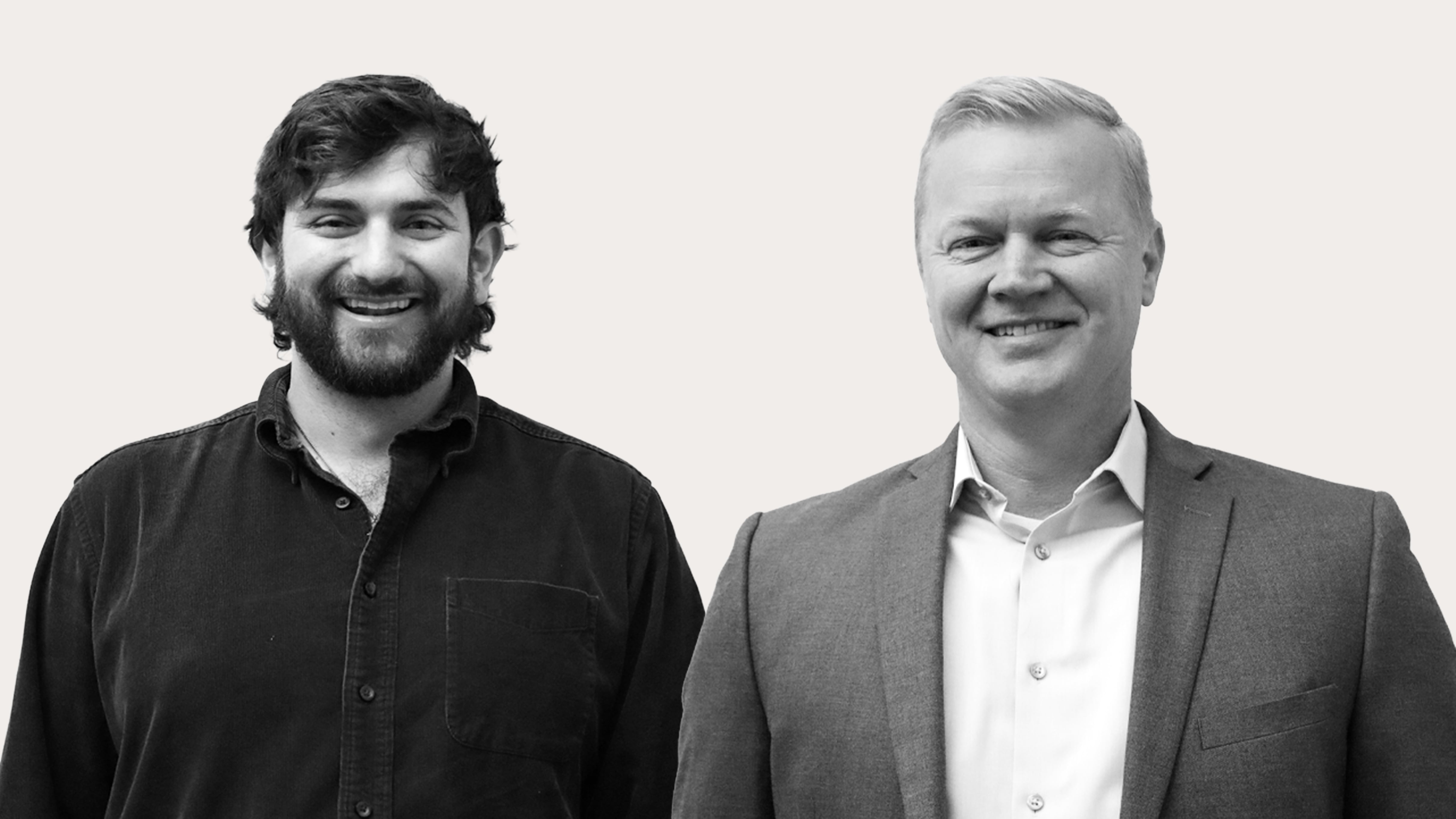
PCAF came back for the November 2026 election. Campaign finance records show that two candidates for City Council in District 4 have paid PCAF for canvassing: Eli Arnold, a favorite of business interests and the Portland Police Association, and Jeremy Beausoleil Smith, whose policy positions closely align with those of the council’s progressive “Peacock” caucus.
Beausoleil Smith has paid PCAF $28,000. Arnold has paid the group $17,000 so far.
Northeast Portland resident Jacob Apenes tells WW he was canvassed in late September at his front door. He said the canvasser introduced the Portland Clean Air Fund and described how “Portland has some of the worst diesel pollution in the country.” The canvasser handed Apenes a flyer on diesel pollution, Apenes recalls. “And then he said, ‘I’m here to collect donations for Portland Clean Air to help fight diesel pollution. If you give a donation, it’ll be matched from the city, 10 to 1.’”
Apenes, aware of only one program in the city that matched small donations, asked how that was possible. At that point, Apenes recalls, the canvasser shared that he was collecting contributions for Arnold, and that if Apenes hadn’t interrupted his pitch, he would have described how the “money was for a council candidate, and that’s how it gets matched, and then money would come to us to fight diesel pollution.”
Julia Moore was canvassed at a farmers market on the South Waterfront in August. She says the canvasser told her that if she gave, “then your donation will go to a candidate that will help make sure that Portland has clean air.” Moore says now: “I was like, oh, this is odd.”
PCAF board chair Seth Woolley wrote in an email that it’s “rather normal politics” for a canvasser to come to a door and “talk about issues first.”
Beausoleil Smith told WW in a phone call that he knew of the concerns around PCAF during the 2024 election, but before employing the group this fall he says he voiced clear expectations about what it could and could not do when canvassing on his behalf. Canvassers had to have his campaign literature on hand, he says, and they had to make it clear that contributions would go to his campaign. He also requested that they canvas only in District 4. PCAF canvassers collected 346 of his 1,068 total contributions.
“I think for young candidates, for BIPOC candidates, for anyone who doesn’t come from money or has friends with deep pockets, this does make it more competitive for more people,” Beausoleil Smith says. “It’s one of the tools in our tool belt, and it’s helped me a lot.” As a climate-forward candidate, he says, “I very much align with [PCAF’s] vision and what they want out of the world.”
But Beausoleil Smith says he didn’t know PCAF canvassers were also fundraising for Arnold. Had he known, he said, it “would’ve given us a lot to think about” before hiring the group. “I would have preferred to have been consulted,” Beausoleil Smith says.
Beausoleil Smith says he ended his relationship with PCAF after reaching 750 contributions eligible for matching through the city program, allowing him to unlock up to $200,000 in matching funds.
PCAF says Arnold’s total bill for canvassing is $8,355 and the remaining $8,863 was for literature drop-off on voters’ doorsteps. PCAF collected 79 contributions for him—about 5% of his total.
“They felt there was some alignment, particularly with the fareless transit stuff,” Arnold says of his conversation with the group. “There was alignment on environmental issues.” Arnold says he was aware of the concerns about PCAF from 2024 but knew it would only make up a small portion of his overall fundraising, unlike some candidates in 2024 who, but for PCAF’s canvassing, would likely not have qualified for any taxpayer funds through Small Donor Elections.
As it did two years ago, PCAF defends its work.
“Candidates we work with were evaluated by a meeting of the board and all admin staff that had equal vote,” Woolley said in an email. He added that PCAF’s goal is to have two “progressive” councilors in District 4—Councilor Mitch Green and Bueasoleil Smith—and one “moderate,” Arnold, who would replace centrist Councilor Eric Zimmerman. “Unlike many if not most police officers, Eli lives in the city and he too is concerned about our air quality, climate change, and the CEI hub because public safety is a holistic thing.”
In 2024, critics of PCAFs’ canvassing, including environmental lawyer Nick Caleb, said a nonprofit shouldn’t be allowed to profit from the city’s program, calling it a “foreseeable moral hazard.” At the time, Caleb said: “The public financing system is a treasure for the community that we all have a responsibility to steward. If the community loses confidence in the system, we all lose.” Caleb says he stands by what he said in 2024 and is “disappointed that the Elections Division has not closed this loophole.”