Skip to main content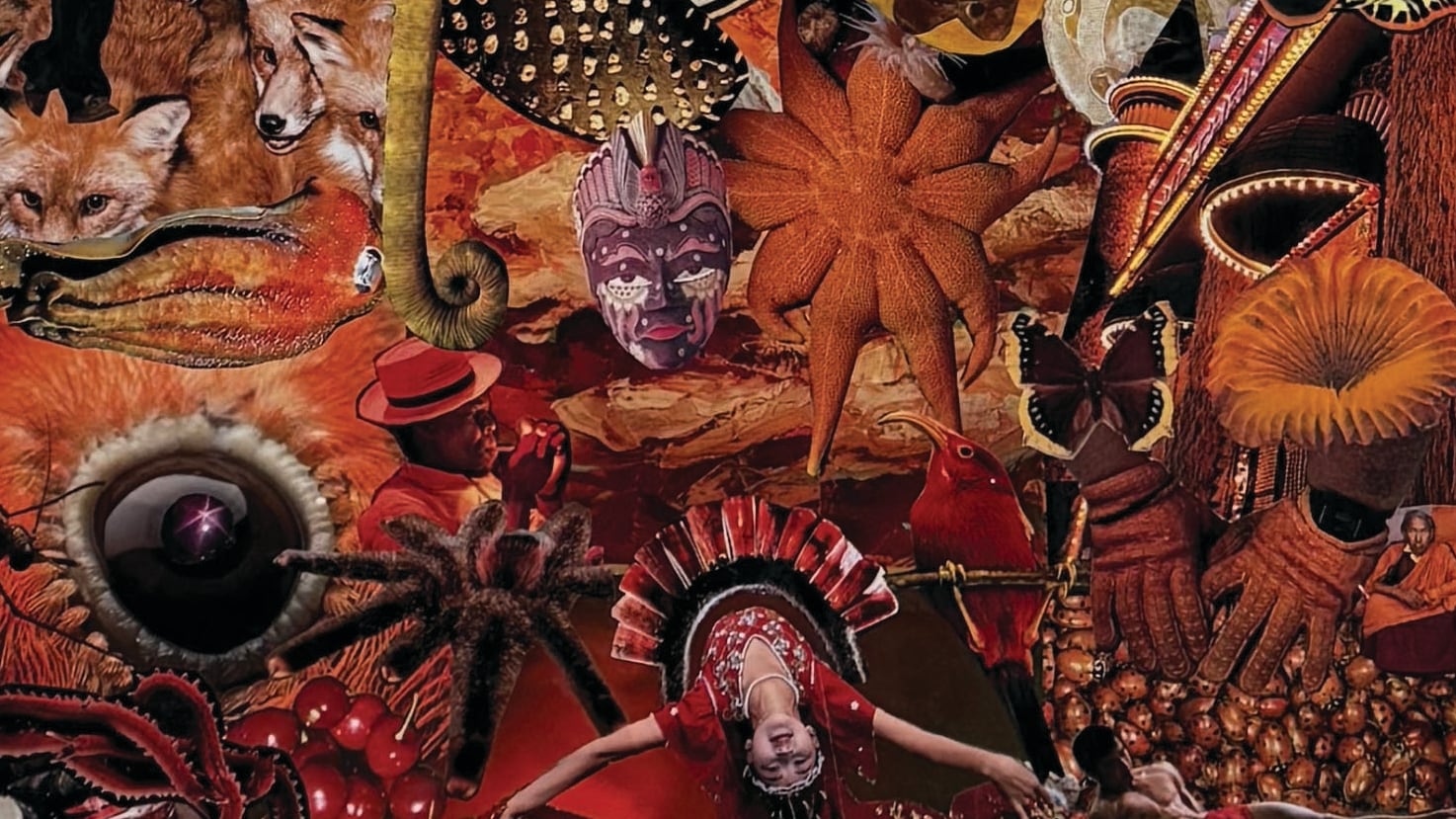
The term outsider art is contentious because it names the divide between well-connected, formally educated makers and their other. The term stems from art brut—French for “raw art”—which was originally a label for art made by children and patients in psychiatric hospitals. Some favor the somewhat less fraught term folk art, but the former is most common. By whatever name, outsider art does have a certain vernacular approachability, providing a welcome break from familiar and pretentious tropes. Art that, whether by choice or fate, was never expected to sell or advance a career is free to make its own tradition.
In several ways, Otherworlds, the current group show at artist-run gallery Carnation Contemporary, takes outsider art as its subject. The show collects work by members of Gather:Make:Shelter, a local arts organization that provides studio space, supplies, arts workshops and exhibition opportunities to people who are unhoused or living in poverty. Owning the label of other, the artists in this show demonstrate the refreshing possibilities that can emerge from a marginal perspective.
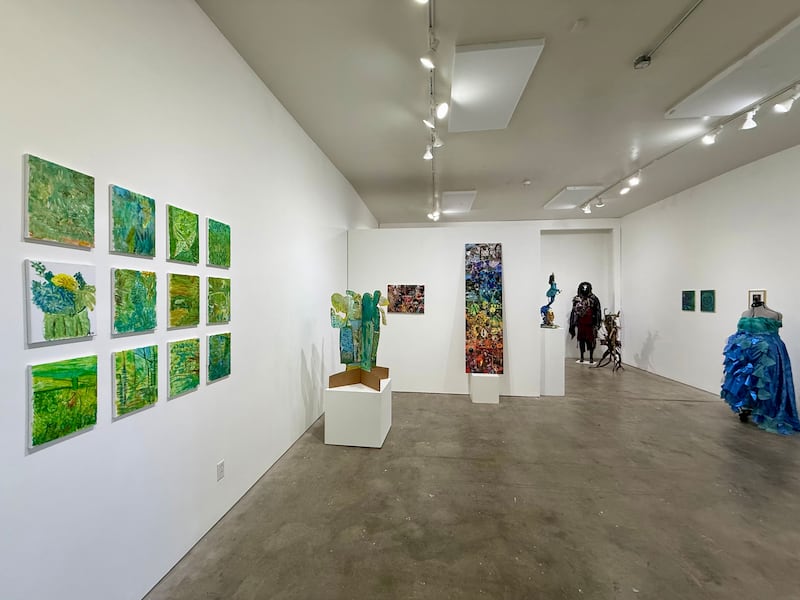
Much of the work in this show also carries aesthetic markers of its makeshift origins. A commanding collage of found images by Zenyatta, a newer GMS member, presides over the small gallery. It’s affixed to a wood panel the size of a door. The collected images blend into a prismatic gradient that, taken with the title Shake Your Chakras, calls to mind the struggle of finding one’s center amid moral and material chaos. At the top, icy white becomes ethereal violet. Then earthy blues and greens seep into warmblooded yellows that give way to terracotta. Hellish red dominates the strip at its base. I thought of the way Hieronymous Bosch contrasted the sacred with the profane.
Carnation is hardly an institution with a capital I, but it does share an address with one. Next door is one of Portland’s most established arts spaces, Oregon Contemporary, and that proximity amplifies the delightful tension of bridging these two distinct art worlds. The opportunity to exhibit outside of GMS’s gallery also further legitimizes the collective, and helps connect its artists to the broader art community.
“Everyone is very eager to be seen, because they’re not seen most of the time,” says Monica Choy, programs and gallery manager for GMS.
Who, as an artist, hasn’t felt the same?
Foregrounding any artist’s biography and circumstances instead of their work is often rightly criticized as an exoticizing practice. Outsider art, a broad category defined first and foremost by identity, is an extreme example. But this show makes a powerfull statement by directly engaging with the genre’s connotations, especially at a time when the art market is hot on outsider work.
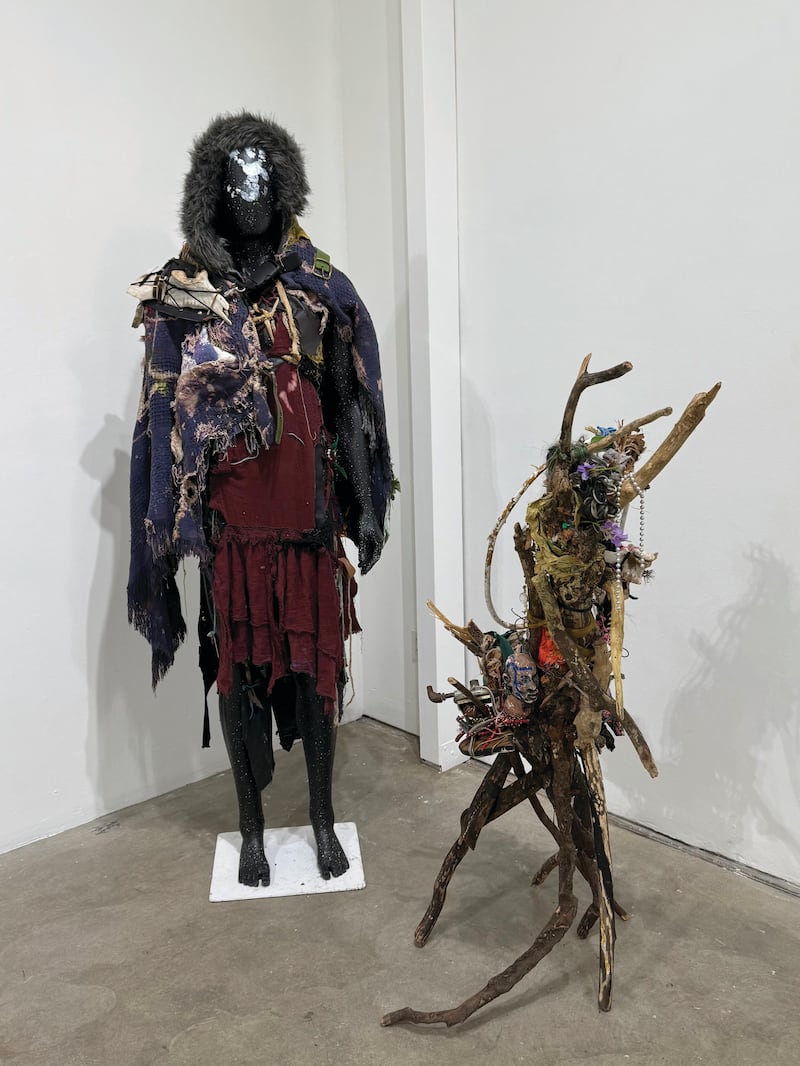
A mixed-media sculpture by Mia Winters leverages the dynamic nicely. It accompanies a costumed mannequin as a kind of pet. (Together, they are titled Fenadi’s Druidic Dress.) The sculpture is a riotous collection of found objects, both natural and man-made debris found on the streets. Plastic Mardi Gras beads, a small clay head, fake flowers, and hair extensions secured by metal wire tangle around an armature of salvaged sticks. The artist’s vision and energy animate the work, this assemblage of refuse, and its rhythm, variety and textures betray a confident command of the materials. It stands chest high and feels like a person.
Much of GMS’s work has to do with elevating and enabling the work of its artists. But the collective also gives members a shot at earning income from their creative work. Zenyatta’s Shake Your Chakras, the biggest work she’s produced, sold at a show in GMS’s Northwest Kearney Street gallery earlier this year—for higher than its listed price—and is on loan for the Carnation show.
Fahd Sadiq, who contributed paintings and a nearly floor-to-ceiling banner covered in interlocking rows of illegible calligraphy to the Carnation show, has also stepped inside the white cube and won. Sadiq used his earnings from the commission of a mural at the Eastside Jewish Commons—a partnership facilitated by GMS—to buy a car. He is now a regular driver for rideshare services, his main source of income.
Regardless of Portland’s steadfast iconoclasm and its undying support of all that is grungy, alternative and local, cultural hegemony seeps in. Institutional paradigms—about who gets to be an artist, about what is good art and what isn’t—become our own. Outsider art has had a resurgence at auction houses and galleries in the past 10 years, but the market is likely to shift with the zeitgeist, as it does. It’s important to keep visiting the other places, and looking in earnest at what’s to be found there.
SEE IT: Otherworlds at Carnation Contemporary, 8371 N Interstate Ave., carnationcontemporary.com. Noon–5 pm Saturday and Sunday, through July 26. Free.