Skip to main content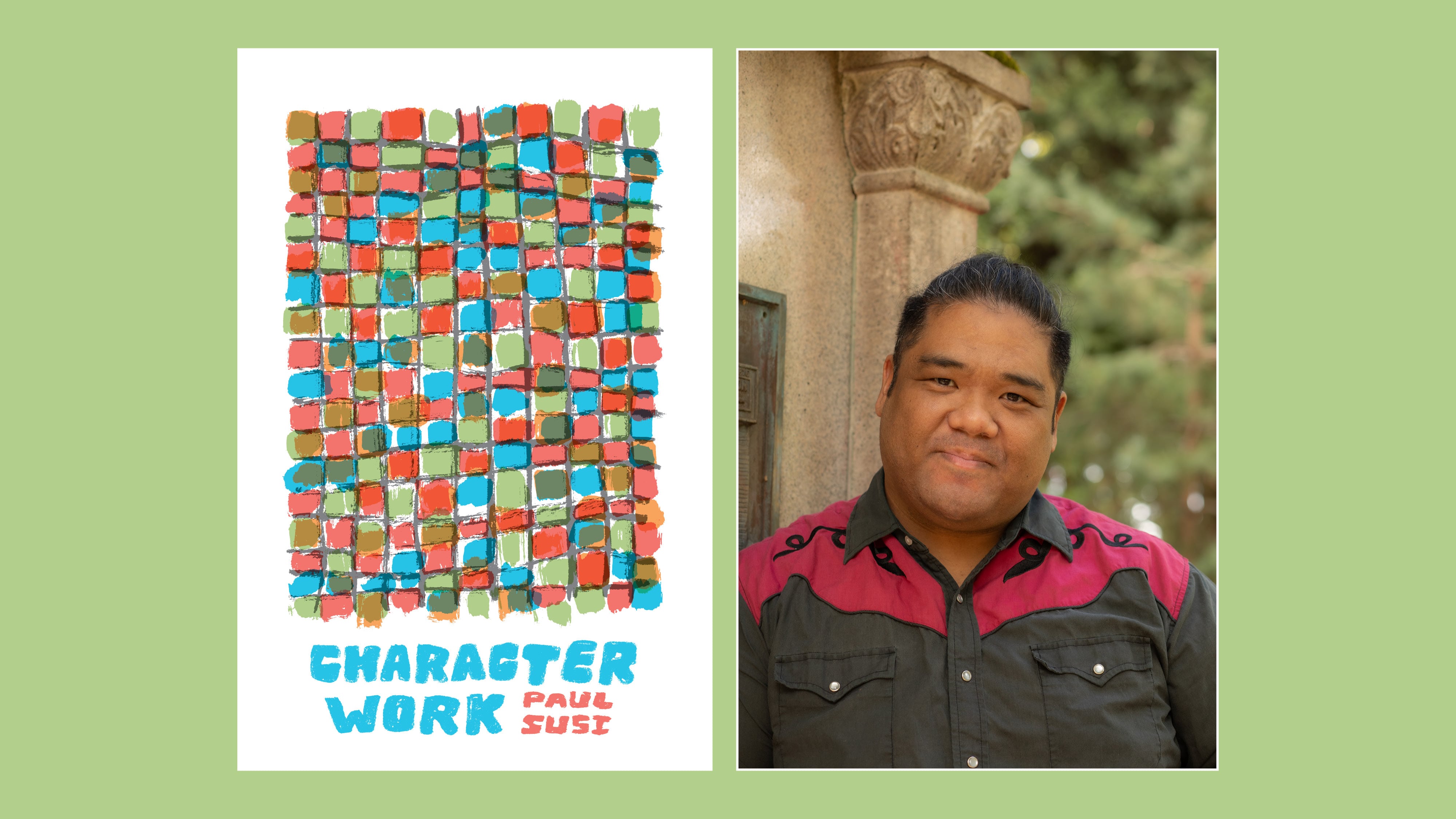
As an actor, activist, social services professional, and writer, Paul Susi is entangled in stories.
Some are Shakespearean tragedies of lust and murder, others are about the many thousands of vulnerable people he’s helped in his work in transitional housing and shelters over the past two decades. One story in particular—that of a Chinese immigrant who was wrongfully convicted of murder and sentenced to death in the late 1880s—helped spur Susi’s first book, Character Work.
Character Work (Perfect Day Publishing, 160 pages, $16) is equal parts memoir and damning manifesto, detailing Susi’s own life and experiences as an actor and social services worker and also taking aim at Portland city leaders past and present for their inability to serve the city’s most vulnerable. Susi will discuss Character Work with National Book Award-winning author Omar El Akkad at Powell’s City of Books on Thursday, Jan. 8.
In 2017, Susi was asked by Metro and the Friends of Lone Fir Cemetery to perform in their annual Tour of Untimely Departures. The role: a man named Chee Gong. That Susi, a child of Filipino immigrants, was being asked to portray a Chinese man, was not lost on him. “To have a career in the performing arts in this time and place, I’ve long accepted that I need to be whomever these predominantly white, paying audiences need me to be,” he writes. Nevertheless, it was an opportunity not simply to explore the life of and tell the story of Chee Gong, but of all the Chinese laborers buried in unmarked graves inside Lone Fir Cemetery’s Block 14 memorial.
His acceptance of this role sets in motion Susi’s quest to learn more about Gong’s brief history through court documents and newspaper stories, dovetailing with his work at PDX ID Assistance, a mutual aid project in which Susi helps individuals find their own identifying documents.
“We’re remembering a version of [Gong] that is fundamentally distorted. All we have is what was reported, and that is sad and powerful,” Susi says. “And when I line that up against the modern difficulties of someone attempting to prove their identity in order for them to achieve justice or healing or housing or restoration or restitution, it feels like we have not moved very far from 1887.”
Through Susi’s eyes, we witness this frustrating milieu—the seemingly arbitrary barriers and obstacles standing in the way of any one person and their sense of security, how different the process is to retrieve a Social Security card or birth certificate or driver’s license in Oregon versus Washington versus Idaho, the ways in which income, or lack thereof, age, gender, criminal record, medical history, and race have all been used to qualify the type of care one receives and how much. Susi argues in the book that the process “is an overwhelming inertia,” the effect of which leads us with little to gain and nothing to show.
The frustration and anger that drove Susi to create the PDX ID project—which he tells WW is “what’s keeping me from literally punching the mayor in the face”—are present throughout the book, pointed mostly at city leaders and the people whom he believes are responsible for creating this system in the first place.
Character Work ends with less of a call to action and more of a call to observe and intervene. “Observation is still action,” he writes. “But to observe requires discipline, and presence of mind over time, and observation is meaningless if it does not lead to action.” And after reading about Susi’s firsthand experience, the stories of the lives of those on the fringes, it’s impossible not to be moved to action.
And you realize that despite the unnecessary complexities of this system, the solution relies on the simple act of compassion.
“The city right now feels like it’s at a critical mass of cynicism and of traumatized experiences,” Susi says. “If we had a critical mass of gentleness and compassion as the first instinct, I think it would change the tone of all of this very dramatically.”
Call it radical if you’d like. But for Susi, it’s only what’s right.
SEE IT: Paul Susi in conversation with Omar El Akkad at Powell’s City of Books, 1005 W Burnside St., 800-878-7323, powells.com. 7 pm Thursday, Jan. 8. Free.