Skip to main content
When her first daughter was born in 2018, Nataliya Pirumova set out to be a gentle parent. For a while, she felt she was nailing it.
As Pirumova describes it, gentle parenting, the dominant style for the past decade, is having respect for your kids and seeing them as full humans who have agency. While gentle parenting is more of an umbrella term than an instruction manual, passersby at Fred Meyer might recognize it as parents getting down to eye level with their children so as not to have a power differential due to height, and a lot of talking through emotions and choices. (So much talking.) Some gentle parents go so far as to perform “empowered diaper changes,” where the caregiver moves slowly, narrating each step of the chore, with the goal of it being a mutually gratifying experience.
Pirumova, who lives in Beaverton, didn’t go that far. Still, during her daughter’s infancy, she practiced baby-wearing, feeding on demand, and co-sleeping, all hallmarks of gentle parenting’s common prerequisite, attachment parenting. This type of baby care aligned nicely with the West African culture her husband grew up in, and gentle parenting seemed like the next natural step.
As her baby grew, Pirumova learned online and from books how to offer choices rather than demands and model desired behaviors. She learned to replace time-outs with time-ins, in which the parent stays with the child and validates their emotions.
In toddlerhood, the rubber hit the road.
Pirumova’s 3-year-old did not see brushing her teeth or hair as a mutually gratifying experience. Believing in bodily autonomy, Pirumova let her daughter delay those hygiene tasks until the next day. Eventually, her curly Afro started to look matted. Pirumova’s disillusionment with gentle parenting was gradual, until it was sudden.
“I saw a photo of her, and I was just like, this kid does not look well cared for,” Pirumova says. “If I saw this kid, I would be concerned.”
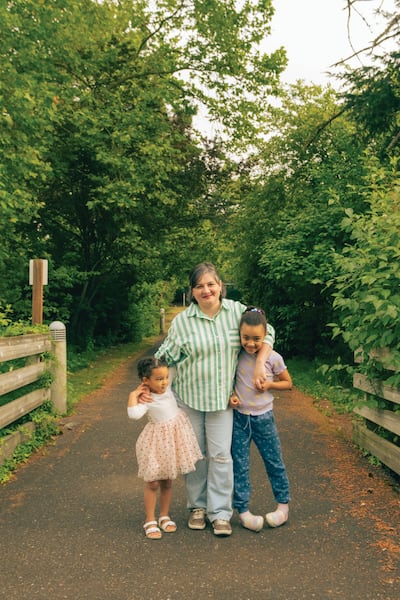
She started distancing herself from gentle parenting. It hadn’t really been working for a while, anyway—she’d ask her daughter to choose between red and blue shoes, and she’d choose the orange ones. Now what? Plus, she was pregnant with her second baby and couldn’t get down on the floor to validate her daughter’s feelings for 15 minutes during every tantrum anymore. She had to unfollow “Mr. Chazz,” online parenting guru Chazz Lewis, one of the experts she had been relying on.
“I had a breakup with him because I was just like, dude, it all sounds great, but like, what are we doing here?” she says. “The idea that there’s one uniting philosophy that is really detailed and has all these rules that you just follow it and everything will be fine? I just think that’s not true. That’s not how real people work.”
While gentle parenting is still common, many of its former adherents, like Pirumova, are divesting from the trend.
The backlash has been multifaceted, with gentle parenting becoming the butt of internet memes and features in national media like New York magazine debunking the method. The famous clinical psychologist Becky “Dr. Becky” Kennedy herself, author of the book Good Inside, said on an April podcast that it’s gone too far: “We’ve overcorrected from nobody cares about kids’ feelings to now kids’ feelings dictate parent behavior.”

But if gentle parenting is seeing itself to the door, it is not doing so without a tantrum on the way out. On a Portland playground last month, four of the half-dozen parents approached for an interview about parenting styles identified as gentle parents. (The two who didn’t said their baby was too young for them to know yet.) Because what would the opposite be? Harsh? Tyrannical? Authoritarian?
The gentle parenting trend has proven especially popular in Portland, where, as one parenting coach puts it, parents have “a high level of consciousness and are committed to their parenting journeys.” Generalized further: Crunchy parenting styles like gentle and attachment fit seamlessly into Portland’s liberal culture, where elevating other people’s feelings and comfort is paramount (think of what our four-way stops and merges are like, and that’s just how we treat fellow commuters.) Portland parents are so gentle that several moms WW spoke with say they’re cautious about correcting kids’ misbehavior in public, fearing others will judge them as too harsh. “It’s exhausting,” one says.
Even as new parents turn elsewhere, the kids who’ve been raised with the philosophy are just starting to grace the real world. In playgrounds, on the bus, and in school halls, the products of gentle parenting are just being put to the test.
And apparently, there’s such a thing as too gentle.
Emma Maddox is one parent who sees the consequences of no consequences.
She’s got a front-row seat as a classroom volunteer at Beverly Cleary K–8 in Northeast Portland, where her two children attend. In different classrooms over the years, she’s seen how even one kid’s dysregulation can jeopardize everyone’s learning experience. And Maddox swears it’s getting worse: In the past year, she’s seen kids in class jumping on their desks, pounding on furniture, hitting other kids, constantly interrupting, and throwing away other students’ work.
Like most people adjacent to or involved in education, Maddox acknowledges there is a myriad of challenges that have complicated learning for today’s elementary schoolers. There’s the obvious deprivation of social and emotional learning during the pandemic, for one, and a lack of support around special education, financial and otherwise. Then there’s the reality that some parents, those who juggle three jobs or who raise their kids alone, don’t have the privilege to weigh which parenting philosophy they might employ when their kids act out.
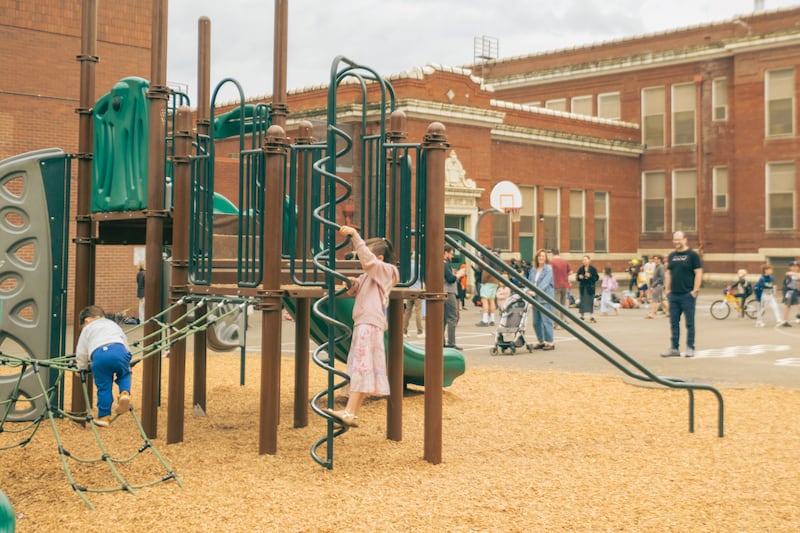
But at Beverly Cleary, Maddox has seen parents “that have access to literally everything” make an active choice to let their children run wild. And she’s got a serious bone to pick with how gentle parenting has translated into the classroom and hallways. When Maddox tries to shush disruptive students, they often ignore her, as if she’s not even speaking.
“I’m a millennial who was in elementary school in the late ’90s, and the idea of an adult that I don’t know coming up and telling me to be quiet, and the idea of me ignoring that person, is so shocking,” she says. “I cannot wrap my head around how somebody can be so comfortable just ignoring an adult.”
Maddox says whether she’s a gentle parent depends on who’s asking. She enforces firm routines and boundaries for her children, she says, but it’s not the authoritative household many people experienced decades ago either. It’s basic human decency, she says, to be empathetic to her children, allow them to be vulnerable, and treat them with respect and kindness.
But she’s acutely aware of how her children present themselves to the world. If one of them disrupts class, that’s the time to sit with them and tell them to knock it off. A functional classroom dynamic, one in which kids can actually absorb information and learn, is delicate. And even students who witness chaotic situations grow dysregulated themselves.
“It’s incredibly inconsiderate,” she says, of those who adopt the parenting style. “I teach my kids the way that I do because I’m concerned for everybody else and their well-being and the way that my kids make other people feel.”
Angela Bonilla, president of the Portland Association of Teachers, Portland Public Schools’ teachers union, says there’s nothing inherently wrong with the gentle parenting philosophy, just that few people implement it well.
Schools are also starting to shift away from traditional disciplinary action, such as suspensions and expulsions. In recent years, studies have shown that such punishment is often meted out subjectively, and kids from underserved communities are disproportionately affected.
Understanding gentle parenting as permissive parenting, or believing those who practice the philosophy shouldn’t hold their kids accountable, Bonilla says, is misguided. Adults, she says, have the responsibility to recognize that kids don’t have every skill they need to be successful, and must guide them with safety and clear expectations top of mind.
“I rarely raised my voice [in teaching] unless it was a safety concern because I am tall and big and intimidating to tiny humans. But if someone is harming someone physically, I will give them a loud ‘nuh uh!’ and go to them to figure it out,” Bonilla says. “Gentle parenting is often code for, ‘I don’t want to be the bad guy so everyone else needs to adjust,’ but that is not what it is supposed to be.”
Gentle parenting—coined and popularized by British author Sarah Ockwell-Smith in her 2015 tome The Gentle Parenting Book—is not the first parenting trend to sweep America, and it won’t be the last. But there’s something new afoot.
Many parents today were raised in the ’90s, when “because I said so” authoritarian parenting was a top style. Julia Tomes, a local parenting coach, says the pendulum has now swung into unknown territory.
“I think now it’s like, well, I remember all the bad things that happened to me. I don’t want to repeat that,” Tomes says. “But they don’t have any modeling for how to hold the line. It becomes permissiveness, when what they really wanted was connection.”
And there’s something distinctive about this shift, says fellow Portland parenting coach Megan Barella. She says she often asks parents if it was OK for them to feel the full spectrum of emotions as a child, ones like sadness and jealousy, and most people answer no, even ones who grew up in loving homes. Barella says gentle parents who weren’t given an emotional vocabulary beyond “go to your room” often struggle with the style. It’s comparable to teaching a child how to ride a bike, or read, if we didn’t know how to do those tasks ourselves.
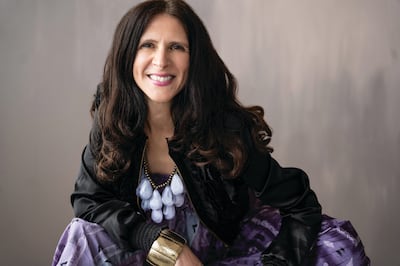
“We’re really the first generation who was raised a certain way and is raising our kids a totally different way,” says Barella, who is also the parent of a teenager.
Parents are also navigating a new digital world, where the perfect answer always feels just one swipe away.
A brief scroll through Instagram under the search “how to stop my child from misbehaving” pulled up an endless stream of short-form videos, all claiming the secret fixes to handling a temper tantrum. It’s immediately hard to find a through line. The first video is of a mom who refuses to tell her kid to use “gentle hands” instead of hitting, urging parents not to intervene. The next video tells parents that, if they don’t react when a child is hitting, “you showed them the line doesn’t exist.” The contradictions are endless.
“There’s so much information that you feel like you need to do your homework before making any decisions, instead of making parenting an intuitive thing,” says Caitlin Cunningham, founder of Papillon Collective, a motherhood community in Portland. She recently listened to a podcast in which a grandmother described leaning on a small village of moms for parenting advice. “That was it. You didn’t have the freaking internet, you didn’t have thousands, millions of people giving their opinions.”
Cunningham, a parent to a 7- and 3-year-old, founded the collective in 2022. In 2019, she’d struggled with a traumatic birth and postpartum depression, she says, in part from swimming in the pressure cooker of parenting. A parent’s job, especially in early childhood, is to make a million micro decisions each day, Cunningham says. They’re told each of those choices—from how they feed their child to how their baby sleeps—matters immensely. And then, they’re presented with the reality that no matter how hard they plan, their child could reject breastfeeding or tummy time, throwing off the schedule altogether.
“For those who were raised in this last generation, we’re expected to be self-sufficient, we’re supposed to bounce back, motherhood’s supposed to be easy, and you’re supposed to look beautiful,” Cunningham says. “But there’s so much going against us.”
That makes a unified theory of parenting look very appealing. New parents might be seeing some spin-off philosophies from gentle parenting, everything from the mindfulness-based “conscious parenting” to a tongue-in-cheek style known as FAFO parenting. (FAFO stands for “fuck around and find out,” where parenting is driven by natural consequences. Don’t want to wear shoes in December? Fuck around and find out, kid!) And in May, “beta moms” became perhaps the latest big trend, presented as an antithesis to the tiger moms who micromanaged their kids’ endless roster of activities.
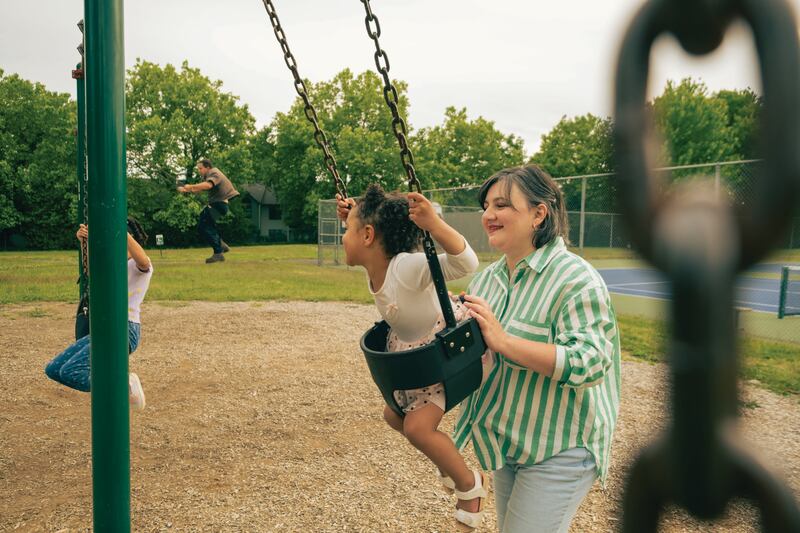
Even the grandparents have noticed just how demanding parenting has gotten. Take Pirumova’s mom, who just seems confused by modern, effort-intensive parenting, and the lack of “scaffolding” around parents, both in terms of family and community resources. (Pirumova, an Armenian refugee and immigrant who was raised in Portland, grew up with two sets of grandparents who often shared the weight of child-rearing with her mother.)
“She says, ‘I just don’t remember it being this hard. I could never do what you do,’” Pirumova says.
Dr. Andrew Riley, a pediatric psychologist at Oregon Health & Science University, says there’s a lot of gray area in parenting.
“There is no single one perfect way to parent,” he says. “It depends on the individual child and family and their values and their context. However, we do know that there are certain parenting styles that tend to produce the best outcomes on average, and that is pretty well established.”
It comes down to two factors, one of which Riley says gentle parenting excels at. That’s responsivity, when parents communicate with high levels of warmth and positivity, forming strong bonds. Gentle parenting is attractive in this regard, he says, because these factors are what Riley terms the “nice and enjoyable” aspects of parenting. Then, there’s a factor known as demandingness, the level of expectation a parent has for a child’s behavior.
These factors are almost always pitted against each other, Riley says, when research shows that parents really should be trying to enforce high levels of both. Settling into a parenting style requires a thorough understanding of any individual family.
“My goal is often just to help them find a combination that will be both effective and consistent with their values,” he says.
One such pairing is positive discipline, which emphasizes the “kind but firm” mantra, offering kids choices and options within the confines of a reality where they are safe and well cared for.
As it turns out, Portland is home to one of the philosophy’s contributors. Steven Foster spent 22 years in the Clackamas Education Service District as an early childhood specialist and has become an established voice in the positive discipline world, co-authoring two of its manuals.
“When you just keep giving your kids things and not setting limits, the kids start getting entitled, and the reality is, you don’t really like them,” Foster says. “You love them, but you don’t really like them.”
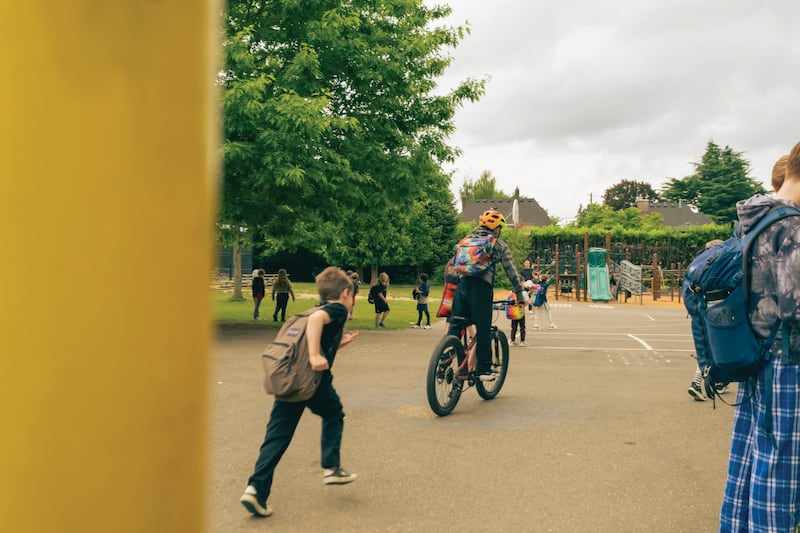
To illustrate providing agency within a reasonable boundary, Foster offers the example of a child who wants to walk by himself from the parking lot to the front of the school. An adult practicing positive discipline in that scenario would recognize the child’s desires, but think about what’s necessary to keep the child safe. From there, the adult can offer a limited series of options to choose from (“do you want to hold my belt loop or my pinkie finger?”).
Of course, there’s always the chance that a kid rejects limited choices and refuses to negotiate a solution everyone can live with. (Think back to the orange shoes.) At that point, Foster says, it’s time to present the conflict one last time, and then shut up and let the kid sit with the weight of the choices on the table.
It could collapse into a tantrum, he says, and there’s a 100% chance that parents will make a mistake. But at its core, it’s the start of a solution to liking one’s child and oneself.
“A thing I say that people don’t like is that not every story has a happy ending,” he says. “But ask yourself, how many times will this child need to go through this before they get it?”
It’s a gorgeous May morning in a sandbox in Southeast Portland. Christiane and her son live in Montavilla, but they drove down to the Westmoreland Nature Park for its natural climbing structures, water features, and a creek with ducks swimming under bridges.
“Gentle parenting isn’t particularly natural to me,” Christiane says, because her parents were from the Philippines and raised her in a more traditional manner. Discipline meant punishment, and that’s not how she wants to raise her child. Sometimes she’s tempted to yell at him, but knows that it will only scare him and perhaps damage their relationship in the long term.
“I’ve invested a lot of time reflecting on how I feel about how I was parented,” she says. “It’s helped me become a better parent. It’s a lot of inner work.”
She’s read a ton of parenting books and really clicked with positive discipline. That said, one of her favorite TikTok parenting accounts is called BratBusters. She travels the middle road.
Today, her son has been hogging the sit-on digger in the sandbox all morning. Another little boy keeps sidling up to the coveted toy, trying to get a turn. The second boy’s mom says, “It’s OK. I know. But just wait. Wait till he’s done.”
Christiane briefly tries to negotiate with her son: “Look how happy he’d be.”
Then, she silently makes the call. She grabs her boy under his arms and lifts him off the toy. Two moms and a reporter brace for a tantrum that never comes. The other mom says, “Thank you!” and Christiane says, “You’re welcome!” in a loud modeling of manners.
“Let him sit on it. He’s going to have fun. Isn’t it nice to share?” Christiane says.
“No,” the boy says. “I want to see some ducks.” He takes off running. Christiane is frustrated, but keeps her cool.
“See, this is a perfect example,” she says, with her son out of earshot. “I want to say to him, ‘Get the fuck back over here.’”