Skip to main content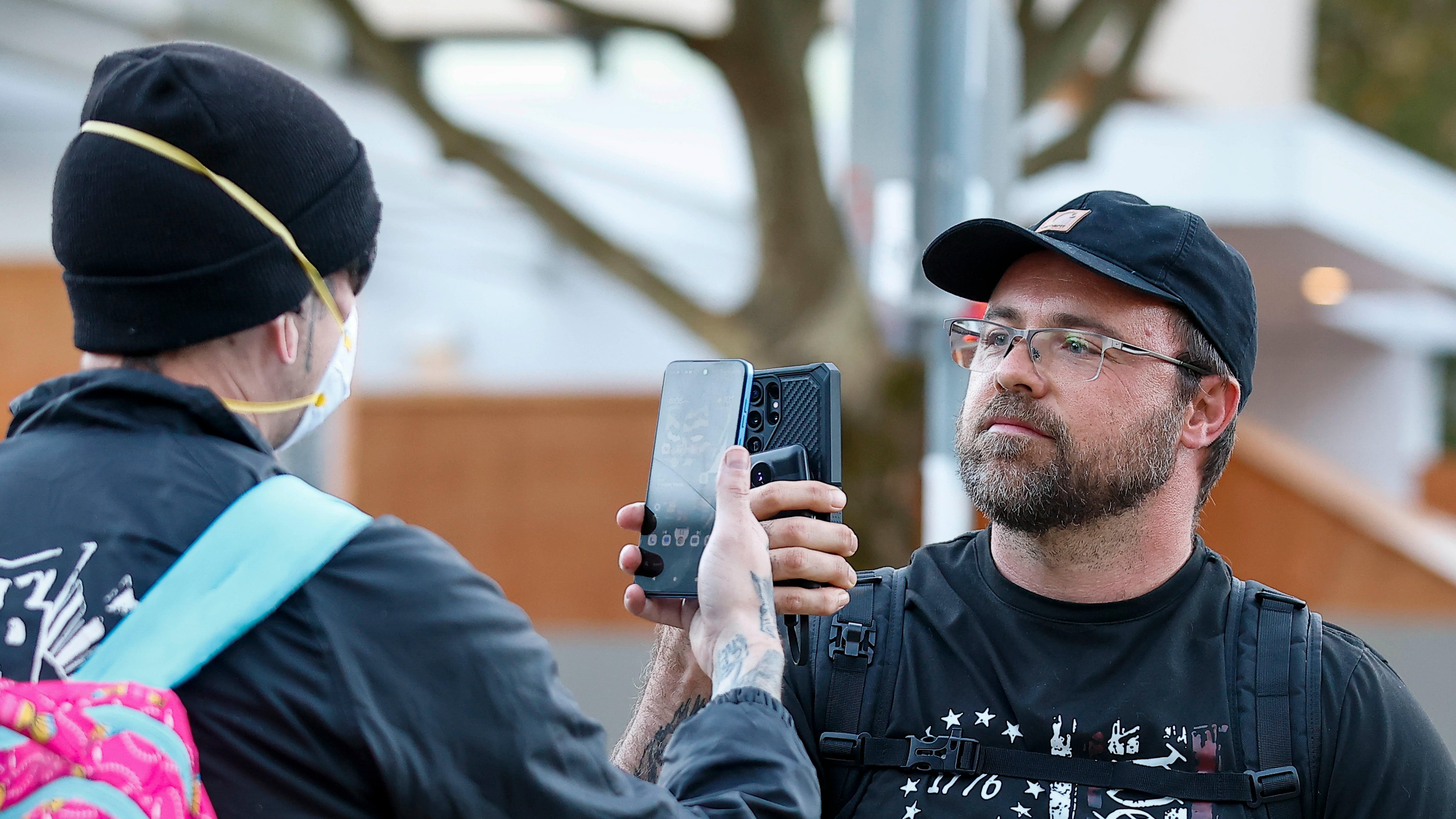
Forty-three percent of the people Portland police arrested at protests against immigration enforcement have had their cases dismissed or dropped with no complaint or they’ve been acquitted, a WW analysis has found.
Of the eight defendants who went to trial, five were acquitted, and those convicted received only short probations. That suggests juries have largely found that the charges don’t pass muster.
“When arrests are made, they’re based on probable cause that a crime was committed by the person. When a public order situation is becoming dangerous, there are times where arrests are made based on probable cause to prevent a situation from further escalating,” says Sgt. Kevin Allen, a Portland Police Bureau spokesman. In response to questions about the high number of dismissals, dropped charges and acquittals, Allen writes, “There are a variety of reasons that cases may not ultimately lead to prosecution.”
Only one person got any jail time—and just 10 days of it—after pleading guilty to second-degree arson. The other 26 people who signed plea deals largely received short probations and community service.
That trend closely matches federal cases of protesters charged with assaulting federal officers. Most of those began as felonies and ended in misdemeanor pleas with short probations (“Petering Out,” WW, July 8).
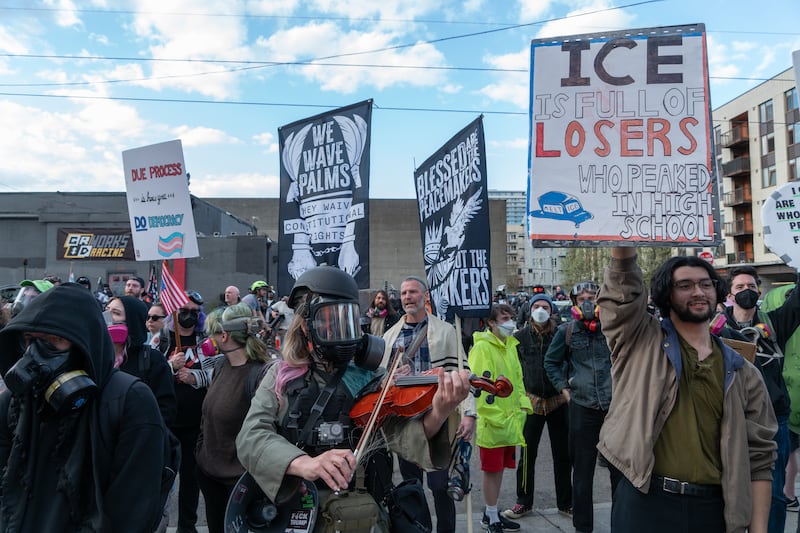
WW analyzed 96 cases of people arrested by the Police Bureau outside the South Portland office of U.S. Immigration and Customs Enforcement during protests between June 2025 and May 2026.
Twenty-six of them were dropped with no complaint, 11 were dismissed and five were acquitted in jury trials. Those make up 43% of all cases.
“There are many reasons a case will get one of those codes,” says Pat Dooris, a spokesman for the district attorney, of charges being dropped with no complaint. He adds that “charges can still be filed later as long as the statute of limitations has not run out.” At least seven cases that were previously dismissed have been refiled.
Twenty-eight people signed plea deals with the district attorney, the majority of whom got between three and 18 months of probation. Many also received a term of community service. Four received only small fines between $50 and $115.
WW’s analysis shows that the local cases had a poorer success rate than federal prosecutions.
WW found that of the 37 people arrested by the feds during ICE protests, 23 walked free with only short probations or supervised release. Only five were dismissed or diverted, compared to 37 local cases that were dismissed or dropped with no complaint.
One key difference between the federal and local prosecutions: The feds more commonly charged people with felonies. Twenty-four of the federal defendants were charged with assaulting an officer; 17 faced felony charges. But the wheels quickly came off once the cases entered the justice system: Only four ultimately got felony dispositions.
By contrast, only 20 of the local cases began with felony charges; only two ended with felony dispositions. (Twenty cases are ongoing as of publication.)
One way to view that difference is that the federal government was trying to paint a picture of its officers facing grave danger from protesters, as Lewis & Clark Law School professor Tung Yin previously told WW. Portland police, by contrast, rarely claimed they had been victims of assault.
Only 18% of local cases stemmed from people allegedly harming law enforcement. Thirteen were charged with assaulting or interfering with a PPB officer, often for trying to stop officers from arresting another protester. Two others were charged with blocking PPB vehicles, and three with harming federal officers.
Thirteen more stemmed from people damaging or attempting to damage the building itself.
(The dispositions in these cases follow the general pattern: mostly guilty pleas in exchange for short probations, with a smattering of dismissals and acquittals.)
But court records also reveal a second front of the battle that raged outside the ICE office. It was fought not between protesters and law enforcement, either federal or local, but instead between those who had come to protest ICE, and the counterprotesters and right-wing livestreamers who had come to support it.
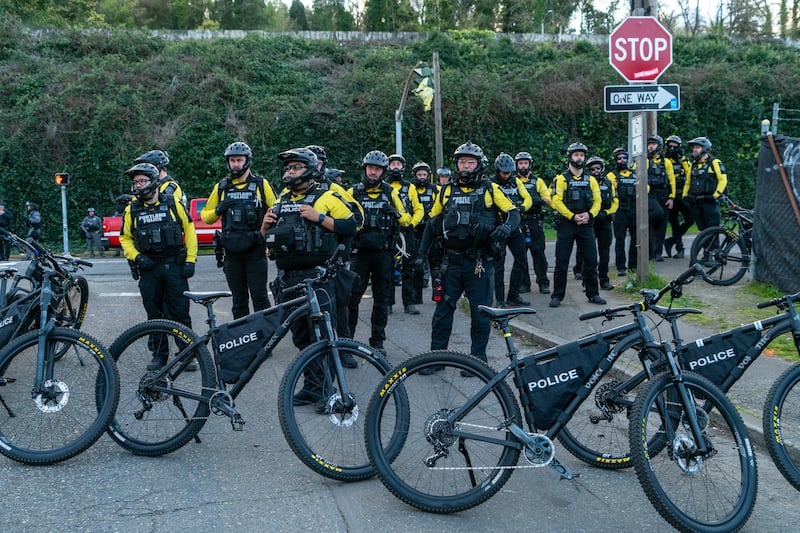
PPB arrested 23 protesters, counterprotesters and livestreamers for fighting with one another. This peacekeeping is the role PPB has most publicly billed itself as filling during the protests. In almost every press release it issued about the protests, the bureau wrote, “PPB will continue to monitor protest activity. While PPB’s role is public safety and supporting constitutionally protected activity, part of our role is to address criminal acts.”
Affidavits by police officers and lawyers in the district attorney’s office document many spats between anti-ICE protesters and right-wing livestreamers. Livestreamers would walk up to people, recording or insulting them, and protesters would smack their tripods or phones out of their hands, or strike the streamer themself.
Some livestreamers appear again and again in the records. It seems that once protesters came to recognize them, they would try to stop the streamer’s antics before they got started—the insults, the getting in people’s faces, maybe even the fact that the streamers sometimes appeared on the ICE building’s roof alongside federal agents. That usually meant bringing the fight to the streamer.
Livestreamers and counterprotesters also initiated physical fights with protesters. One counterprotester punched a protester in the head; the protester was knocked unconscious when his head hit the pavement. Another dragged a protester into the street after they refused to apologize for calling the counterprotester a pedophile. A third pepper-sprayed a protester who he said was holding a knife, making him feel unsafe.
Protesters, counterprotesters and livestreamers who fought one another have all faced similar results in the court system. The majority on all sides pleaded guilty or no contest to misdemeanors and received probation. A few on both sides were dismissed. Two protesters were acquitted.