Skip to main content
The summer of 2026 was shaping up to be Seamus Fitchen’s best one yet.
Seamus, 13, is coming off of arguably the worst year of middle school: seventh grade. But in the final weeks of class, he was starting to taste the months of sun and freedom that lay ahead. And he’s been eagerly anticipating June 18, when the gates to Sellwood Pool finally open.
“Last summer, because I went there so much, it was kind of a getting-away sort of thing,” he says. But now, Seamus’ ambitions for his first teenage summer at the pool—which will include “eating by the pool, talking, and most of the time swimming around”—may be dampened.
Two weeks ago, Seamus’s mom relayed some bad news. Since February, Portland Parks & Recreation has been enforcing a new age restriction at indoor pools across the city: Swimmers under the age of 14 must be under direct adult supervision by a person 18 or older.
Previously, only children under 11 needed pool supervision and could be supervised by someone as young as 16. (Anyone wishing to swim in a pool’s deep end has needed to pass a swim test since 2024.)
Come summer, that rule change could affect outdoor pools, such as Sellwood. Or perhaps not: News of the rule change has met with significant adult backlash, including from The Oregonian editorial board, which opined that “there are better ways to improve safety than broad fiats.” Last week, the Oregon Health Authority, the rule’s author, said it would consider softening it to a guideline.
As the grown-ups dither, WW went directly to the swimmers most impacted by the policy change: the ones between the ages of 11 and 13.
“I thought it was kind of stupid…If I need an adult there when you’re under 14, then it’s kind of annoying,” Seamus says. “It’s going to be different since [the parents] are going to be there.”

Seamus isn’t thrilled that the pool, which has in the past given free range to mostly middle and high school–age kids, could become overcrowded with supervising adults.
About 30 minutes before the pool opens, Seamus says, a line typically forms to jockey for the best seats. This could make the already popular swim spot less accessible to the kids who most want to use it.
“It was so fun going to the pool with just nobody being there, just kids,” Seamus says. “But now it’s weird with all the adults there.”
Seamus is not alone in his feelings. All four kids who spoke to WW for this story feel the rule is unnecessary, especially for the 11-to-13 age group. “I have been going to the pool on my own since I was 11, and I was totally fine,” says 14-year-old Anneliese Akretch, who adds that she goes to the pool most summer days, almost always without parents. “That is why you have lifeguards and swim tests, right?”
Not according to Oregon Health Authority. It hiked the age kids can go to the pool unsupervised after a 12-year-old girl drowned in an outdoor pool in the Montavilla neighborhood in 2023, the first such death since at least 1985.
And just weeks ahead of peak pool season, OHA’s recent backpedaling on the rule has increased confusion. OHA spokesman Jonathan Modie tells WW that the pool safety program decided late on Friday, June 5, to propose an amendment to the rule that would make it a recommendation rather than a requirement. That comes after concerns from community members, Modie says.
“We will convene a public process focused on this rule to include parents and caregivers who would be most affected by the loss of access for older elementary and early middle school-age children,” Modie wrote to WW, “as well as lifeguards, recreational pool operators and others who would have an interest in this issue.”
Modie says national data shows children’s deaths in pools remain high through age 13 and begin to drop only at 14. But as OHA reconsiders its rule, he says the agency concedes, “as in many areas of public health, we do not have good data for the specific circumstance the rule addresses: children swimming in pools with lifeguards at the age that families are most likely to allow them to swim in a pool without individual adult supervision.”
PP&R spokesman Mark Ross says the parks bureau expects to hear more details from OHA in the coming days. He declined to comment whether the bureau would maintain the new rule as a requirement even if OHA lowers it to a recommendation.
“Portland Parks & Recreation plans to connect with the OHA in the coming days to get clarification on their guidance and intent,” Ross tells WW. “At that point, we would have the confirmed information necessary to make any potential policy changes. We are committed to making sure Portlanders are clear on pool policies before the summer outdoor swim season starts.”
And if safety is the ultimate goal, OHA might want to think again. With the pool’s new barriers to entry, multiple kids who spoke to WW say they will probably go to the Willamette River more often. The river, of course, is largely devoid of lifeguards and can have a strong undercurrent.
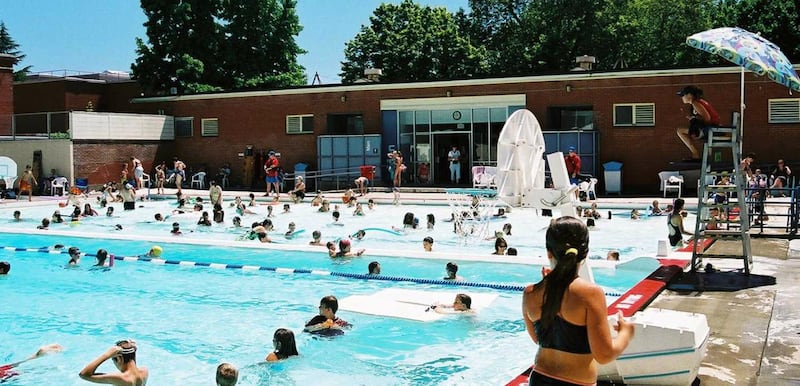
Their parents aren’t stoked either. Seamus’ dad, Marty, says their family signed Seamus up for fewer activities this summer because they expected him to be out and about most days, on his bike and at the pool with his friends.
Seamus is among the luckier kids—Marty works from home and plans to allot time to take Seamus and his friends swimming. (Even Dad, however, acknowledges his presence makes his kids’ experience a little less fun.) And Seamus’ grandparents have a pool he also plans to use.
Many families have fewer alternatives. Open swim times are usually in the afternoons, when working parents can’t bring their children to the pool. That closes pool gates to many families in which both parents work, as well as single-parent households.
And parents have built summer plans around the pool. Elizabeth Martin tells WW she signed her 13-year-old daughter, Charlotte, up for a volleyball camp with the idea that she would go to the pool after camp let out.
Now how Charlotte fills the second half of her days is a question mark. “My parents won’t be able to bring me,” she tells WW, “which leaves me to stay inside with nothing to do.”