Skip to main content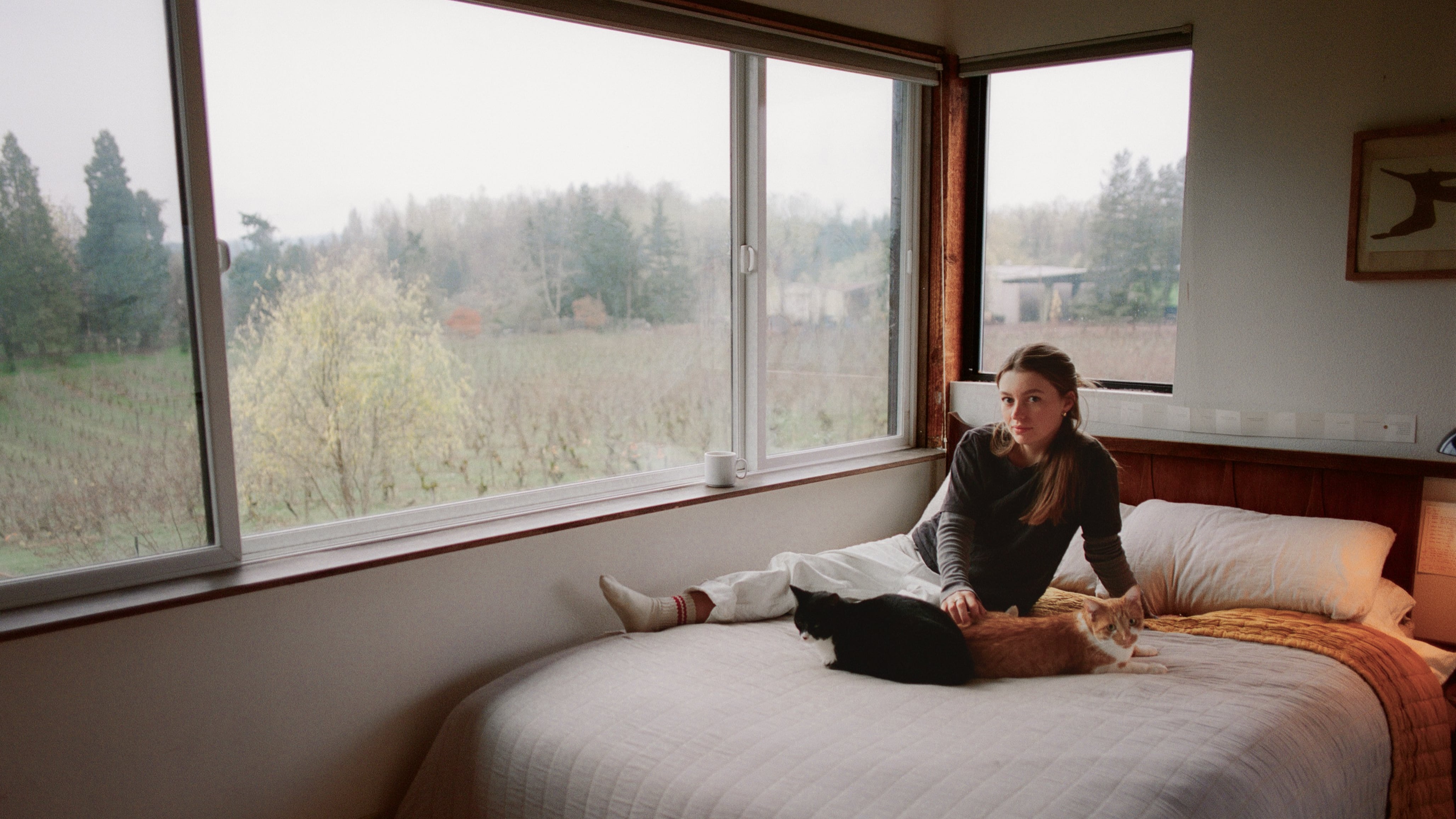
Between running a bed-and-breakfast, operating a wine bar, and bottling and selling her own wine, Mia Ponzi stays busy. She may have inherited her hearty work ethic and homegrown knowledge of the wine industry, but each business’s thoughtful details and close-knit crew of friends turned co-workers are all Mia.
WW caught up with her about the trip that inspired her to become an innkeeper, the new wine project she’s working on with her mom, and how hospitality is at the root of it all. The interview has been lightly edited for brevity and clarity.
WW: What was it like to grow up in a family that has such a storied history in the Willamette Valley? Did you imagine you’d work in the family business some day?
Mia Ponzi: Like any kid, our life was all I knew. The entire concept of work, the way I learned it, was grounded in community and joy. It was that way for my grandparents in the ’70s, when they planted the vineyards and built their winery business. They were some of the first in the area to even dream of an “Oregon wine industry.” They had three little kids, a strawberry farm purchased from a newspaper clipping, and the same stubborn determination that runs through me, my brothers and cousins to this day.
They did it all of it themselves—cultivating, planting, raising the beams that house the cellar. It’s so precious to me that we get to be here, 55 years later, still enjoying a place that took so much effort to build and equal effort to maintain. It’s a gift to have a legacy to carry on, a place we want to share.
There’s a Portland family, the Grimms, who have a motto that we all repeat constantly: “Work is love made visible.” To me this place is wholly that. Decades of work, generations of love, all of this energy concentrated into one place. A younger me didn’t think I would be back here, but it took being away to realize how precious it all is.
To that point, you decided to move back to Oregon after working stints in notable restaurants—King, Mimi—in New York City. Can you talk a bit about why you went to New York, what you gained from the experience, and why you eventually left?
Cooking was the reason I wanted to be in New York, but art school was what got me there. After a couple semesters studying sculpture at Parsons, I dropped out to cook full time. I spent five years cooking in restaurants in the city, which was its own kind of school. New York is a beautiful place to cook, but it is fast-paced, demanding and, eventually, for me, exhausting. I also missed my family and the rhythms of our life in Oregon, which is inherently tied to the land.
My brother Nico was also in New York and feeling ready to head back west. We went to visit family in Iceland in the summer of 2022 and saw these tiny, perfectly casual B&Bs run out of family homes on the North Coast. It was revelatory. We didn’t yet know that something so low key could be…so good? We returned to NYC inspired by this vision of simple hospitality. That fall, we started dreaming up a plan to get back home.
From there, how did Sosta go from dream to reality?
We imagined this project as easy, cheap, and possibly short-lived. It has been none of those things! But, that’s where the name came from: “Sosta” is Italian for “truck stop.” A little break along a journey. Our original family home is right next to the winery. Our grandfather built the house on weekends over several years while teaching full time at Portland Community College and figuring out how to make wine from the grapes they planted. This is the house where our mom and her siblings grew up and, a generation later, where we and our cousins grew up. It had to be Sosta House, of course.
We were still in New York, and the house itself was in total disrepair, so we started where we could. My best friend, Zab Shavrick, is a fantastic artist and graphic designer, so they were the first person we asked to help us bring this “Sosta thing” to life. With their expertise, we launched our website and booking platform in January 2023 using old photos from boxes in my grandmother’s attic and a lot of persuasive language about what this place was going to be.
Somehow, it worked! We were getting reservations for the summer before Nico and I even walked through the house. Friends showed up to dig, move and demolish. Never you mind that none of us had any experience in construction. Some of us had never used a drill before! The roof was leaking, the deck was decomposed, the house was full of 50 years’ worth of accumulated stuff, and within a week our dryer was on fire. We started working on May 4, and our first booking was set for July 5. “Hit the ground running” was an understatement.
With Lerzi, your main collaborator is your mom. How did you two get started as partners in that?
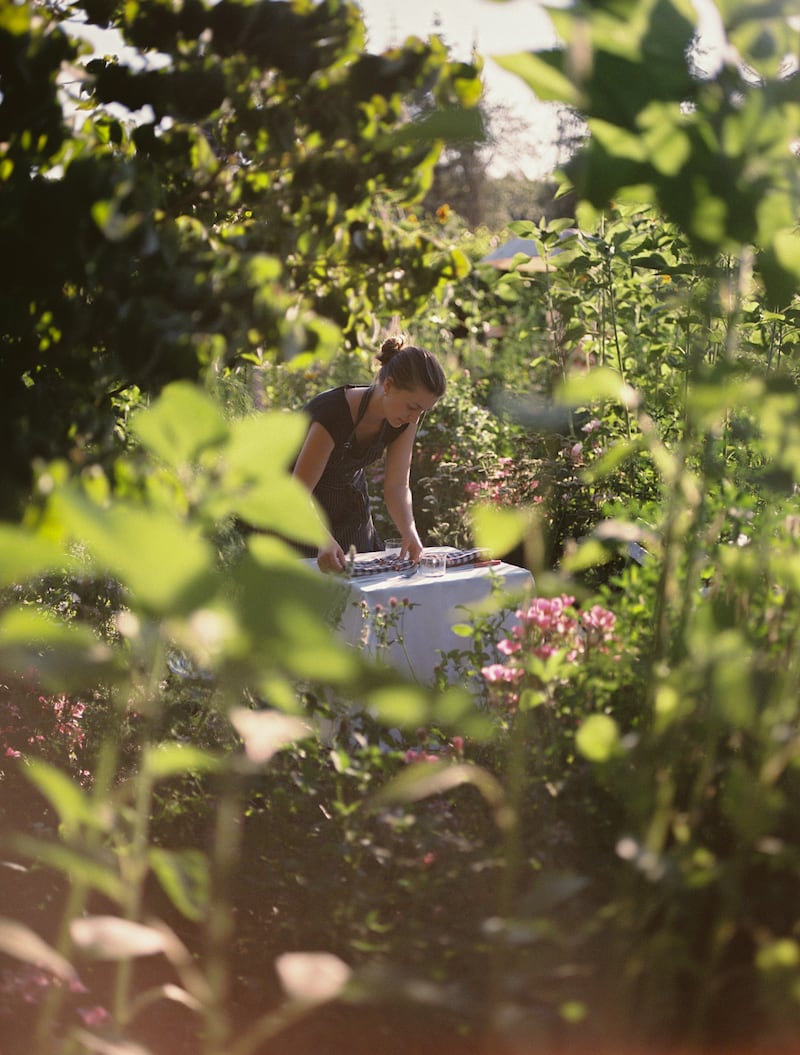
Lerzi is named for my nonna, Guiseppina Lerzi, my mother’s grandmother. My mom, Luisa, is a very serious winemaker. But I know her as playful, fun and silly. She finished making wine on a big scale a year ago and moved back to the original winery here, intent to start her own little label of chardonnay and pinot only. But then, we had a realization—she can now make wines that are fun and silly, like her!
The challenge with this era of her career was to find new life in this work that she’s been doing for…all her life. I like the natural stuff and I like the classic stuff—if it tastes good to me, I call that good wine. My mom is way more traditional. She studied in Burgundy, trained under great wine houses, knows her stuff in the “official” way. Lerzi is our meeting place where we get to play around together. I push her to make things she would never make on her own; she pushes me to look at it all through another lens. It’s all very experimental.
How do you think about what your grandparents and parents created in relation to what you and your family are building together now?
My grandparents planted the vineyards here that have grown into an entire world for us two generations later. I see legacy not just as carrying on something that exists but having that same vision of building something for the future. This winter, we planted willow trees in the wetlands behind Sosta House, and my brother Teo said, “Those are going to be so nice....in 30 years.”
I think of the families that owned the B&Bs in the northern fjords of Iceland and how they have no idea how much they’ve impacted me—that their legacy is being carried on every day here in Oregon. The legacy I hope to pass along is one of thoughtful care and joy, spoken through little gestures.
STAY: Sosta House, 14667 SW Winery Lane, Beaverton, sostahouse.com.