Skip to main content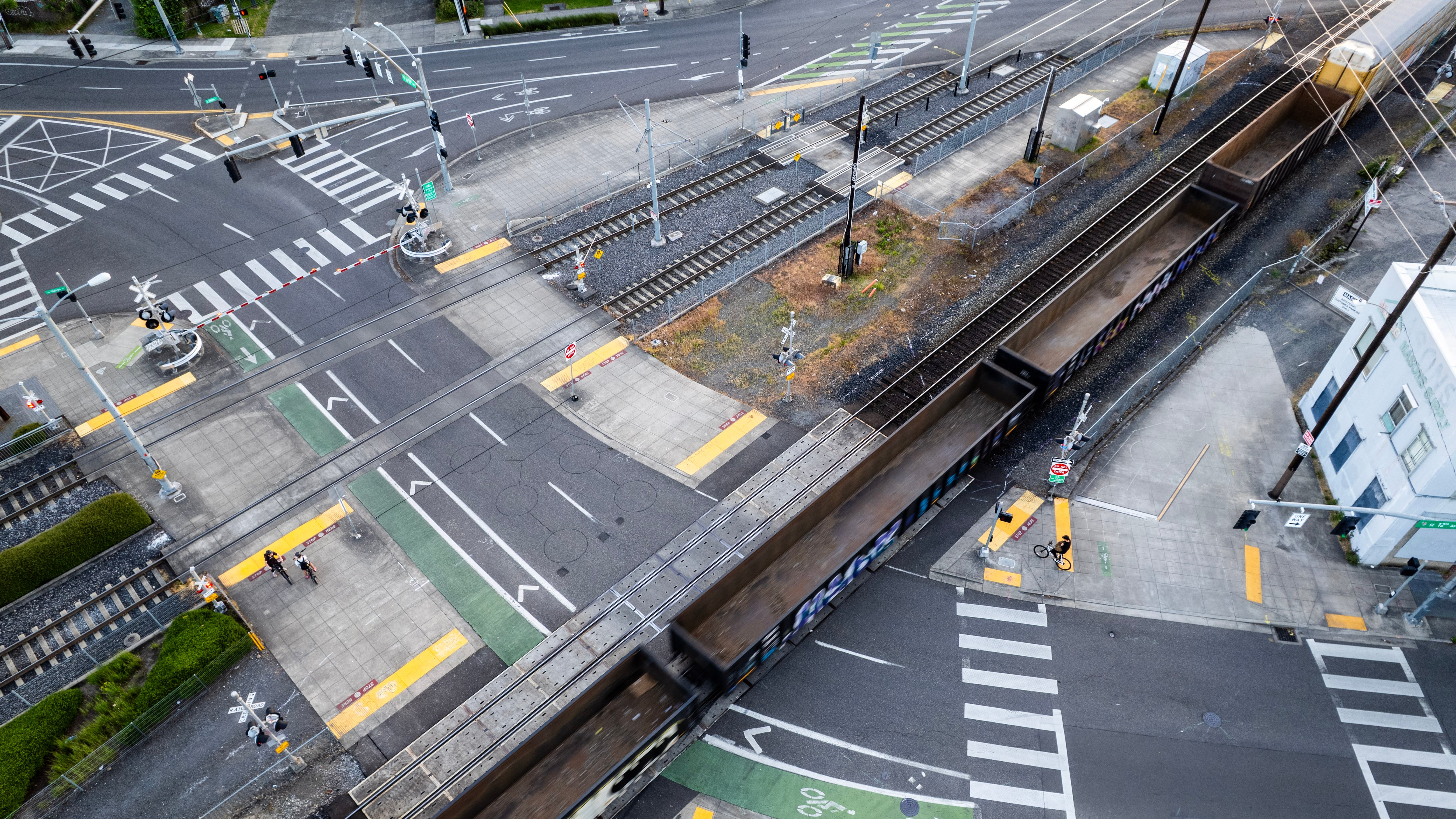
If you picked up this paper to read while you wait for the train to pass Southeast 12th Avenue, good news: The average wait time at this railroad crossing is just 2 minutes and 42 seconds, according to TrainSnap, so it should be over by the time you finish this column. Of course, as WW reported in last week’s cover story about how to solve this commuter delay (“Railed,” May 20), sometimes the gates are down for an hour or two, which is why we provided you with a whole newspaper to read. Minutes from now, you will look back on this and laugh. Many, many minutes from now. Here’s what our readers had to say:
aggieotis, via Reddit: “Fundamentally, we need better ways to make old industries come to the table. The rail lines (and timber industries) were granted these ridiculous permanent contracts during the robber baron era. I don’t really care what court precedent there is or whatnot paid for by these big old companies. We’ve got to have the social ability to update our contracts based on current people and current needs. I’m glad that this merger with Norfolk Southern presents a glimmer of an opportunity.”
P Miller, via wweek.com: “There are precious few industries that do not experience significant progress in technology every couple decades. But due to a punishing combination of overregulation and massive government subsidization and promotion of trucking, North American freight rail was relegated to existential limbo for decades.
“And municipal governments took advantage of that by routinely taking money-saving short cuts, under the mistaken presumption that railway tracks were an immaterial nonconsideration.
“Well, they bet wrong. Freight rail has seen a number of important technology and efficiency improvements in the last 25 years, and the industry is financially healthy and economically relevant again.
“And the shortsighted, money-saving assumptions that multiple generations of municipal governments made are coming home to roost.”
Xavier Salazar, via Bluesky: “At the intersection of a neighborhood greenway, a transit stop on the Orange Line, multiple bus lines, and historically horrible bike/ped connections, we have to find more creative solutions than ‘how can we make this easier for the cars?’”
WillyVlautinRules, via Reddit: “I liked the way the article pointed out how this causes major delays not only for cars but bikes and buses too. The FX2 is always getting stuck in a traffic jam before 11th Avenue when the train is there because the backup from 11th often backs up into Division.”
Samson, via wweek.com: “There is a fifth solution, and it’s cheap—better signage directing folks to the fastest but hardest-to-find bypass, which is over the Martin Luther King Jr. Boulevard viaduct. It’s the same route the FX2 uses when a train is blocking 8th.
“Look on a map. It’s easy and fast once you know it’s there.”
GIVE US A SIGNAL
Thanks for the article about the train crossing delays on the Inner Eastside [“Railed,” WW, May 20]. One Band-Aid fix that was left out that could be implemented cheaply and quickly to help while waiting for a long-term solution would be to put some flashing red lights on the OMSI off-ramp signs to warn drivers the crossing gates are down. This would allow drivers to take an alternate route. It wouldn’t be perfect, but many times I’ve wished I had a warning I was entering railroad hell.
Chris Carvalho
Aloha
DON’T GET CRAFTY WITH THE ARTS TAX
Your recent article regarding City Council vying to make unlawful changes to the Portland Arts Tax [“Metro Chamber Threatens Legal Action if City Council Makes Changes to Arts Tax,” wweek.com, May 16] brings crucial attention to the motivations of the council which are disheartening for supporters of the local arts. The article states that the council is unable to make changes on voter-approved taxes without again seeking their approval, but the intent to do so is equally concerning, especially since only a few of the members are fronting this decision. The audit of the Arts Access Fund Oversight Committee showed some weak spots within the program. However, the audit also laid out how that program can be improved in legitimate ways. Increasing the cost of the Arts Tax could lead to the dismantling of those funds entirely. If enough complaints arise, that program could be viewed as an unnecessary expense and land at risk of being cut. In a political climate where the arts are already undervalued, programs like this are incredibly important. Recommending that the tax be imposed on a minimum income of $20,000 per year is not a bad suggestion. The issue is not that portion of the reform; it is the way in which the council members tried to go about it. The protection of the voters’ rights is as important as the arts they are voting to keep.
Angela Johnston
Scappoose
Letters to the editor must include the author’s street address and phone number for verification. Letters must be 250 or fewer words. Submit to:
P.O. Box 10770
Portland, OR 97296
Email: amesh@wweek.com