Skip to main content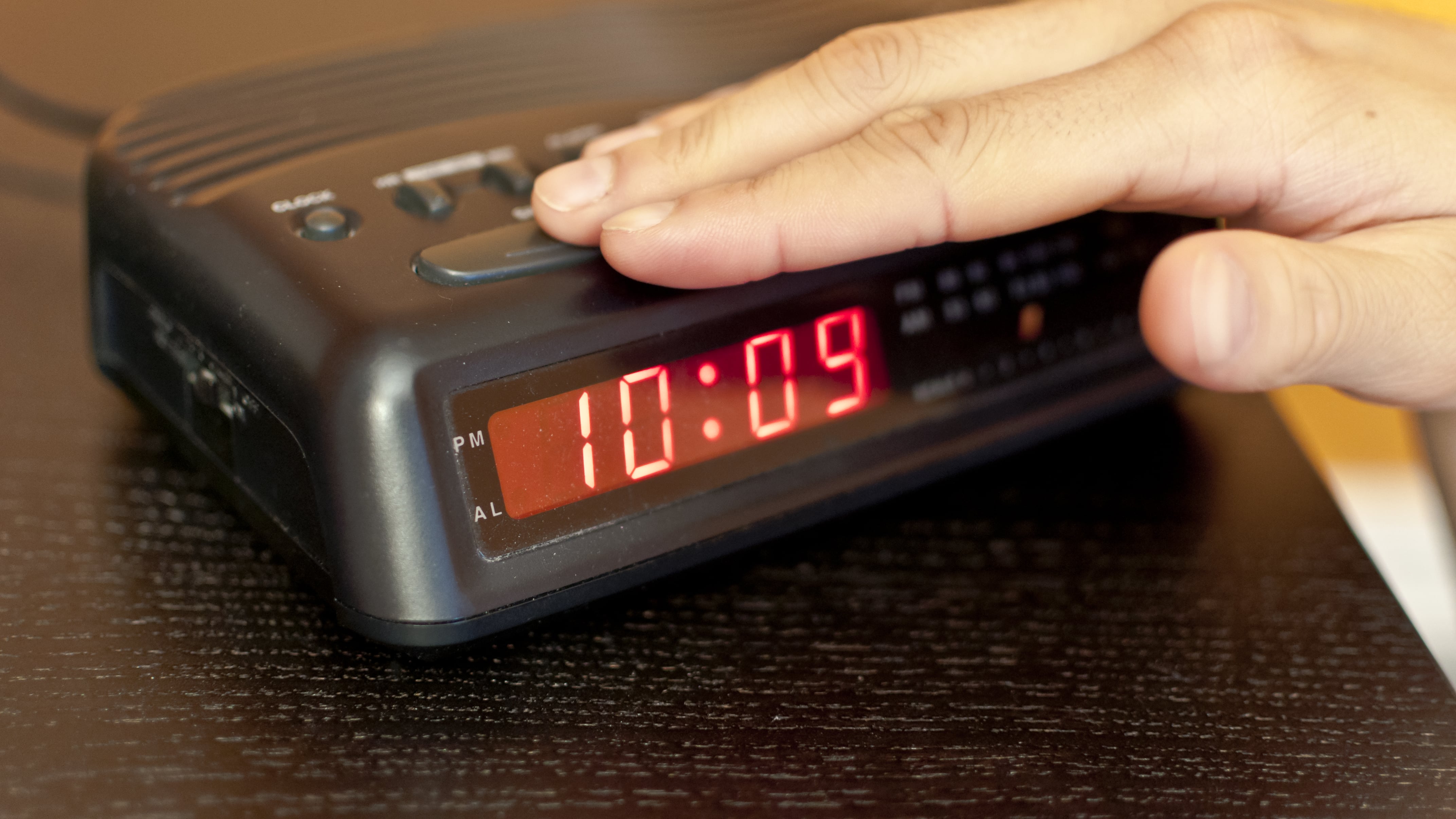
How and why did the snooze duration on alarm clocks get codified as nine minutes? —Sleepy Joe Biden
The first recognizable bedside alarm clock was patented in 1876 by the Seth Thomas Clock Company—the same firm (he added, shamelessly grasping for a local angle) that built the tower clock atop Portland’s Union Station. America’s first mechanical alarm clock of any kind, however, was a 1787 creation by clockmaker Levi Hutchins. Inexplicably, it wasn’t adjustable—it went off at 4 am and only 4 am come hell or high water, which is probably why you’ve heard of Seth Thomas but not Levi Hutchins.
The snooze bar didn’t come along until GE-Telechron’s “Snooz-Alarm” in 1956. Billed as “the world’s most humane alarm clock,” the primitive Snooz-Alarm set the alarm time ahead nine minutes with every smack of the button—if you hit it three times and forgot to reset it that night, you’d be getting up 27 minutes later the next day.
Where did they get the nine minutes? Several online sources note that nine minutes is the longest interval expressible in one digit. This allows the snooze mechanism to be pegged to just the last digit of the time displayed, simplifying manufacturing. (Reader’s Digest further mansplains that a two-digit snooze time would be “harder to program.”) The main problem with these theories, of course, is that the 1956 Snooz-Alarm, with its old-school hands and dial, wasn’t even slightly digital.
The trouble with pre-internet history is that trivial details often simply aren’t recorded. This seems outrageous to those of us who’ve gotten used to being able to look up every haircut Justin Bieber ever got, but the truth is that the historical record does not include the CEO of General Electric explaining the company’s snooze motives to a joint session of Congress. The dominant theory is that the designers were going for a delay of 10 minutes. That wasn’t possible mechanically, so they settled for nine. Once the nine-minute snooze was established, it apparently persisted through sheer inertia.
Could it have been longer? Maybe not. The very first Snooz-Alarms had a delay of just over 15 minutes, the shortest pause their design could support. GE-Telechron must have found this number unacceptable, since it promptly redesigned the entire mechanism just to get the snooze period down to the figure we know and love. Nine minutes may not be ideal, but I’ll take it over what Levi Hutchins was pushing any day.
Questions? Send them to dr.know@wweek.com.