Skip to main content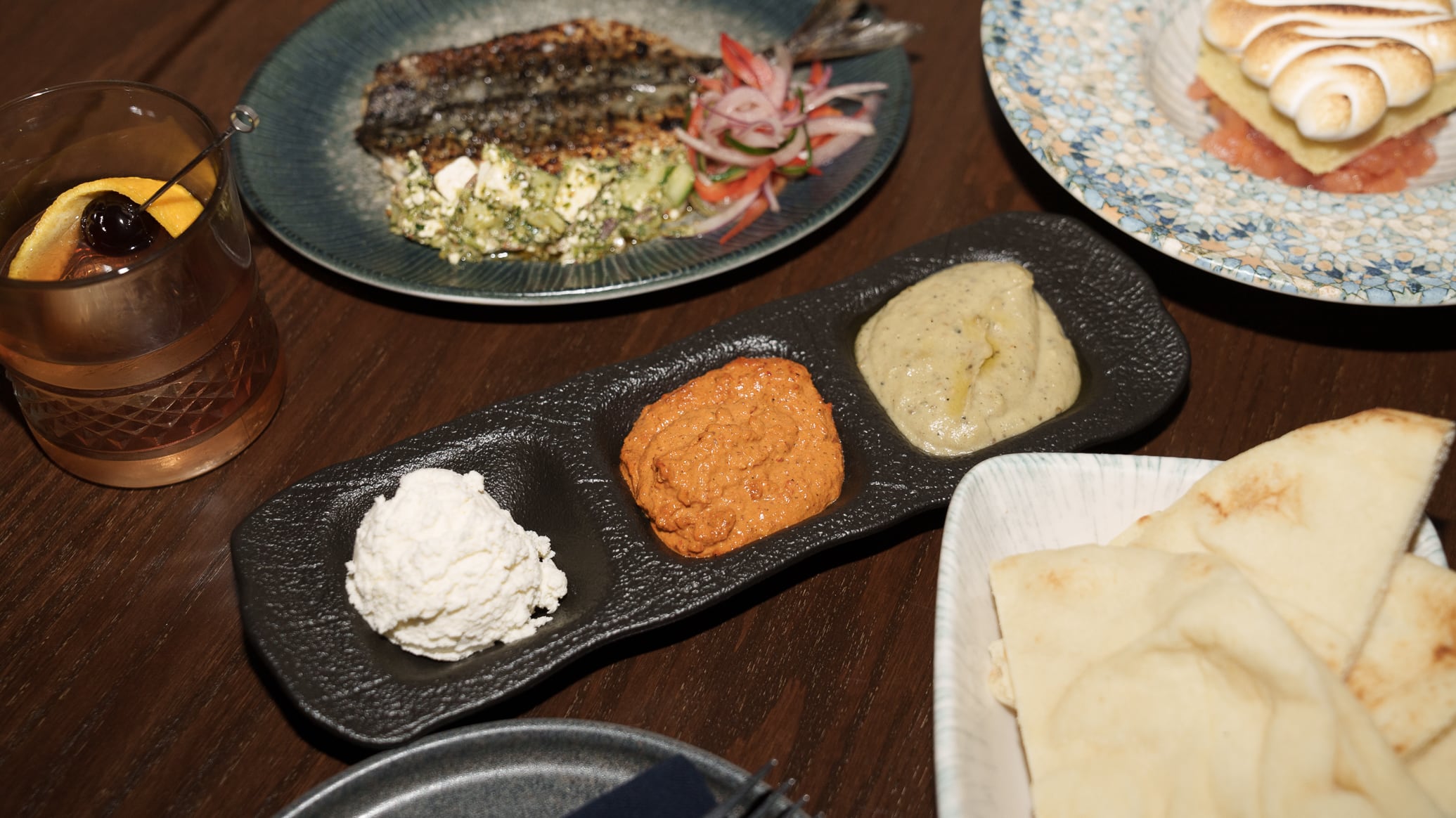
It’s not too late to wish someone a happy new year. The Old New Year, after all, falls this weekend on Jan. 10, and you know who’s probably got a lock on celebrating with a traditional dinner? The staff at Alma, that’s who.
The proudly Balkan restaurant opened in June, serving southeastern European dishes that might remind unfamiliar diners of Mediterranean and Middle Eastern staples, like baba ghanoush and lamb. Most of the menu is made up of a combination of Balkan recipes, adapted from traditional dishes made by chef-owner Vedran Jordan’s mother and aunts, who are from Sarajevo, Bosnia. Alma’s menu is fused with modern adaptations informed by Jordan’s years working in restaurants such as Langbaan and Gado Gado. Bookended with a colorful cocktail and a pistachio or cardamom dessert, the entire dining experience at Alma can feel simultaneously comforting and brand new.
The familiar is strange when it comes to the baba ghanoush, which appears a few times on the menu: a side with bread ($8), in the trio of dips ($12) and, most effectively, in an entree paired with lamb shank ($28). While other restaurants’ take on the eggplant-based dip is usually a chunky, thick appetizer, Alma’s recipe is completely smooth, yet so smoky and garlic-forward that an eggplant-hater wouldn’t be able to taste the main ingredient. Jordan smokes the eggplant until it’s completely white and ashy, until it can be blended with charcoal oil and garlic oil. While it’s mouthwatering on its own with the pitalike bread, it shines most in the lamb shank entree, where the rich, gamey meat and herbs complement each other.
If there’s any surefire hit at Alma, it’s lamb. Besides in the entree, it also appears as a kebab ($13) and in a light, tangy soup called čorba, which contains lamb neck and yogurt ($9). With each iteration, the tender, spice-infused cuts stand out without overpowering the sides.
But the greatest and most unexpected star at Alma is kajmak, which appears in the trio of dips as well as with bread ($8) and in a beet salad ($17). Kajmak is like a Middle Eastern restaurant’s labneh. The waiter described kajmak as more like a clotted cream than a yogurt dip. The thick, cream cheeselike product has a surprisingly complex flavor considering it is made only of milk and salt.
Jordan tells WW the kajmak is “a pretty labor-intensive product, but it’s worth it.” His team makes kajmak by boiling cow and buffalo whole milk until it has a skin, which is removed and seasoned with salt. The chefs repeat this process until the layers of skin are five or six inches high, then press and wrap it in cheese cloth to ferment for a couple of days.
Once you’ve secured a form of lamb and one to three dips to round out the meal, choose from any of the salads. The bean and frisee salata (which was on an earlier menu and is regrettably no longer being served) was a soupy salad with creamy beans; it tasted like an entree, especially with bread and very especially with bread already smeared with kajmak. The arugula salata ($14) is a perfect shared side salad. Not too light and boring, the beets and the feta make it feel hearty. The grapes were a nice surprise, and the arugula’s pepperiness with a sweeter dressing and creamy feta crumbles balanced well.
The ambience is classy, with low light and sparse décor, but the portions are large and meant for sharing. Several options for diners who are pescatarian include squid, octopus, branzino and Balkan-style fish and chips ($18), plus many vegetarian and vegan dishes. Most of the menu is gluten free. Balkan fish and chips use fried smelt and fresh french fries. They flip the dish’s usual salt-to-savory balance of British-style fish and chips, because the smelt is so salty that the chips don’t need more. Toum, a garlic sauce, and citrus aioli give the pub fare elevated nuance.
For dessert, muhallebi ($10), a milk pudding flavored with pistachios and rose petals, has the echo of a pots de crème. Sampita ($6), a spiced orange cardamom cake with apple quince meringue and caramel, was light enough to be pleasant after the heavy meal but not so insubstantial as not to make a difference. The meringue tasted like marshmallow fluff in a dream.
The drink menu is varied enough that one could visit Alma just for cocktails and apps. It has everything from a smoky old fashioned ($17) to the cheeky Elderabuse ($14), a bubbly mint, elderflower, and raspberry cocktail that would be equally at home at brunch. The Kyoto Sunset ($17), Alma’s twist on the classic cocktail, uses Toki’s Japanese whiskey with egg whites and cranberry, lemon and walnut to create a surprisingly mild combination of flavors and textures. The bar also serves a rotating monthly drink for its Cocktail for a Cause program, which raises proceeds for a charitable effort close to Jordan’s heart. Past beneficiaries have included Kids in Need of Defense, a nonprofit offering legal representation for children in immigration court.
“We look at what’s happening in the world, and try and figure out a way to help out in the best way that we can,” Jordan says. “We have a platform to help change and a platform to help people, so why not utilize it?”
The deep connections to Balkan heritage, the world as a whole, and the local community, plus the warm flavors and helpful waitstaff make Alma feel like a home for upscale global comfort food. As the menu gets ready to take a refreshing new turn in the next couple of weeks, prepare yourself by trying the flavors of this past year one last time.
TRY IY: Alma, 5237 NE Martin Luther King Jr. Blvd., 971-313-9730, almapdx.com. 5–9 pm Thursday–Monday.