Skip to main content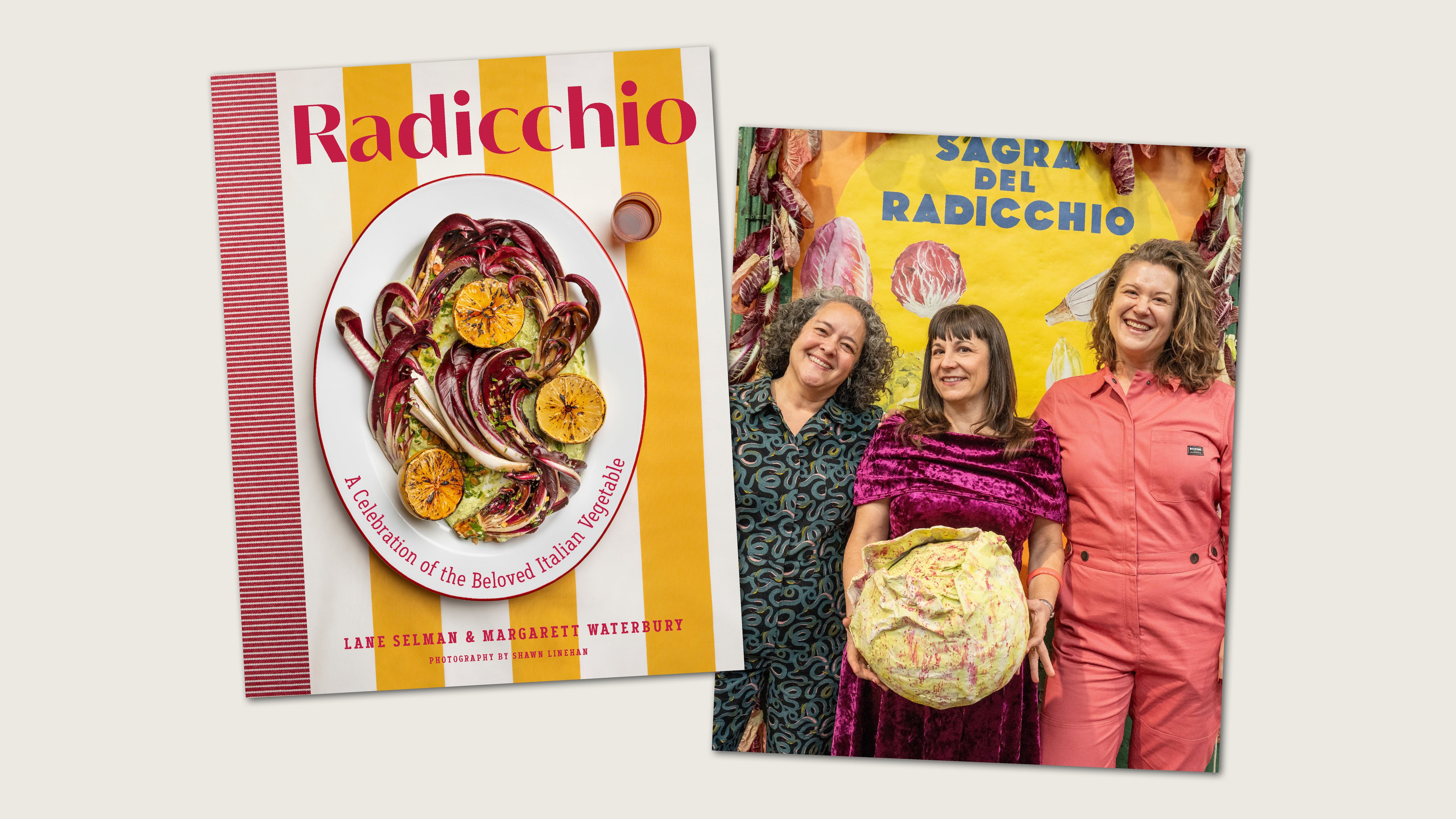
In some circles, name-dropping radicchio varieties is like name-dropping bygone punk bands. Castelfranco and Rosa di Gorizia have become a handshake language to signal that you’re part of the movement—yes, there’s absolutely a movement—and set yourself apart from the masses who still think radicchio is the weird and bitter purple lettuce you pick out of your packaged salad mix.
Radicchio has become the poster child of an effort to connect parties in the local food production system. The sometimes wildly colorful leafy vegetable is a temperamental but rewarding crop, and it’s proven to be a perfect vehicle to put seed breeders in touch with farmers and farmers with chefs. In our industrialized agricultural system, these folks rarely interact, much less collaborate. But opening these lines of communication is the mission of the Culinary Breeding Network, a group that Oregon State University research professor Lane Selman started 15 years ago.
Today, Selman’s network puts on all manner of events evangelizing different crops, where you can shake hands with a seed breeder, a farmer and a chef while eating their collective yearslong collaborations. The Culinary Breeding Network’s conferences and parties promote new and heirloom varieties of things like green beans, tomatoes and winter squash. But it’s evident that radicchio is Selman’s favorite—it’s hard to say whether child, patient or client is the right word.
Along with Portland food writer Margarett Waterbury, Selman has compiled much of the past decade of her life and work into what appears to be the definitive book on the subject, Radicchio (Timber Press, 376 pages, $40). It’s about as comprehensive as any general audience book on a crop could hope to be, equal parts botanical history, gardening guide, cookbook and photo essay, the latter thanks to local photographer Shawn Linehan’s staggering images.
Selman and Waterbury recount their own courtships with radicchio and eventual pilgrimages to its homeland, the Veneto region of northern Italy. After meeting some Italian seed breeders and farmers, Selman organized a trip in the late 2010s, “the expedition,” in which she brought some 40 Pacific Northwest farmers and vegetable nerds to Italy.
It’s on a farm tour in Italy that Waterbury recounts first truly “getting it,” and her prose articulates the vegetable’s enchanting charms:
Most of its outer leaves were browned and slick, decaying under the accumulated weight of months of rain. But as he stripped away course after course of floppy, ruined leaves, a bright central heart began to emerge, glowing against the pale gray of the Italian winter sky. Finally, he shook the last few tattered shreds from the now-pristine orb of radicchio, its white inner rib gleaming brightly against the fuchsia of its leaves, and handed it to me with the satisfied smile of a magician.
As a wild plant, Chicorium intybus seems to be about as old as time. It was an important peasant food through the Middle Ages; it grew wild and stored well. Selman and Waterbury trace the first appearance of the word “radicchio” to a 1476 Italian translation of Pliny the Elder’s Natural History. From there “radicchio” seems to have become the word for domesticated chicory plants. But it wasn’t until the late 1800s that radicchio became the Italian staple it is today. To prove its fanfare and ubiquity, the authors note that Italian McDonald’s franchises boast a speck sandwich made with Radicchio di Chioggia IGP—a legally protected classification like those for Champagne and Parmigiano Reggiano.
Real-deal radicchio first showed up in the Pacific Northwest around 2007. Chefs loved it, but farmers market shoppers didn’t bite. Over the next decade, more and more local farmers fumbled through the difficult and often fruitless growing process. The trick is that radicchio gets sweet, compact and crunchy—instead of bitter and hairy—by finishing its growing cycle with a few weeks shielded from the sun. Some varieties cover themselves in a slimy mess of dead leaves, as Waterbury describes, but delicate varieties require another tedious step. Rosso di Treviso Tardivo, which look like burgundy squid tentacles, and Rosa di Gorizia, which convincingly resemble actual roses, undergo a process similar to Belgian endive. They’re dug from the field and finish growing in a dark cellar with their roots suspended in fresh running spring water. Total divas.
A decade on, local farmers figured out these tricks, but the dining public hadn’t caught on. So the Culinary Breeding Network got involved to help promote the local rise of radicchio, and in 2018 held its first Sagra del Radicchio. Now, the Italian-style harvest festival is an annual event—the next installment is Oct. 24 at the Redd on Salmon—where casual eaters can hang with the pros and sample the latest and greatest radicchio.
Along the way, the authors, of course, picked up a few recipes—from chefs, farmers and seed breeders in Italy and the Pacific Northwest. There’s potato gnocchi with radicchio pesto and pasticcio with radicchio and sausage—a regional lasagna variation. Several pizza recipes give shout-outs to both Lovely’s Fifty Fifty and Pizza Thief, and Lovely’s chef Sarah Minnick contributed a chicory-laced recipe for farro pie.
Portland’s Italian food godmother, Nostrana chef Cathy Whims, lent her iconic Insalata Nostrana recipe. Former Antica Terra chef Timothy Wastell, who won a James Beard Award in 2025, shared a radicchio salad recipe incorporating black futsu winter squash.
In what is perhaps the most unexpected recipe, radicchio is battered and fried and dipped in aioli. It seems delicious, and the impulse to deep fry something that took so much demanding work to produce captures the book’s tone perfectly: This crew is very serious about radicchio, but they prefer not to take themselves too seriously.
GO: Authors Lane Selman and Margarett Waterbury as well as photographer Shawn Linehan will sign copies of Radicchio: A Celebration of the Beloved Italian Vegetable at a book launch event at Enoteca Nostra, 1401 SE Morrison St., 503-236-7006, exploretock.com/enotecanostrana. 5:30–8:30 pm Tuesday, Sept. 29. $31.