Skip to main content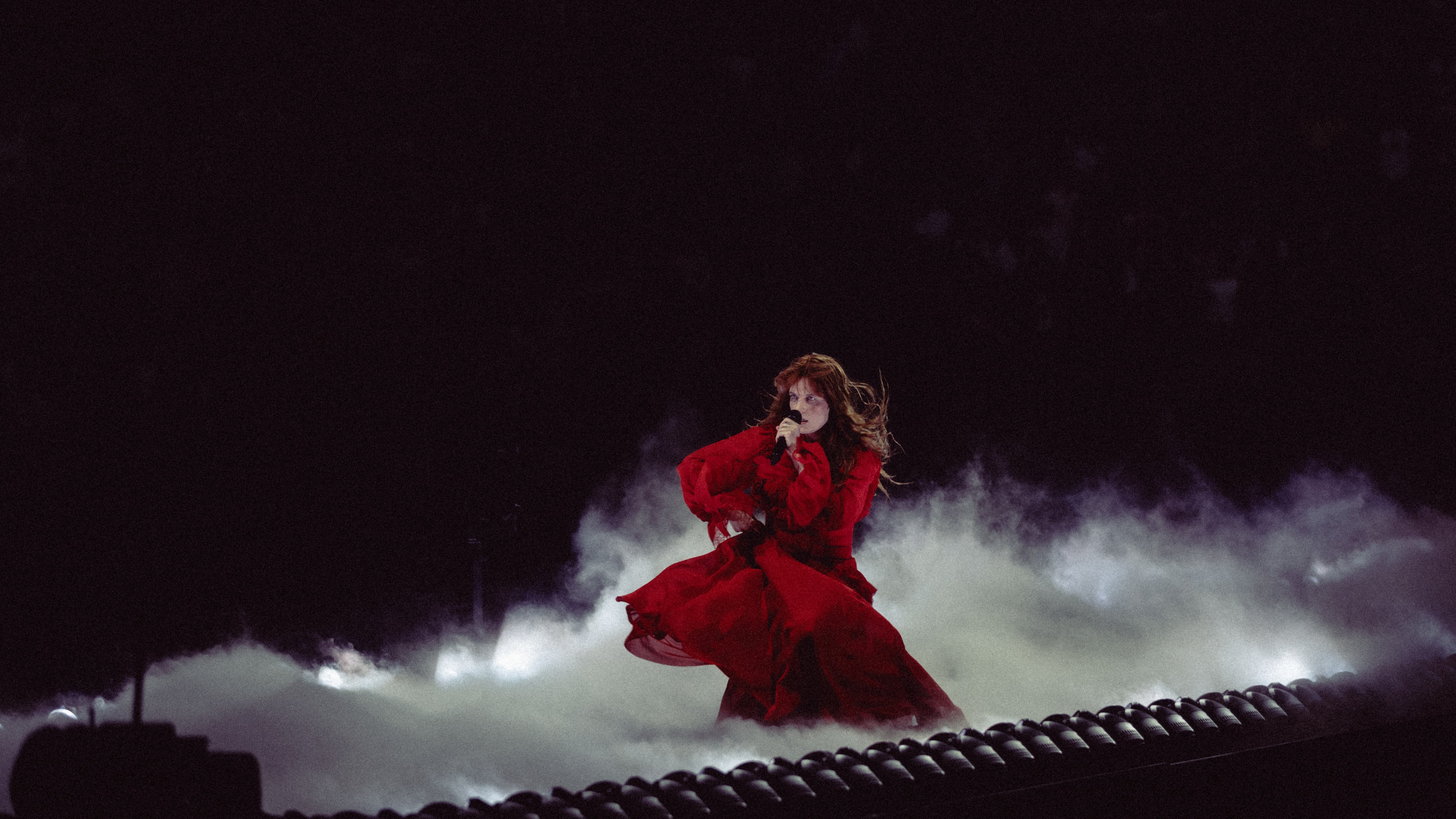
Florence Welch is the most likely musician to bring a harp to a punk show.
During its Portland stop promoting the femme rage-focused album Everybody Scream, the Machine half of Florence + the Machine fired on all cylinders. Welch paraded and pranced barefoot down a runway stage for over two hours in a white-trimmed black wizard sleeve dress with the quartet of dancers featured in the title track’s music video, tossing her voice and emotions to Moda Center’s rafters. The multi-instrumentalists behind her completing the Machine’s coven included guitars, keyboards, drums, synth boards, a violin and, yes, a harp player. Florence was obviously the star of the night, but though her vocals soared, she left enough room for the Machine’s musical chops to shine.
Welch is no stranger to darkness. It covers the fringes of her band’s debut album, Lungs, which last brought Florence and the Machine to Portland 16 years ago. But while darkness is at the forefront of Everybody Scream—unavoidable due both to These Times and a life-threatening ectopic pregnancy Welch suffered in 2023—Florence and the Machine’s set proposes the embrace of darkness as a path out of it back into the light. Her band’s newest arrangements are musically complex and compelling, just a thrill to witness live, but songs that have had longer to marinate with fans got bigger responses. Along with early alt-pop hits like “Shake It Out” and “Cosmic Love,” fans collectively seemed into songs like “King” from 2022’s Dance Fever, “Which Witch” from 2015’s How Big, How Blue, How Beautiful and “Never Let Me Go” from 2011’s Ceremonials, the latter of which Welch told the audience she would have sworn off playing were it not for fans’ insistent love for it.
Philadelphia punk band Mannequin Pussy set the tone early for the night. Anyone who arrived early enough to catch their set was treated to a high-octane performance that on paper might have been a head-scratcher for Florence + the Machine’s more polished sound and image but ultimately worked flawlessly together. Missy Dabice’s closing invocation for concertgoers to release their internal poison brewed under the crushing pressure of capitalism proved to be the spell needed to fully embrace Welch’s pagan pop.