Skip to main content
Sunstone Way, the nonprofit shelter provider that was sued by a whistleblower last month, plans to close on July 1, blaming reduced government funding and rising costs.
“The recent and anticipated funding reductions, coupled with anticipated increases in expenses in fiscal year 2027, forced the board of directors to make this hard decision,” Sunstone Way said in an all-staff memo obtained by WW.
Formerly known and All Good Northwest, Sunstone Way runs six low-barrier shelters in the metro area with funding from Multnomah and Clackamas counties and the city of Portland. They include Weidler Village, a 38-unit cluster in Northeast Portland and the 70-bed Delta Park Motel Shelter, a former Motel 6 converted just last June.
Sunstone Way had revenue of $13.3 million in the fiscal year ended June 2024, according to federal tax filings. It was Multnomah County’s 11th-largest contractor in the 2024 fiscal year. Chief Executive Andy Goebel, a pastor, was paid $131,711 that year, the filing shows.
Sunstone Way has operated under a cloud since 2022, when Multnomah County Auditor Jennifer McGuirk determined that the nonprofit overbilled the county by $525,000. Some $330,000 of that amount came from duplicated payroll expenses submitted for the same pay period in separate invoices, McGuirk said at the time.
Sunstone Way drew fresh scrutiny last month after former director of finance Kate Fulton filed a whistleblower complaint in Multnomah County Circuit Court, first reported by WW, alleging that the nonprofit’s leaders overspent on Portland office space, staff retreats to Bend, and bloated contracts with related organizations, then retaliated against her after she questioned expenses.
“By July 2024, it became apparent to plaintiff that Sunstone Way was being mismanaged financially,” Fulton’s complaint says. “That month, the organization nearly failed to make payroll for its employees and was able to do so only through plaintiff’s negotiation with Sunstone Way’s bank to avoid a default.”
Sunstone Way’s shelters will remain open, the nonprofit told staff.
“While Sunstone Way is closing, the shelters are not,” the memo to staff says. “We will be working with our government partners to ensure continuation of support for those who need shelter and housing services.”
Multnomah County staff learned about the closure today, spokesman Denis Theriault said.
“Multnomah County and the city of Portland are committed to supporting participants served by Sunstone Way throughout this transition,” Theriault said in an email. “We are working together with urgency to assess our next steps. Our shared goal is resilience as we plan for how this decision will affect our overall homeless services system.”
A Sunstone Way spokeswoman confirmed the contents of the all-staff memo.
Sunstone Way was under review by Multnomah County’s Fiscal Compliance Unit last week. The review was scheduled before Feb. 12, when Fulton filed her lawsuit, Theriault said at the time. The county performs fiscal compliance reviews every three years on contractors that get federal funding. Sunstone Way was last reviewed during the 2023 fiscal year and was due for a new one.
The timing is “fortunate,” Theriault said in an email last week, because the county didn’t have to schedule an additional review of Sunstone Way after Fulton’s lawsuit and WW’s coverage of it. “We were able to keep the review already in progress,” Theriault says.
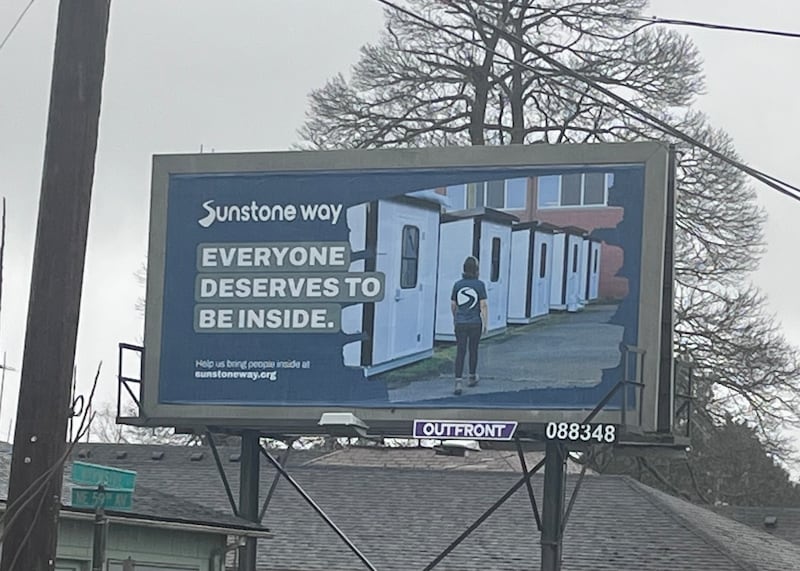
Oddly for a nonprofit facing a budget crunch, Sunstone Way has a billboard advertising its work on East Burnside Street.