Skip to main content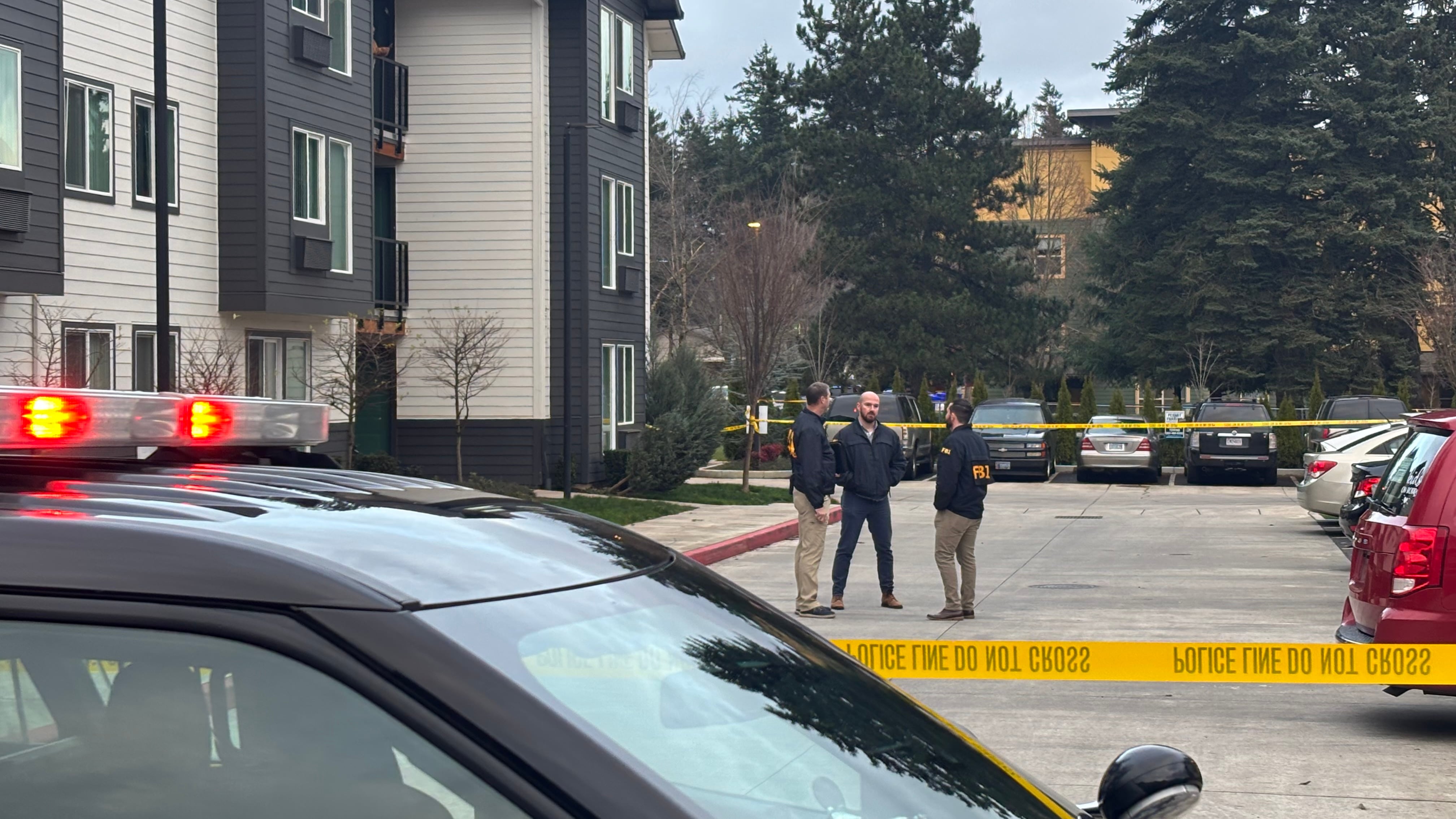
On Jan. 9, one day after a federal agent shot two immigrants in East Portland, Portland Police Chief Bob Day stepped behind a lectern to deliver some remarks.
The Trump administration had promptly declared the two wounded immigrants had tried to hit several immigration agents with a pickup truck, and described the couple as members of a “vicious” gang. At a time of broiling political tension, few local officials were prepared to accept this story at face value. Chief Day had initially declined to hold forth on the gang question. But now, at this news conference, he said he had some “factual information” to share.
He said he was pleased to confirm that the people who got shot were recovering. Then he turned to the matter at hand—a subject, he said, that he broached only with great reluctance. “They do have some nexus to involvement with TdA,” he said, referring to the notorious Venezuelan gang Tren de Aragua. “We can confirm that.”
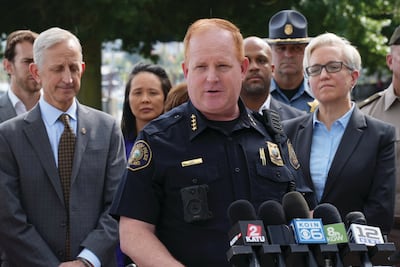
Chief Day seems to have a philosophical streak. In one tangent that day, he emphasized that the world contains many competing truths, and that the Portland Police Bureau would continue to hold and honor all these truths at once. The gang nexus was one truth, he seemed to be saying, even as he emphasized that this did not inherently justify the truth that these people with a gang nexus had just gotten shot by a federal agent.
Yet the chief’s evident anxiety over which truths to voice left him open to scorn. During the press conference, Day dabbed at his eyes. Conservative pundits delighted in the moment, which seemed to reveal a liberal who could barely stomach facing facts about the character of people the left wanted to see as victims. To progressives, meanwhile, he was just a reluctant flunky for federal propaganda.
In fact, it was unclear what the quality of the chief’s sourcing was. There had, he said, been a shooting the previous summer, and the victim in that shooting told police the suspects were “associated with TdA.” He at first left it ambiguous what this shooting had to do with the man and woman whom the federal agent had just shot. Asked for more info, Day clarified that “through the investigation of the shooting on July 11, there became a nexus to them. Whether they were involved, I do not know.”
He added, “They have not been confirmed as the shooters.”
In short, the information the chief shared was a muddle. From this muddle flowed media reports asserting what could be said for sure: As wweek.com put it that day, “Police Chief Says Couple Wounded by Border Patrol Were Linked to Gang Activity.”
Spend a few days in the news business, and you quickly get a feel for the “official” sources of information that, if often too dull to use, will certainly make no editor squeamish: a press release from the health department. Revenue figures listed in a tax filing. Remarks delivered from behind a lectern by a city police chief.
Day himself alluded to the power of his words. “Anytime that we have messaging that jumps to conclusions, anytime that we make assumptions or assertions, then we are definitely putting the entire system at risk,” he said.
Yet seven months later, the Trump administration has retreated from its own most provocative allegations—and what once seemed a painfully conceded truth from Portland’s police chief proved largely irrelevant in court.
It wasn’t long before the drift began. Yorlenys Betzabeth Zambrano-Contreras, the passenger in the vehicle, only ever faced a relatively minor charge—leveled by federal prosecutors the day after the incident—of having entered the country illegally a few years earlier. She was released on probation.
Luis Nino-Moncada, the pickup’s driver, faced deeper legal trouble: possibly more than a decade in prison. And having charged him with assaulting a federal officer with a deadly weapon (the Toyota Tacoma) and damaging federal property (the feds’ rental Hyundai Sonata), prosecutors wanted to keep him locked up while the case proceeded.
This they succeeded in doing, but not before backpedaling on one of the Trump administration’s first assertions. “We’re not suggesting, and we didn’t make an argument to the court, that he’s a gang member,” federal prosecutor Thomas Edmonds told a judge in February, arguing instead that “there are associations with him in this gang circle of individuals who were active in Portland back in the summer of 2025.”
Though law enforcement often bandies the term in media statements, judges are rightfully sensitive to “gang-tie” accusations, says Aliza Kaplan of Lewis & Clark Law School. This is not just because the association can stain someone in the eyes of a jury, but because the claims are often spurious, hanging on some sloppily assembled gang database or other form of “loose intelligence.”
According to the court record, the intelligence on Nino-Moncada is essentially that he associated and has hung out in the same room with people who were involved in two shootings in July 2025. And that one of the victims of those shootings told law enforcement the people who shot at him were members of Tren de Aragua.
Whether or not those people actually were members of that gang, the court record does not show anyone making that claim about Nino-Moncada himself. His connection to the shootings is also tenuous. Despite Chief Day’s insinuations of his involvement in a July 11, 2025, shooting, nowhere do the court filings allege Nino-Moncada was present when that—or a separate earlier shooting—took place.
The filings do, however, evoke the rough terrain he and Zambrano-Contreras, often described as his girlfriend, traversed.
The other July shooting, the feds say, occurred on July 7, after Zambrano-Contreras reported she’d been sexually assaulted during sex work and then held against her will. She said she called Nino-Moncada to ask him to help her leave, which he did, before she returned with different people to retrieve her things. A police report indicates someone got shot when she and this other group returned, but she faced no charges and said she did not see the shooting. Nino-Moncada, for his part, said he did not know anything about the subsequent shooting. He described Zambrano-Contreras crying and having marks on her neck when he picked her up.
When a reporter described this milieu as unsavory-seeming, Kaplan, the Lewis & Clark law professor, said she has no particular insight into this case, but pointed out that “what you call ‘unsavory’ could be survival.” She says telling a more complex narrative of people’s lives than that often told by law enforcement—lives which often involve poverty, abusive relationships, drugs, mental illness—might help produce a better criminal justice system.
As a practical matter, Kaplan says, she’s represented many gang members and alleged gang members alike, and being in a gang doesn’t mean you don’t have relationships with lots of other people—rendering the gang-associate-by-proxy logic particularly dubious. “It’s not OK for law enforcement to throw around ‘gang’ this, ‘gang’ that, unless they have significant proof that it’s true,” she says. “Because, again, it sticks.”
Through a spokesperson, Chief Day declined an interview for this story. “Chief has nothing to add beyond what was shared earlier this year,” said Portland Police Bureau spokesman Mike Benner. Attorneys for Nino-Moncada and Zambrano-Contreras did not comment either. But in court, Nino-Moncada’s attorney Michael Benson said his client fled Venezuela because of political persecution, came to the U.S. looking for work, and is not from a part of Venezuela where Tren de Aragua operates.
Late last month, Nino-Moncada struck his own plea deal with the feds. In it, he admitted he was guilty of damaging federal property and acknowledged he had an open deportation order. Meanwhile, the feds pledged to drop the assault charge and not push for additional prison time after sentencing—at which point he may well be deported. The document made no mention of gang ties. It also said both parties—Nino-Moncada and the government—believe he had no history of criminal convictions at all.