Skip to main content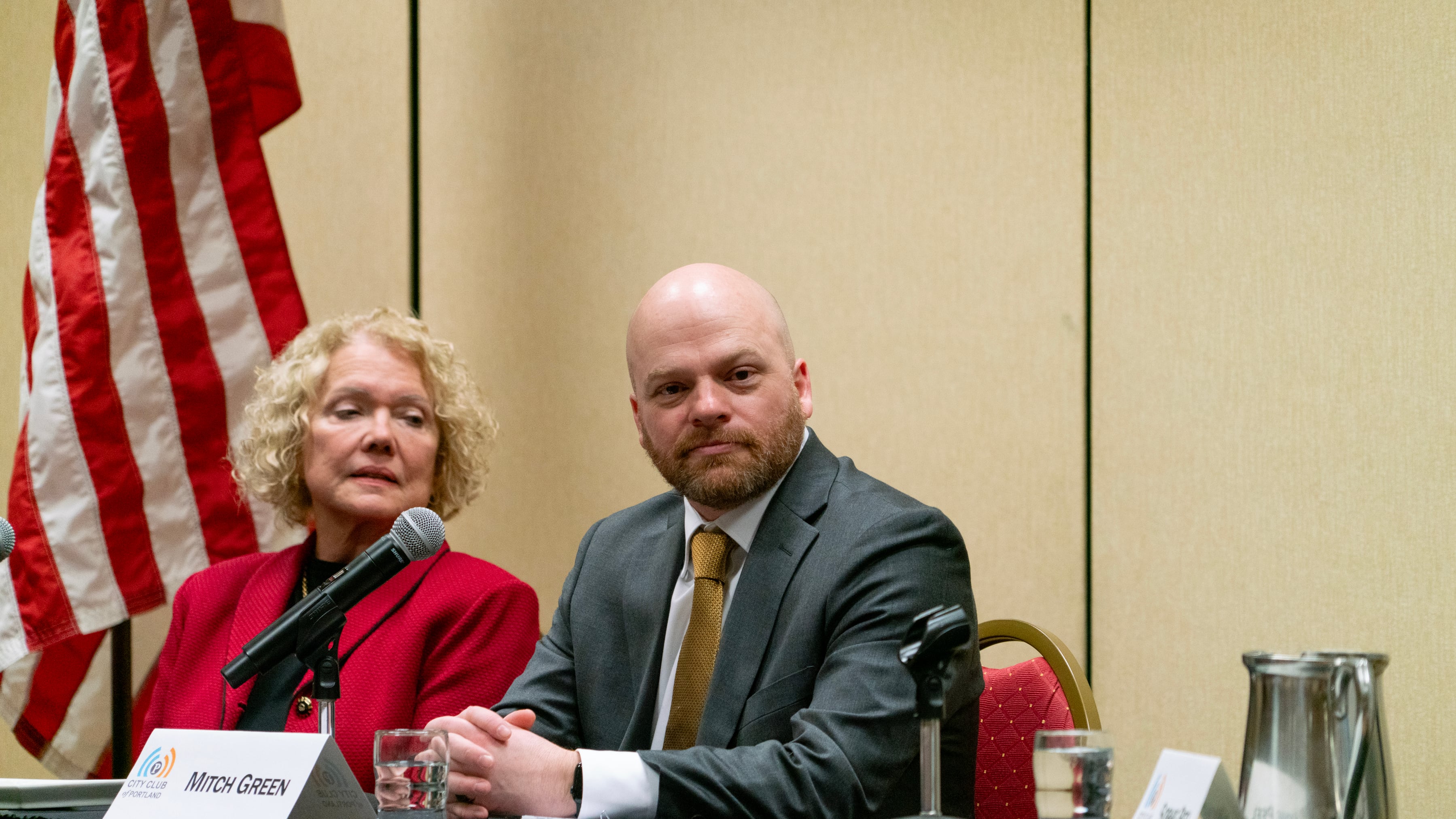
Last month, City Councilor Mitch Green debuted his intention to spearhead a ban on foie gras in the new year.
When Green offered his “sneak peak” at the foie gras project during a December committee meeting, fellow City Councilor Olivia Clark asked if time was best spent on animal welfare when the city was in what some economists say is a “doom loop.” She said she’d appreciate it if Green held off on bringing it as an agenda item in a January meeting.
Green declined to delay it. At the time, he replied that the sale of foie gras was an economic issue in of itself. “The foie gras ban,” he said during the Dec. 16 Arts and Economy Committee meeting, “is an economic issue that is very important to people in our community.”
Since 2021, animal rights activists have implored City Council for a ban on foie gras, which is the liver of a goose or duck that has been fattened by a process of force-feeding. (About half a dozen high-end Portland restaurants serve it.) As WW reported in 2022, advocates never got traction for the idea, largely because city commissioners feared the issue would appear frivolous next to Portland’s other challenges.
Last week, WW wrote a story examining whether Portland was, as Clark asserted, in a “doom loop”—that’s a catchy term for when employees leave the downtown core, foot traffic drops, small businesses crater, and the value of buildings tumble, resulting in less tax revenue collected and fewer city services over time.
In the story, WW juxtaposed Green’s plan to push a ban on foie gras in the new year with the fire sale of a landmark downtown building, which business leaders, most prominently Portland Metro Chamber president Andrew Hoan, point to as evidence of a doom loop.
Green’s office didn’t respond to requests for comment before the story went to press. But after its publication, Green reached out to take issue with the story’s comparison. He says his work to ban foods tied to animal cruelty doesn’t diminish his concern about the Portland economy and commitment to improving it.
“To take the last moment of a two-hour committee meeting, where the agenda focus was on the needs of small businesses and consideration of a quasi-privatization proposal for the Portland Tennis Center, to mean that I am unconcerned with the economic conditions of the city is quite a leap,” Green said in a statement. “The fact is that I care deeply about the economic health of our city and worry about the risk of falling into a doom loop every day, which is why I fought for and secured resources in the FY25-26 budget for important downtown economic catalysts like Portland Center Stage and the James Beard Public Market.”
Green also cited his support of a policy that waived system development charges for housing developers and another aimed at speeding up the design review process, and his push to get the city to upzone the inner eastside faster.
“Are we in a doom loop? No, but if we can’t address the affordability crisis facing our city and get our fiscal house in order, we run the risk of entering one,” Green said. “I agree with Hoan that we have a challenging decade ahead of us, but we can walk and chew gum at the same time.”