Skip to main content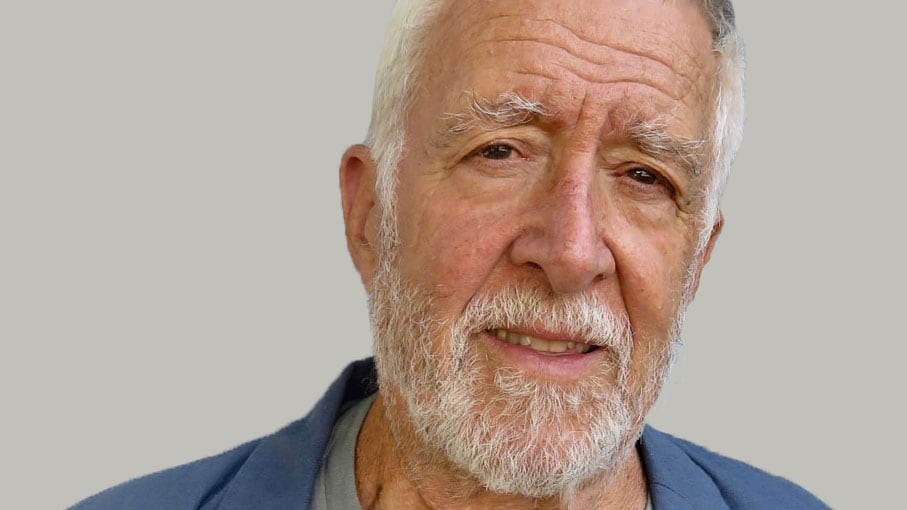
For more than 35 years, columnist and author Phil Stanford has picked away at the unsolved 1989 murder of Michael Francke, who at the time of his fatal stabbing outside his Salem office served as the director of the Oregon Department of Corrections.
As The Oregonian’s Metro columnist from 1987 to 1994, Stanford wrote dozens of columns about the case, many of them dismissive of the state’s prosecution of a small-time Salem drug dealer named Frank Gable. Stanford’s fascination with the murder, which continued during a subsequent stint as columnist for the Portland Tribune from 2001 to 2008, kept the case alive and ultimately led to a successful challenge to Gable’s conviction by federal public defender Nell Brown. A federal magistrate judge accepted Brown’s argument that Gable was wrongly convicted, and Gable was freed from prison in 2019.
But if Gable didn’t kill Francke, who did?
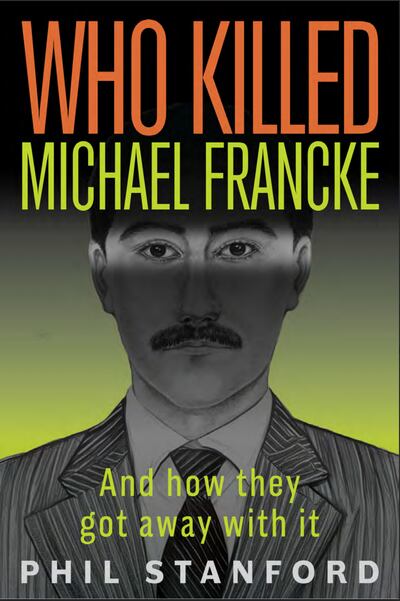
Stanford has thoughts on the answer. He pulled together everything he’s learned from countless interviews and thousands of pages of records in a new book titled Who Killed Michael Francke—and How They Got Away With It.
The book, available from Amazon, follows a 12-part, 2019 podcast, Murder in Oregon, and fills in some of the blanks in what is now an encyclopedic court record—a record Stanford says lacks one crucial bit of information.
“No one in a position of authority, in politics or law enforcement, seems the least bit interested in finding out who killed Michael Francke,” Stanford writes in the book’s introduction.
No one but Stanford.
He spoke to WW over the weekend from his home in Los Angeles. The interview has been edited for brevity and clarity.
WW: After decades of pulling on various strings and looking at individual parts of the story, what surprised you when you sat down to put it all together?
Phil Stanford: I guess what surprised me the most was how they got away with it. Because once you look at the facts as we know them now, after two federal court decisions and the federal public defender’s brilliant habeas corpus petition and all the research we’ve done over the years, it seems so clear that they had absolutely no case against Gable. They made it up, every bit of the information. And once you get to that point, you realize that they were lying from the very beginning. That’s what shocked me the most, I guess. Then you really have something to deal with, and that’s what I tried to do in the book.
It’s been years since I’ve had a forum from which I could stir up trouble. The 9th Circuit Court [of Appeals] has made it very clear that the case was phony, that Gable was innocent. And it’s very clear that Michael Francke’s murder had something to do with the fact that he had discovered corruption in his department. Almost certainly there was a conspiracy to kill him. It’s something that for the well-being of the state and its institutions should be pursued.
In some ways, you’re describing in this book two conspiracies that fold into one. First, there’s a murder plot to kill Michael Francke so he would not reveal corruption in the Department of Corrections. And second, there’s a plot to pin it on a patsy.
Exactly. Those were their two big lies. The 9th Circuit Court ruling, it’s just a searing ruling. They said that the [Oregon] State Police and the Marion County District Attorney’s Office were engaged in investigative misconduct, which was their lawyerly way of saying, “This was crooked. They fabricated all the evidence against this poor bastard.” It would’ve been impossible for them to do it accidentally. This was not a case of a technical glitch that led to an exoneration. This was a railroad job.
And the same sort of realization hits you once you go back and look at the incontrovertible evidence now that Francke was investigating corruption. The staff had to know about it. He was conducting interviews with people who testified in the previous 1986 investigation, which had been a whitewash. What is shocking is not just that it was covered up, but that it was covered up immediately from the first or second day. The word out of Salem was that it was a car burglary gone bad when they knew he was investigating corruption. Now, that doesn’t prove in and of itself, of course, but it’s certainly something that has to be investigated. And they did everything they could to avoid investigating it. And after a year, they pinned it [on Frank Gable].
They had to do something. Some of us kept raising questions in the press: Jim Redden at Willamette Week, Steve Jackson at the Salem [Statesman]Journal, Eric Mason at Channel 6, and I was doing what I could at The Oregonian. It wasn’t going away the way they’d obviously planned it, the way things usually do. And so they selected a patsy and made up phony evidence. They got people to perjure themselves. They had absolutely no physical evidence connecting him with the scene of the crime.
Over the years, you have objected to the term “obsessed” to describe your relation to this case, which surprises me slightly because I think any good journalist gets a little obsessed on a story they know is good. What word would you use?
At a certain time, I think “obsessed” was used to mean that I was pursuing a boogeyman that I’d created. In fact, yeah, I guess I’ve been obsessed with just about any good story I’ve ever worked on. And I hope that if readers pick up this book, they’ll become obsessed with the story too.
Is there a word you’d use instead?
One foot in front of the other. Plodding.
In your book, there are two heroes: Kevin Francke, the dead man’s brother, and Nell Brown, the federal public defender who won Frank Gable’s exoneration and release from prison. Tell us about a third character who might not be as central to the story who really sticks with you.
I was just thinking about him today. He’s retired from the Corrections Department. His name is Dave Larson. He was a guard back then. Straight-arrow guy. He’d been a Marine for seven years. He believed in right and wrong. And he believed in telling the truth. And as a new guard at the prison farm annex back then, he noticed some irregularities. Some senior officers were partying with inmates, letting them out at night, drinking with them, doing drugs with them. They asked him for some keys.
He went to his pastor, and the pastor put him in touch with L.B. Day, who was the state senator from Salem, an old labor lawyer and an honest guy himself. And L.B. Day looked into it and demanded an investigation. This was back in, in ’85 and ’86. And sure enough, the State Police whitewashed it. L.B. Day wrote a letter to Gov. Vic Atiyeh saying he was quite dissatisfied. Then he died very suddenly of a heart attack that Larson considers suspicious. They were planning the following Monday to hold a press conference and say the 1986 investigation of corrections was a cover-up.
However, when Francke became head of corrections, he was put in touch with Larson, and Larson did talk to him, although it was later denied. This is more proof that Francke was investigating corruption. Larson—he’s an evangelical preacher now—was central to this whole story. He’s a likely candidate for hero, sure.
Are you finally finished with Michael Francke? If not, what’s left to be done?
There’s still some loose ends. I will always be pursuing them, although not as full out as I have been for the last two or three years on this book. What is still to be done, of course, is for the politicians and law enforcement officials who have the authority to do anything at all meaningful to reinvestigate the case. It’s an open murder case of a ranking law enforcement official who was stabbed to death outside his own office building the night before he was scheduled to appear before the Senate Judiciary Committee and expose the corruption in his department. Is that not enough to interest the law enforcement authorities?
Of course, the State Police can’t investigate. They’re being sued for millions of dollars. The state’s going to end up paying millions of dollars to Gable. The case is still in process. It has to be someone outside. The FBI wanted to get into it back in ’89. They don’t now. They’re too busy doing whatever they’re doing. But that’s what has to be done. I can’t do it. I can’t subpoena people.
Let’s say you had subpoena power. Who’s the one person you would like to talk to?
That’s difficult because a case has to be built up around that person. You don’t go to that person, because let’s assume he’s a pretty good liar. He’s a really good liar, OK? He’s a psychopath. So you have to talk to the people he’s threatened. You have to give them an excuse to talk. You have to find the surviving bad guys who were probably involved in the actual stabbing and give them a reason to talk. I certainly can’t do that.
The first person I had in mind was not the stabber. I think he’s probably the person who organized it. Anyone who reads the book will be able to figure out the people I’m talking about. I mean, it’s not just one person.
What does the story of Michael Francke’s death say about Oregon?
I think his death—the assassination, as I see it—and the subsequent cover-up comprised the most serious criminal case in Oregon in the last half century. The murder itself was alarming enough: that there would be that level of corruption in the state government, but particularly in Salem.
I try to make the case in the book that everyone in Salem had something to cover up. That everyone was partying way too hard. It was the end of the ’80s and the professional class was into coke, hot tub parties with young girls—everyone was into something. Everyone had something to cover up. And whether they were involved with planning the murder or not, someone had something on them.
That was the driving force behind the cover-up, which I think is even more revealing of the state as a whole, because it involved state government, and it lasted. It has lasted. It’s still lasting. No one is investigating this murder. It’s an open case for more than 30 years. The murder happened 37 years ago, folks. And that should be at least the subject of some serious thought by people in Oregon: what that says about the joy [laughs] of a one-party state.
State government, starting with [Gov. Neil] Goldschmidt, and Goldschmidt’s successors and their successors, resisted reexamining the case even after the 9th Circuit Court had exonerated the poor bastard and, in their lawyerly language, said it was a crooked investigation.
Maybe the population as a whole isn’t upset about this because they don’t want to admit this is possible. That goes way back into Oregon history. People came out here to start a new Eden. Of course, that was a false hope from the beginning, but they’ve always liked to believe that somehow they were a little bit purer than people living in adjoining states.