Skip to main content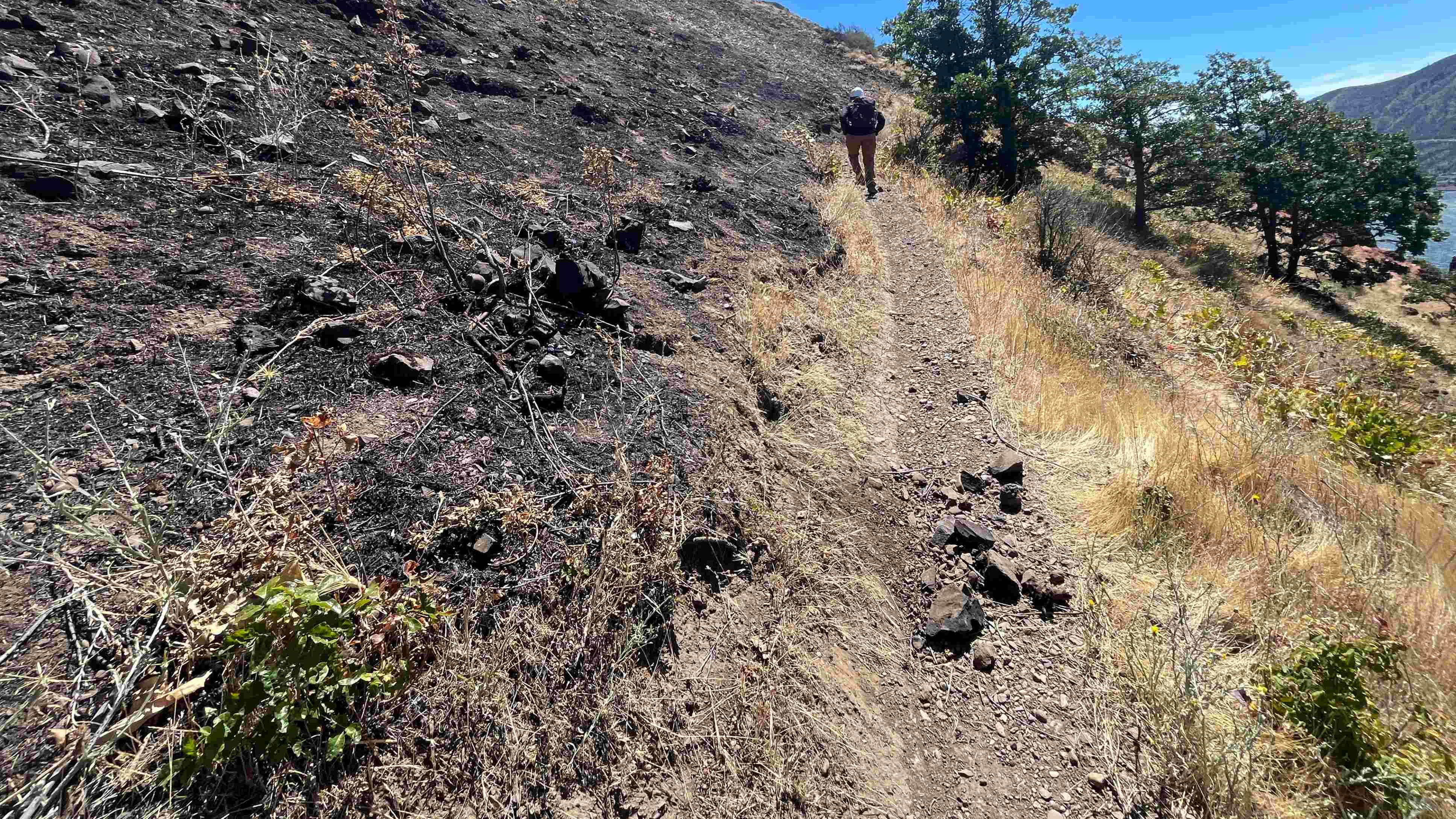
A wildfire season that had simmered across Oregon for weeks erupted suddenly last week after lightning strikes ignited more than 140 wildfires in a dry landscape. The Oregon Department of Forestry deployed an incident team to fires burning near Prineville and Sisters. “This is the third and last ODF-staffed team the department has available,” the agency warned in a statement. “The deployment is necessary due to the unusual early season ‘resistance to control’ nature of these lightning-caused fires in Central Oregon.”
Oregon officials have been bracing for a perilous fire season, even by recent standards, thanks to a mild winter that left little snow and much of the state in drought conditions. The coming days could swiftly exhaust the state’s firefighting resources, even as emergency managers tell people living in Central and Eastern Oregon to prepare for swift evacuations.
So far, the effects of those fires have felt remote from Portland, which hasn’t even experienced noticeable smoke. But one fire last month offers hints of how this summer’s conditions could change landscapes this city’s residents regularly enjoy.
The 226-acre Lyle Hill Fire that burned the Lyle Cherry Orchard Preserve at the end of June has caused the preserve to close indefinitely due to damage to trails and burned trees posing a possible safety hazard. More than 90 acres of the 540-acre preserve that looks out over the Columbia Gorge from the Washington side was burned in the blaze.
Friends of the Columbia Gorge, the land trust that owns and operates the preserve, says that while no lives or homes were lost, the area’s vegetation will need a more in-depth assessment and significant repair. Because of this, the land trust is asking visitors to abstain from coming to the preserve for the foreseeable future.
“Repairing the trails and giving the land time to heal will take months of work and stewardship before it’s safe to visit again,” Gabe Sheoships, director of the land trust, said in a written statement. “We know this is disappointing, but the closure protects the Lyle community, visitors, and the recovering landscape.”
The Lyle Hill Fire broke out east of Lyle, Wash., on June 12 and didn’t reach full containment until July 3. The preserve was hit with the worst of the blaze; two-thirds of the fire was concentrated on the preserve.
“Our land trust staff was recently able to get out to the preserve for a first look at the damage,” Sheoships said. “Walking the trails, they saw that sections will need repair and that the oak woodlands must be assessed for damaged trees that could pose a danger. This was only an initial visit, and a comprehensive survey of the burned area is still to come.”
Though the land trust doesn’t yet have a timeline for its restoration, Sheoships says the organization plans to host a range of “stewardship opportunities” to engage the community in the preserve’s rehabilitation.