Skip to main content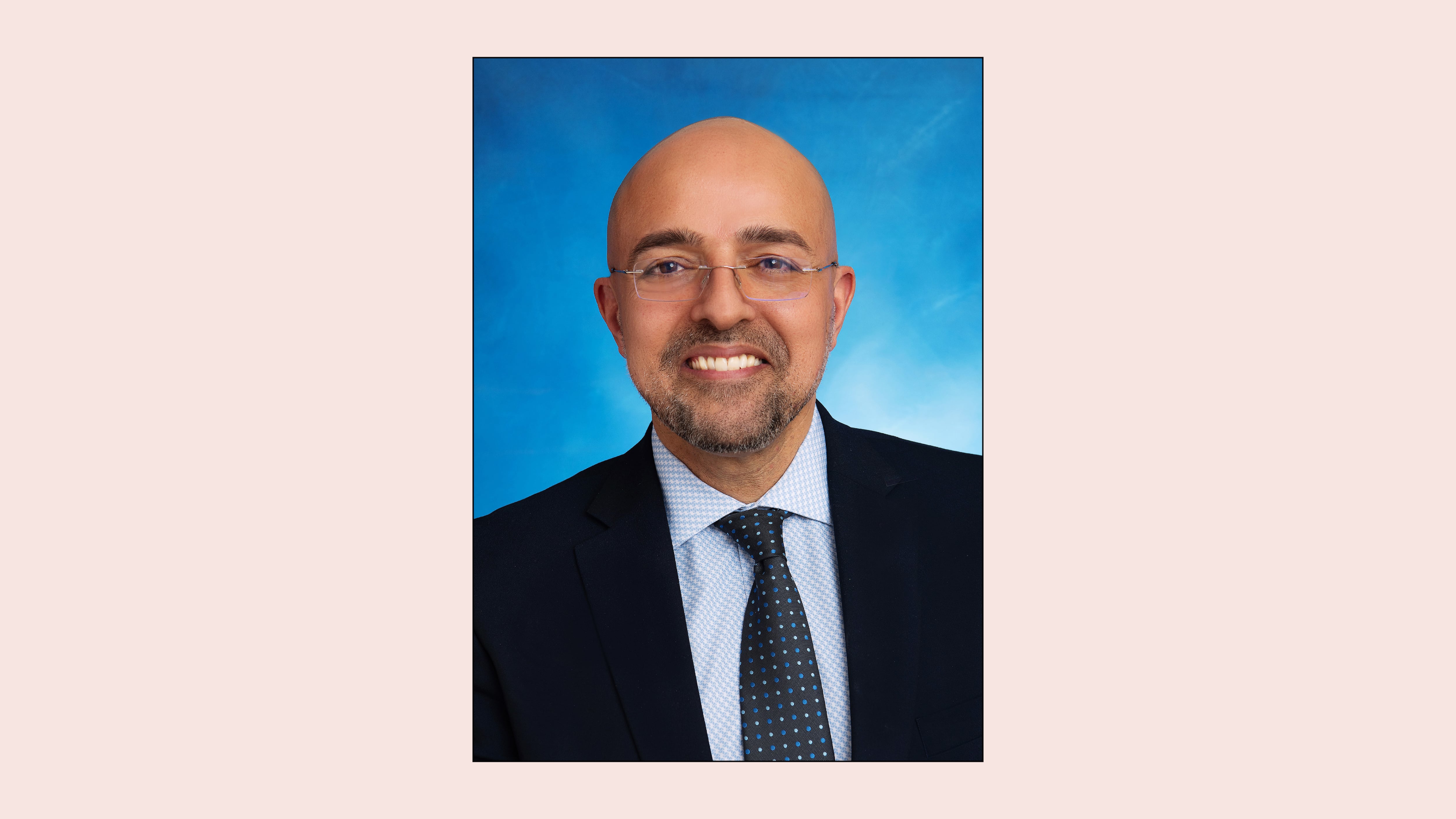
When Oregon Health & Science University abruptly removed the chief of its health care operations after just a few months on the job, he quickly hit back. Casting himself as a whistleblower, former CEO Tarek Salaway said his firing was retaliation for raising concerns about spending, workplace bias, and patient safety.
Documents reviewed by WW suggest there is more to the story than Salaway initially let on.
Obtained under Oregon public records law, the documents detail witness statements from an OHSU investigation in early March. Several of the witnesses—their names were redacted, but they are clearly OHSU colleagues—described experiences with Salaway that ranged from obnoxious to “unsettling.”
The accounts touched on similar themes: They describe a CEO who zealously set out to improve OHSU’s health care operations, but who could also be condescending and arrogant, quick to cast aspersions on matters he still didn’t know much about, and didn’t seem to read emails or onboarding packets or listen particularly well.
The reported result was sometimes unpleasant, if unremarkable. “I cannot say anything that he has said to me that was inappropriate,” one staffer told investigators. “It is just not clear that he is listening.”
Others wondered, however, about Salaway’s sense of boundaries. One official recalled Salaway telling him early on that “we need to get gangster” on Hillsboro Medical Center, whose partnership with OHSU had evidently left Salaway unimpressed.
Another staff member told investigators of hearing secondhand that, frustrated with the recent resignation of a colleague, Salaway had twice stated, “I am going to strangle her.”
In a written response through his attorney, Salaway, whose annual salary at OHSU was $1.4 million, declined to comment on these and other specific claims. “I am aware of recent claims circulating and, given the legal process now underway, I am not prepared to comment publicly on specific details at this time,” his statement said.
In her own statement, Salaway’s attorney Jackie Ford cast the OHSU investigation as a “virulent” anti-Black, anti-Muslim and anti-LGBTQ hatchet job designed to discredit Salaway after he raised an array of legitimate concerns about the institution in January.
After Salaway came forward with his concerns, she tells WW, OHSU administration initiated a “rushed and irregular process” that suppressed views of people from “marginalized communities who enthusiastically supported Mr. Salaway’s leadership.”
Meanwhile, she added, “allegations were assembled against him, including backdated ‘supporting’ documentation based on hearsay, rumors, and outright lies used to justify Mr. Salaway’s termination.”
An OHSU spokesperson said the medical center cannot comment on a particular case, but added that the institution “does not tolerate racism, discrimination or retaliation of any kind,” and that “these were not factors in any decision related to this case.”
The witness statements tied to OHSU’s investigation of Salaway are dated March 10, 11 and 12—less than three months after Dec. 15, when his tenure at OHSU officially began.
The accounts indicate he did not always make a good first impression. On Christmas Eve, for example, an OHSU official expected to have a formal one-on-one “meet-and-greet” with Salaway, rather than the “unusual” conversation that ensued.
As the official recounted to an investigator, Salaway promptly commented on drama at OHSU, said it was not as well regarded as a California academic health center, and began dispensing advice. “You guys just need to commit,” the official recalled Salaway saying. “If there is bad behavior, you need to own up to it and make decisions.”
In that conversation, according to the documents, Salaway also expressed his preoccupation with OHSU’s partner organization, Hillsboro Medical Center. “I will not invest in HMC unless I have full control,” the official recalled Salaway saying. “I want the right of refusal for activities at HMC, and I want board seats.” Noting that OHSU already had right of refusal by contract, the official, according to the investigative document, “questioned whether Tarek had reviewed the agreement.” The official “described Tarek’s directives as lacking clarity and appearing uninformed.”
In time, the official said, he became guarded about the information he shared with Salaway, fearing it might be repeated or used without appropriate filtering.
Other recollections had more flattering dimensions. When Salaway toured Hillsboro Medical Center, investigators summarized the official’s analysis: “Tarek performed well, handled difficult questions effectively, and appeared as the CEO they expected during recruitment.” Another colleague described Salaway as “inconsistent”—effective in board settings but “accusatory or dismissive in one-on-one meetings.” She recalled one of her own meetings with Salaway, where she felt spoken to “like a child.”
Still, whatever his interpersonal manner, witness statements suggest Salaway communicated an earnest desire to tighten up the operation. One official recalled Salaway showing uncommonly fine-grained (and, the staffer thought, misinformed) concerns about levels of paid leave and turnover in the official’s department.
Another time, a traveling worker recalled Salaway chatting him up after moving into the adjoining unit in their building: “Tarek,” as the investigator summarized it, “told him that he had been hired to improve quality and invited [the worker] to ‘knock on [his] door’ if he observed any quality issues.”
According to the worker, a subsequent conversation with Salaway felt “more direct.” He recalled that the CEO sought his views on the attending doctors in the catheterization lab where he worked. The worker told investigators it was a good working environment, but also recalled mentioning to Salaway that he’d overheard what sounded like doctors speaking with a lawyer. Salaway, the traveling worker recalled, responded that there was “a legal thing going on” and referred to a potential discrimination lawsuit.
According to the investigative documents, the worker stated that “at this point he felt uncomfortable with the information being shared and attempted to remove himself from the conversation.” He recalled that Salaway told him, “If you hear anything else, let me know.”
As concerns were starting to burble about Salaway, the CEO, according to his attorney, had amassed a wide range of concerns about OHSU.
“Beginning in January,” his attorney wrote, Salaway “raised documented concerns to university leadership regarding patient safety, quality of care, institutional stewardship, conditions affecting the safety of staff and patients in the emergency department, and aspects of the workplace climate that were inconsistent with the organization’s stated commitments to equity, inclusion, and respect for leaders and communities from historically underrepresented backgrounds.”
OHSU leaders, Salaway’s attorney went on, did not take well to this. “Rather than addressing these concerns through appropriate governance channels,” she wrote, “the university initiated a rushed and irregular process that resulted in Mr. Salaway getting locked out of his office and instructed to misrepresent his availability to his leadership team.”
Specifically, she added, Salaway was told to say that he was “out of cellphone range,” which was not true.
Meanwhile, she said, OHSU amassed its allegations against Salaway on the basis of hearsay and outright lies. And though they say legal matters and confidentiality prevent them from sharing evidence of their claims, she and Salaway say the record will vindicate them.
Whatever the case, another thing that was going on during this tumultuous period was that key staffers who would have worked closely with Salaway were leaving OHSU.
It is not clear that this all had to do with Salaway. One person told investigators she was leaving because of better compensation, but also acknowledged that she’d been under strain.
Witness statements make clear at least some of the resignations created tension and left Salaway displeased. Salaway reportedly said one outgoing colleague had “screwed [his] re-org up” by planting landmines after resigning, and had “swarms of people” coming forward.
At least two witnesses described hearing of violently threatening remarks Salaway had made toward a colleague. One reported that Salaway at one point said he would cut someone across the throat, before laughing in a “maniacal” manner. As documented by the investigators, at least some of these accounts appear to draw on secondhand information, but the details of what they reported hearing left them shaken. A witness recalled going home and calling up someone else to tell them to be careful: “I don’t think I trust him in a room with you alone,” the witness recalled saying.
Salaway had other resentments brewing. A witness said Salaway viewed himself as at the same level as OHSU’s hopeful new president, Shereef Elnahal, and reportedly complained that Elnahal “monopolizes public speaking at town halls.” One time, investigators were told, when Salaway was assigned a portion of a slide deck, he said, “If Shereef has someone to do his slides, I should have someone too.”
By March, Salaway told WW in a prior phone interview, he was in talks with OHSU about his departure. And there were external indications that change was afoot. His LinkedIn page was deactivated for a period, though he said it was because of all the spam he was getting. Meanwhile, his email was sending an auto reply that he was out of office for a personal matter. This, he said, was true; he was in California caring for a sick parent.
Despite all this lead-up, Salaway said he was taken aback by the abruptness of Elnahal’s April 3 announcement that, effective immediately, Salaway no longer worked at OHSU. Soon Salaway and his attorney were threatening legal action.
Elnahal’s announcement reverberated through OHSU’s community of thousands. But, of course, everyday work carried on. That same day, investigative records show, the traveling worker from the catheterization lab wrote the investigators a follow-up email.
It was his last day at OHSU before moving on, he said, but he had information he felt he should share. Salaway, his neighbor, seemed to be out of town, the worker wrote, yet over several days, 24/7, Salaway had left his home stereo on, playing music loudly to the point that it disrupted the worker’s sleep.
“I believe his music/stereo is directed at our shared wall,” the worker wrote. “I can hear this music at all hours, and it has been pervasive.” The worker added, “I truly do believe this is retaliation for giving a witness statement.”