Skip to main content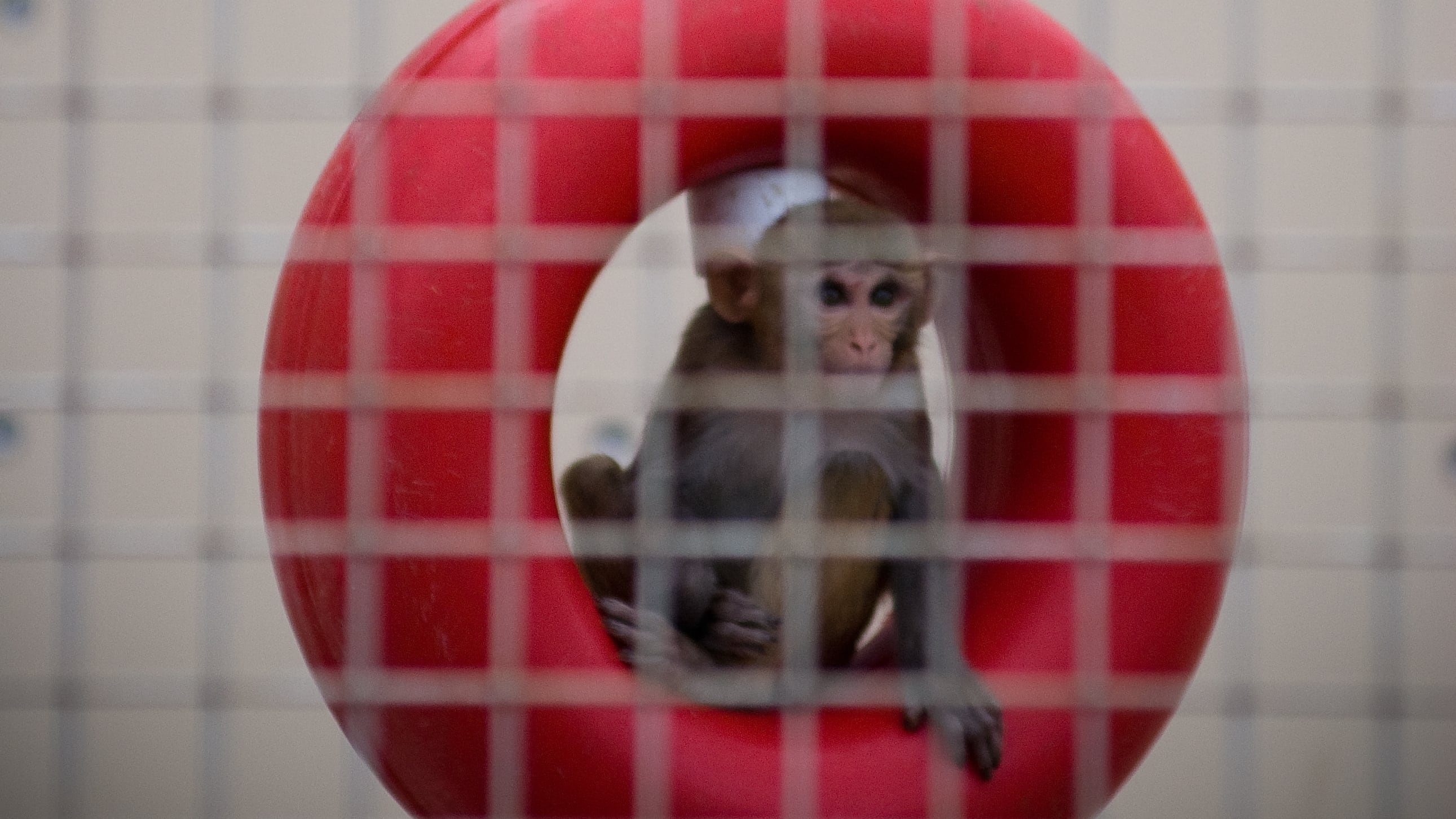
After years of pitched debate over a matter of considerable moral and scientific weight, the Oregon Health & Science University oversight board took a significant step Monday toward deemphasizing primate research at the Oregon National Primate Research Center, which is home to one of the largest monkey research colonies in the U.S.
The board approved a resolution, a compromise between skeptics and proponents of the center’s scientific work, that is broad in nature, setting parameters for OHSU leaders in the months to come to make a comprehensive plan to transition the facility’s focus.
The proposal emerged after negotiations with the feds to turn the ONPRC into a primate sanctuary came to naught.
These negotiations were launched six months ago to manage the peril officials said the research facility faced; amid mounting pressure from animal rights groups and lawmakers, OHSU leaders said the ONPRC faced a real risk of getting shuttered or seeing its funding dry up.
But in the end, OHSU’s negotiators said, discussions with the National Institutes of Health and members of Congress suggested that federal financial support to wind the primate center down and manage a sanctuary was not likely to be available in a sustained way.
So OHSU proposed to the board another path: Keep the facility operating as a research institution, but focus on becoming a leader in developing alternatives to monkey research, while “substantially” reducing the non-human primate population at the center by sending many to other sanctuaries (an option determined to be more efficient than setting up a whole new sanctuary), and limiting new breeding (including ending a program to sell monkeys for research elsewhere).
At the same time, the facility would continue monkey-based scientific research in areas for which OHSU determines it has unique capabilities and there are no good alternatives.
After lengthy public comment, the board approved the proposal without making any alterations. OHSU President Shereef Elnahal told reporters he expects the comprehensive plan to be produced as part of a broader strategic plan for OHSU by early next year.
For now, some of the language in the resolution remains general enough that different factions—who, despite objections that it doesn’t go far enough in their desired direction, seem generally supportive of the measure—can form interpretations that please them.
“PETA welcomes the board’s movement toward the long-awaited closure of the primate center, but hopes that the finish line will soon be reached,” said the animal rights group’s Senior Vice President Kathy Guillermo in a statement.
Meanwhile, primate center researchers and their supporters clearly hope to see the monkey-based experiments go on where they deem it necessary in the name of science.
Hashing out the details in the coming months will not be easy. The determination of what monkey-based research should continue at the center into the future is likely to be a contentious one. And it remains unclear what colony size would be necessary to support that research. Elnahal declined to offer a ballpark estimate for what ”substantially" reducing the monkey colony size at ONPRC—currently, about 5,000 primates—would actually mean.
Then there is the question of exactly what alternatives to monkey research are viable, or could be made viable in the foreseeable future.
OHSU pledges to transform the primate center into a “national leader in research on the development of NAMs”—an acronym for New Approach Methodologies, a broad range of technologies, from human-based experimental models to computational biology to organ-on-chip technologies, meant to reduce the use of non-human animals in research.
In testimony Monday, ONPRC Director Skip Bohm said he found the prospect of new institutional investment in NAMs exciting. He also said that the ONPRC had spent more than two decades developing such methods, adding “New methodologies still require validation in animal models” because current technology often cannot replicate the necessary complexity.
In other testimony, the OHSU neurologist Dr. Joseph Quinn noted the role that primate research played in developing deep brain stimulation, a treatment for Parkinson’s disease. “I’m not aware of any new approach methodology that can replace primates in this work,” he said.
In remarks before and after the board vote, Elnahal, who has described the ONPRC-related decision making as the most difficult of his career, emphasized his position that some broad categories of scientific research still require non-human primates, but that OHSU could forge a critical role in the path to making them less necessary.
With the new emerging research models, the greatest bottleneck is validating whether they are effective and accurately predict what will happen, he said. “Very few places in the world can do this rigorously,” he said, “We can.”