Skip to main content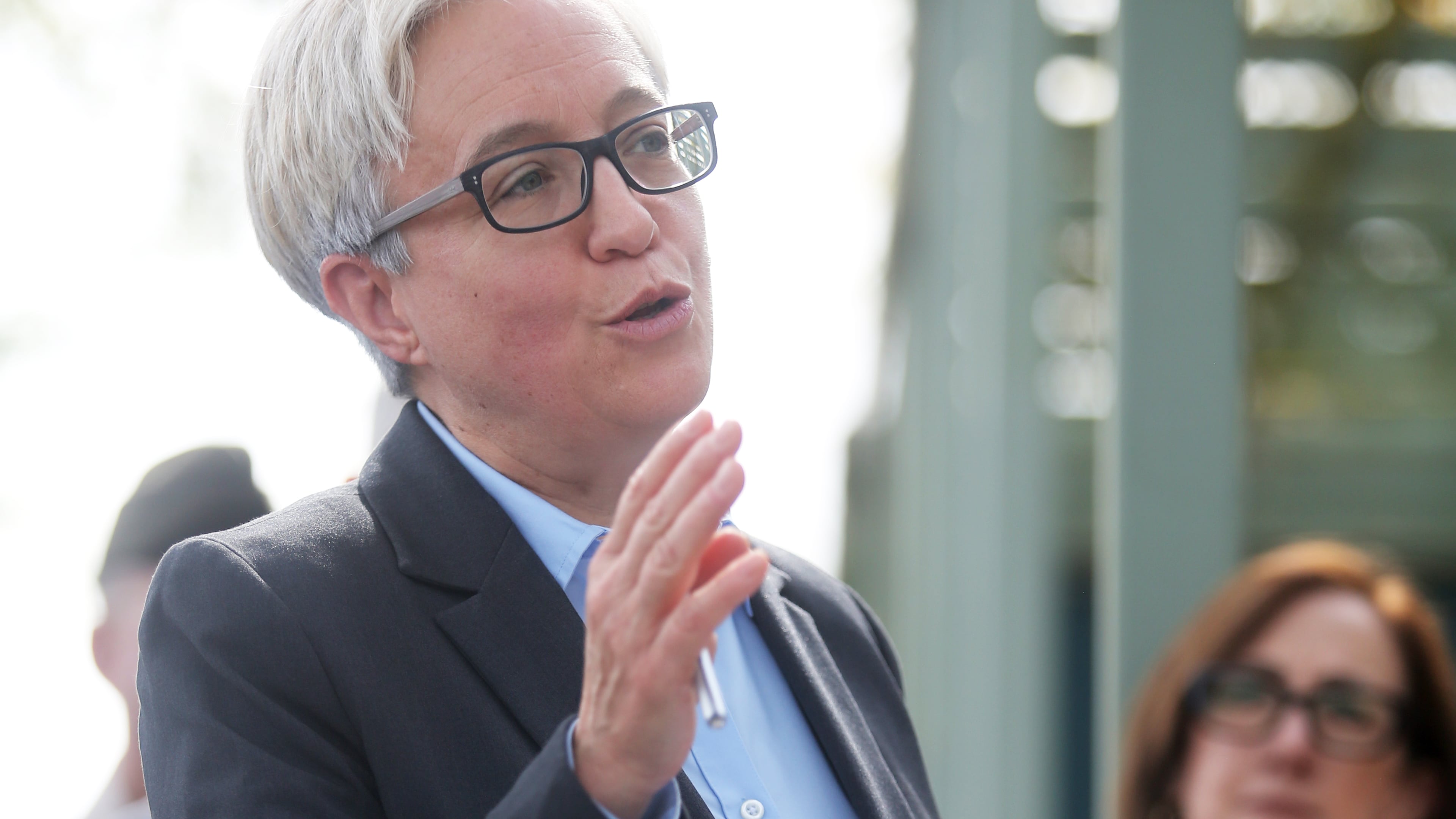
Oregon Gov. Tina Kotek issued an executive order Thursday that bars school districts statewide from reducing student instructional time to close budget gaps. The order forces districts, including Portland Public Schools—which just did exactly that this academic year—to add back classroom days by the start of the 2027–28 school year.
In a press avail Thursday morning, Kotek said her order was meant to “preserve” student instructional time across the state, which has one of the nation’s shortest average school years.
In some of the state’s school districts, unanticipated midyear budget deficits have shortened already short academic years, as districts turned to furlough days to cut costs. At Portland Public Schools, which faced an unexpected $22.5 million midyear budget gap for the 2025–26 academic year, each school day costs about $3.2 million. PPS presented the Portland Association of Teachers a choice: hundreds of midyear layoffs or four furlough days. (It presented varying offers to other union partners.) In accepting four furlough days, PAT averted mass layoffs, but students lost three instructional days. In turn, the district was able to close its budget hole.
Kotek’s order looks to prevent that from becoming common practice. (PPS is just one of many districts across the state that looked to cutting instructional time in a budget crunch.) Her executive order instructs school districts to make plans to restore instructional time to 2024–25 academic year levels no later than the 2027–28 school year.
The order does not appear to require PPS to provide extra days lost to furloughs this year.
But in Portland, where the state’s largest school district faces at least a $50 million budget deficit in the upcoming year, both the district and the teachers union voiced concerns about how PPS would be expected to implement such an order.
Angela Bonilla, president of the Portland Association of Teachers, slammed the order as slapdash and politically motivated.
“Quality instruction is more than just the time that butts are in seats, and the governor has shown that she has no true understanding of what we do,” Bonilla says. “Not only does she not understand it, she doesn’t respect it.”
Kotek has risked intensifying a feud with teachers unions; the Oregon Education Association already declined to endorse her reelection bid. But at her press conference, she cast her decision as drawing a line in the sand over classroom days.
“Right now, a number of school districts are facing tough budget decisions, and in some cases, that could mean less time in the classroom for students,” Kotek said at the Thursday morning press conference. “But that instructional time is critical for Oregon’s students…We cannot expect better student outcomes if we continue to give our students less time to learn.”
In a Thursday letter to the Oregon State Board of Education, to which Kotek presented her order, the seven members of the Portland School Board wrote to express alarm at the governor’s executive order.
Members of the School Board wrote that they shared Kotek’s desire to protect valuable instructional time. But they said that when the choices boiled down to instructional time or deeper cuts to staff and student services, they chose to prioritize personnel over instructional time, describing the decision as “agonizing.”
“Mandating the recovery of lost instructional time without new funding will necessitate even deeper cuts to essential student services like access to mental and behavioral health care—and the dedicated staff that provide them,” the board members wrote.
The School Board also emphasized that PPS exceeds the state’s minimum requirements for instructional hours, even with furlough days. (The state requires a minimum of 900 instructional hours a year for grades K–8, 990 for grades 9–11, and 966 for grade 12. Reporting by The Oregonian shows PPS reports hours above the minimums across all grades.)
Notably, Kotek’s order does not hold school districts to those minimum hours, but instead to the instructional hours they reported in the 2024–25 year. Bonilla, the president of PAT, says that choice “basically penalizes” districts that have already stretched their resources to ensure longer school years than the state requirement. “When crisis hits, because we don’t have enough money, we have to take furlough days, and now we’re held to a higher standard than everyone else,” she says.
Bonilla says teachers unions like PAT and school districts aren’t against longer instructional years, but the reality is there is no money to fund those. She says she sees the executive order as an “unfunded mandate,” noting districts need more resources to effectively deliver more days of student services.
Kotek ”could change the requirements for those hours and provide funding to maintain it,” Bonilla says. “This is not something that is actually helping students. It’s political grandstanding.”
The executive order comes with little financial support. An FAQ document accompanying the order mentions Kotek has directed the Oregon Department of Education to provide technical support and “explore potential options within the current budget to support districts.”
The governor has also not declared a state of emergency to access the Education Stability Fund, meant to keep education funds stable during times of budget emergency. (In the same FAQ document, the governor expressed her openness to discuss the option, but indicated that legislative leaders had not expressed interest in tapping the billion-dollar fund, which requires both the governor’s declaration and a three-fifths vote of both chambers of the Legislature.)
At the Thursday press conference, the governor emphasized that the Legislature had not cut any state school fund dollars in the current biennium. “Schools have not been cut from the state’s perspective,” she said, noting not every school district turned toward chopping instructional hours as a budgeting strategy. “It is up to our local leaders to look at what they’re doing, decide how they can make things work, based on the increased resources the state has given.”
The FAQ also denies that the charge is an unfunded mandate. In response to a question that reads “Is this just another ‘unfunded mandate’ for districts?” it presents just one word: “No.”
The governor’s executive order rescinds provisions in state law that currently allow school districts to count up to 30 hours of professional development time for staff and 30 hours of parent-teacher conference time toward required hours of instructional time. “The revised rule shall ensure that hours of instructional time requirements reflect actual student-teacher classroom engagement time.” (Bonilla, for her part, said time spent in professional development is necessary to help teachers prepare for instruction in the classroom.)
Bonilla says she sees the executive order as “political retaliation” by Kotek against the OEA, which did not endorse the governor in her reelection campaign.
She said Kotek showed a disdain for the work teachers do. “If she respected it, she would have called for an emergency legislative session, like she did for transportation. She can call a special session on education. She could’ve released the Education Stability Fund. But instead, she decided to try to punish educators who chose not to endorse her, and districts who had to make difficult choices because the state did not give up the funding.”