Skip to main content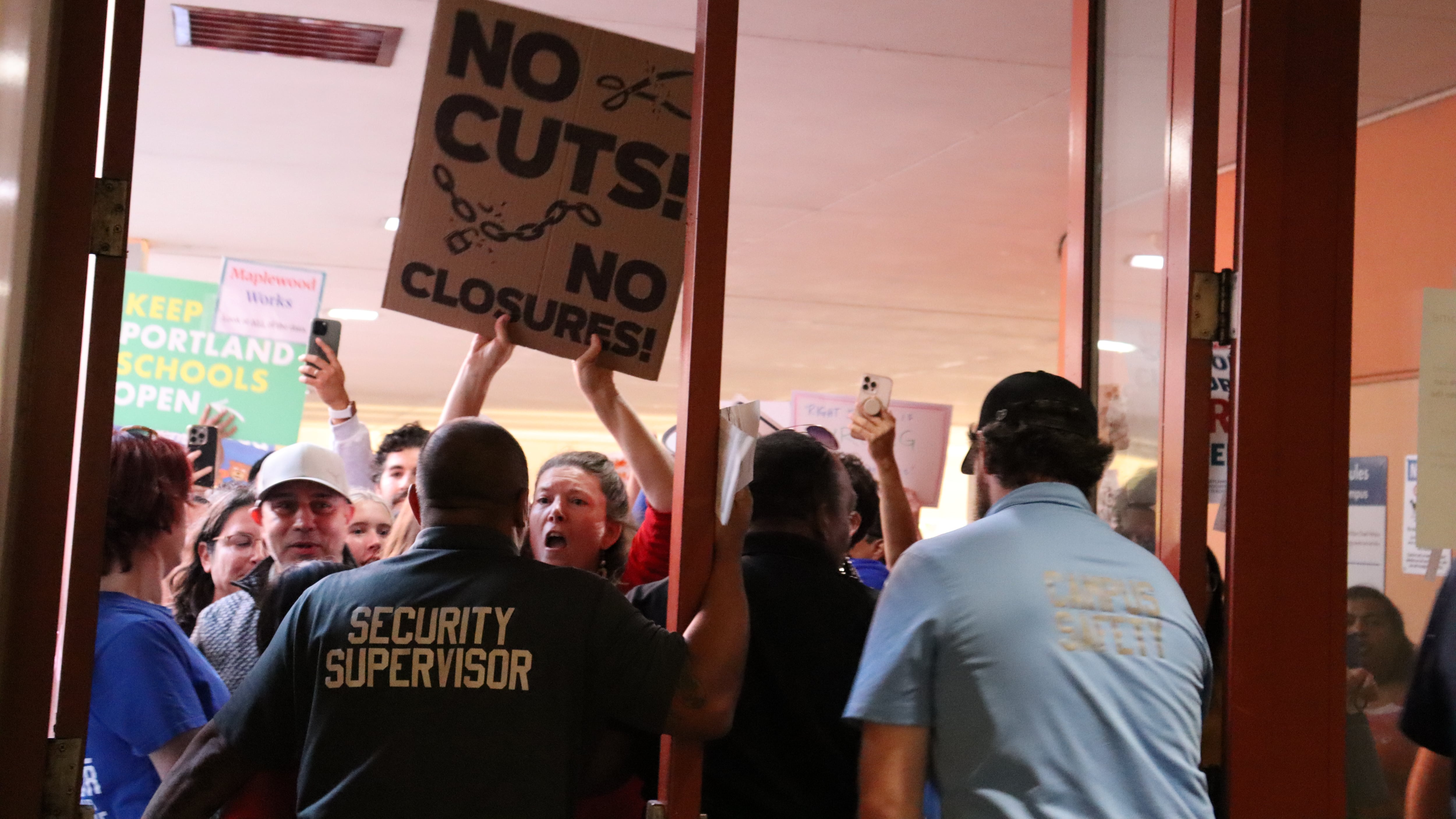
In March, Portland School Board chair Eddie Wang told WW that while school closure conversations are difficult, he felt that the public recognized Portland Public Schools had reached hard times.
Back then, Wang said he hoped Portlanders could see—and sympathize—with PPS’s challenges. After all, the district faces declining enrollment that forecasts indicate isn’t slowing soon, and fewer students means less state funding.
Perhaps these pressures, Wang reasoned, meant Portland was more ready for one of education’s most politically difficult conversations.
“I think people understand [school closures] more so than probably in the past,” Wang said then. “The reasons for it.”
For months, that prediction held. Through spring, just a handful of public commenters spoke about school closures, often asking board members to prioritize equity or consider different criteria. In recent months, particularly after Superintendent Dr. Kimberlee Armstrong announced the district could look to close up to 20 schools, some rumblings of backlash emerged from individual school communities and the Portland Association of Teachers.
But on Monday, PPS released two closure scenarios to the School Board for consideration. Those scenarios named 14 and 11 schools, respectively. (A third option is to continue the status quo.) They would convert seven of the districts’ 11 K-8 schools to elementary schools, and redraw about 35 boundaries each.
Less than 24 hours later, it was clear that those proposals have drawn ire from the larger PPS community. And at a Tuesday meeting, Wang and the other six members of the School Board faced the reality that, for many Portlanders, the school closure pill won’t go down easily.
And the PAT appears to have gained its fire back—ahead of the board meeting, a union-organized rally drew more than 500 people, president Alisha Chavez estimated. A petition the union put together to protest school closures has garnered close to 4,000 signatures, she said.
“There’s nothing that is forcing them right now to have school closures,” Chavez told the large crowd ahead of the meeting. “And yes, the status quo is not sustainable. But closing schools, eroding our community centers, only furthers the break and breaks the trust with us as the community, and it moves us farther away from winning state funding.”
By the end of Tuesday night, the School Board committed to not adding any schools to the affected list, in an effort not to surprise any school communities at the eleventh hour.
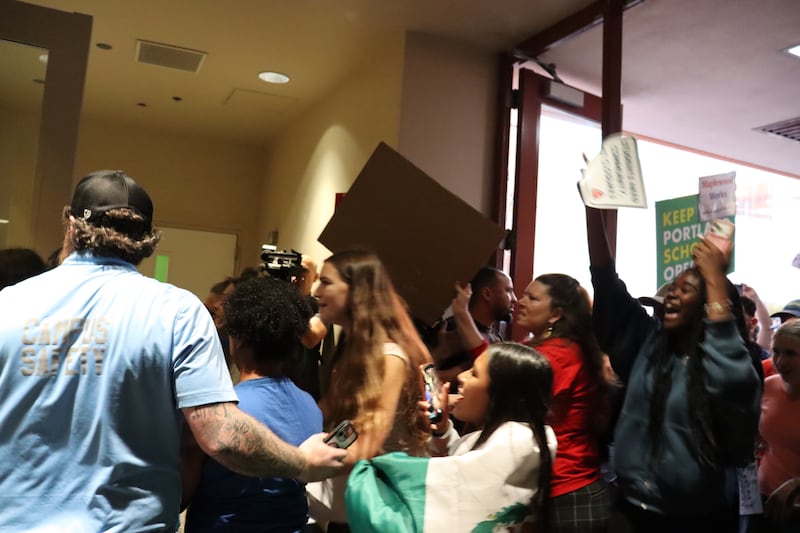
The board meeting began in dramatic fashion, after PPS security attempted to limit the crowd in the building, citing fire code. At one point, a door swung open and three guards attempted to create a human barricade between the crowd outside. In the board room, Chavez asked two rows of PPS leadership to vacate their seats for the crowd. Leadership refused. Chants of “Let them in” and “This is what democracy looks like” grew louder in the room. At one point, the human barricade cracked and the large crowd started streaming inside.
As the night unfolded, the School Board, at multiple points, floated conducting its meeting in another format after facing persistent jeers from the audience. At one point, board members packed up and nearly made their way upstairs. When the superintendent took the cue and briefly headed out, the board room filled with calls to fire her. And as district leaders read the list of potentially affected schools, a loud boo followed every name.
Those who delivered public comments varied in their approaches. Some concentrated on the value of one specific affected school, others advocated for the preservation of all buildings, or at least for impact to fall less on Southeast Portland and North Portland.
“Your equity lens is broken if you think that it makes sense to cut the same proportion of Title I schools after a very long history of disinvestment,” said Afton Wilcox, a PPS parent.
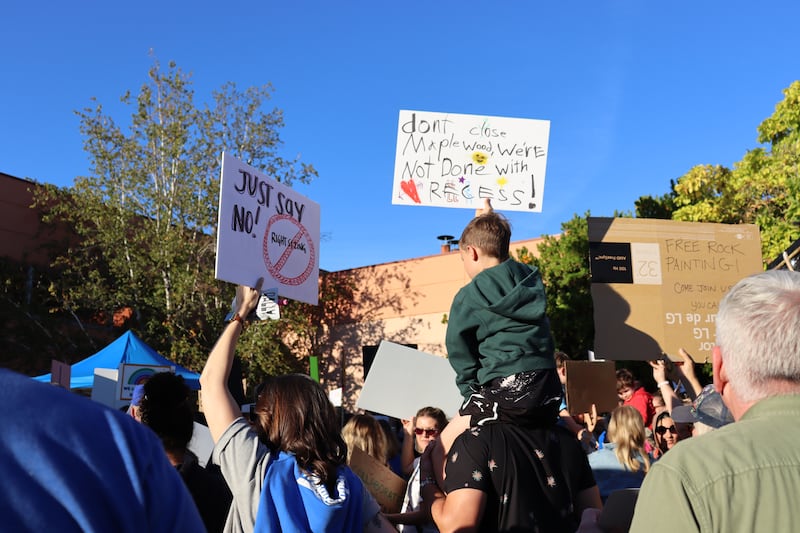
But it appeared that the crowd in the board room—which at one point was packed shoulder to shoulder—was largely in consensus that the School Board slow down and rethink the process.
“I would like you to consider a fourth option, stop what we’re doing and think. Take a deep breath,” said Jackie Wirz, a parent to an eighth grader at Odyssey. “I would like you to drop the scarcity mindset, and I would like to roll forward with a program that involves evidence-based, community-based research that is going to build a program at the speed of trust.”
School Board members, through it all, largely stared solemnly ahead. As some began to give their early comments, it was clear that several had many questions that will need to be addressed in the months ahead.
Vice chair Rashelle Chase-Miller delivered an impassioned comment about her own child’s experience through the school system, including that her older child does not attend their neighborhood school because of accessibility limitations. She told the crowd that, though it wasn’t ideal not to attend a neighborhood building, her family found community elsewhere, and she hoped that Portlanders could unite in community.
“I do really hope that really soon the public has some really clear answers about what well-resourced schools look like, what all of our kids can expect, what we think staffing is going to look like, what we think programming is going to look like,” Chase-Miller said. “I hope that the folks here understand the very real perilous position that we’re in as a school district and the trade-offs. I hope that with some clarity and some more answers and perhaps some massaging of the scenarios we can get to a place that most people feel good about.”