Skip to main content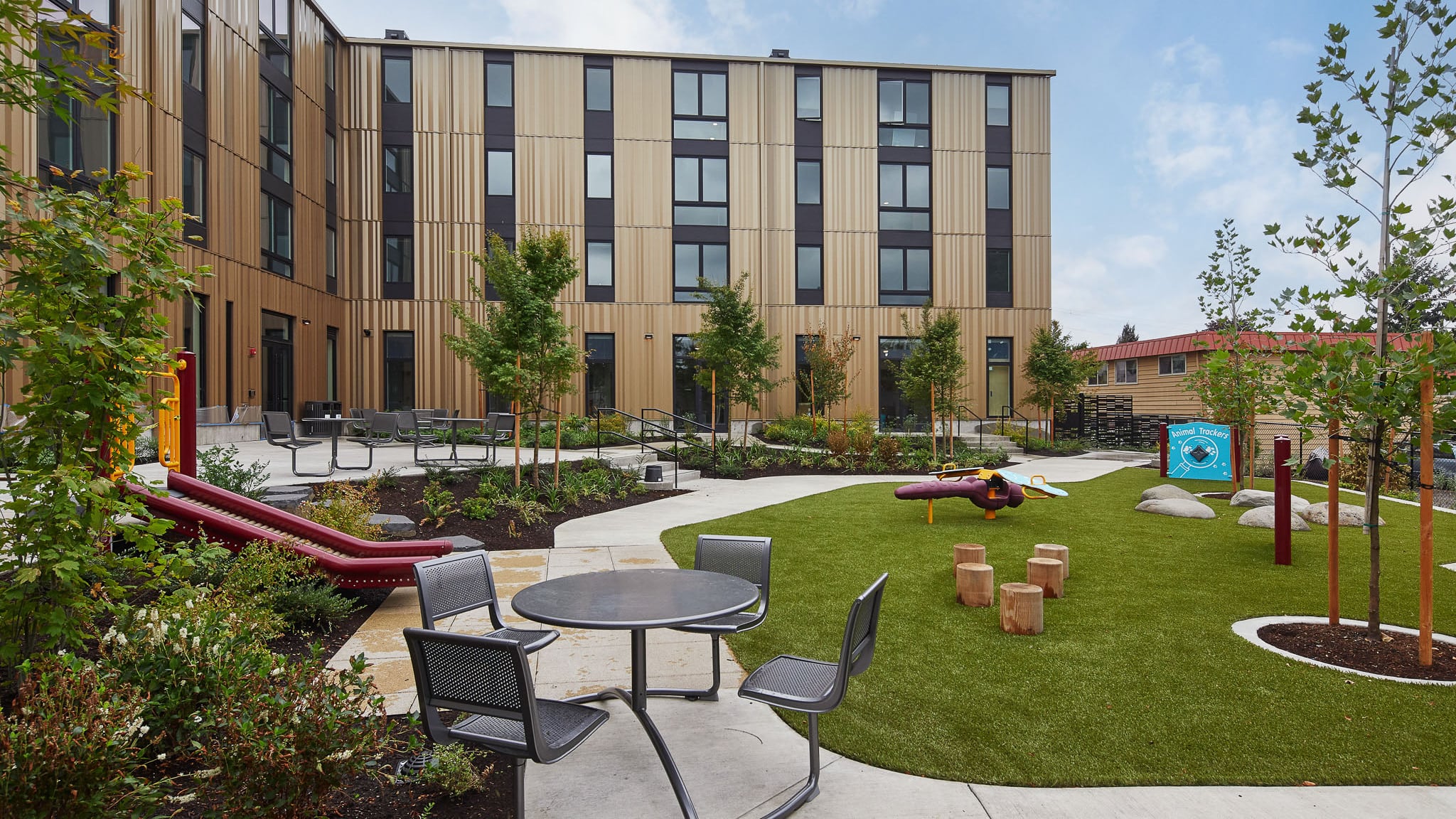
Three factors matter most in the hunt for affordable housing: qualifying income, percentage of income paid toward rent, and availability.
The U.S. Department of Housing and Urban Development determines affordable and deeply affordable housing eligibility based on an area’s average median income (Portland’s AMI is up to $86,870 for a single-person household, and $124,100 for deeply affordable housing). Rent is set at no higher than 30% of that person’s income once they qualify, or 10–20% for deeply affordable housing, while people who make up to 80–90% of the AMI can also qualify for affordable housing.
For our purposes, we focus on one and four-bedroom households. A single-person household can qualify for affordable housing when they earn up to $52,140 annually, and deeply affordable housing at $26,100. Similarly, a household of four can earn up to $74,460 to qualify for affordable housing or $37,250 for deeply affordable housing.
But even once eligibility is confirmed, unit availability remains a leading factor for placement. Voters approved a regional affordable housing bond in 2018, and the need for affordable housing continues to grow. The bond is on track to help fund construction of more than 5,600 new affordable homes in the region.
Emily Green, a Metro Housing Department spokeswoman, says 34 bond-supported affordable housing developments have opened since 2018, while another 30 are on track to open within the next three years as the bond approaches its conclusion with 90% of it allocated. Still, she says, it’s not enough.
“Our region continues to be drastically short of the housing that’s needed to meet demand, and that includes housing of all types,” she says.
New buildings fill up fast when they open. Home Forward, the Multnomah County housing authority, manages some of these properties, while private companies handle the others (organizations like Home Forward, REACH Community Development, Northwest Housing Alternatives, Hacienda Community Development Corporation, Native American Youth & Family Center, and Central City Concern each manage multiple properties). Waiting lists are common, while wait times are anyone’s guess (the Metro Council offers a map updated in real time on its developments). But based on publicly available data, these recently built affordable housing communities are the most likely to be accepting applications:
T. Joyce Phillips (operated by Home Forward) is a 187-unit affordable housing community in Northeast Portland that opened Sept. 5. Named for a beloved educator and community builder, T. Joyce Phillips’ units range from studios to four-bedrooms. The complex includes community gathering spaces, children’s play areas, community gardens, and on-site supportive services. 2455–2475 NE Saratoga St., homeforward.org/tjoycephillips, dekumcourt@homeforward.org.
The Cully neighborhood’s chaku kumtuks haws (Pinehurst Management) opened in August with studios and one-, two- and three-bedrooms over 84 units. Its culturally specific on-site Early Childhood Learning is run by the Native American Youth & Family Center and Portland Community College’s Workforce Development Center. An outdoor space offers a communal dining area and courtyard with a play area. The Portland Clean Energy Community Benefits Fund paid for heat pumps, appliances, insulation, and a photovoltaic solar array. Northeast Killingsworth Street and 42nd Avenue, 503-802-8300, pinehurstmanagement.com.
Goose Hollow Lofts (Pinehurst Management) in Southwest Portland was acquired by Home Forward in May through the Metro affordable housing bond and is also run by Pinehurst. Below-market rents are $984 for studios, $1,027 for one-bedrooms, and $1,226 for two-bedrooms. 1450 SE Jefferson St., 503-280-4060, pinehurstmanagement.com.
The Montavilla neighborhood’s Aldea at Glisan Landing (Quantum Residential) opened in March designed for families. It offers 96 units from studios to four-bedrooms with a community garden and access to public transit. Immigrant and Refugee Community Organization offers services to residents, including workforce development and English as a second language classes for adults. The waiting list currently stretches six months to a year. 451 NE 75th Ave., 503-610-3654, aldeaatglisanlanding.com.
The Hazel Ying Lee Apartments (Key Property Services Inc.) opened last June near major bus lines, restaurants and shops. Rent is $950 for the available studio apartment, though the building also contains one-, two- and three-bedroom units that are all taken. 3000 SE Powell Blvd., 971-415-6870, kpsinc.net.
If you are a college student, an excellent off-campus resource is College Housing Northwest with seven apartment buildings near Portland Community College campuses, Mount Hood Community College, Portland State University and Oregon Health & Science University. Monthly rent starts as low as $1,050 for a studio apartment at The 601, located at 601 NE 162nd Ave. halfway between Gresham and downtown Portland. CHNW lists no requirements for first and last month’s rent or co-signers, but enrollment verification is required. Various addresses, 503-345-4111, chnw.org.
Correction: WW has updated information from print on the Portland Housing Bureau’s requirements for affordable and deeply affordable housing. We regret the error.