Skip to main content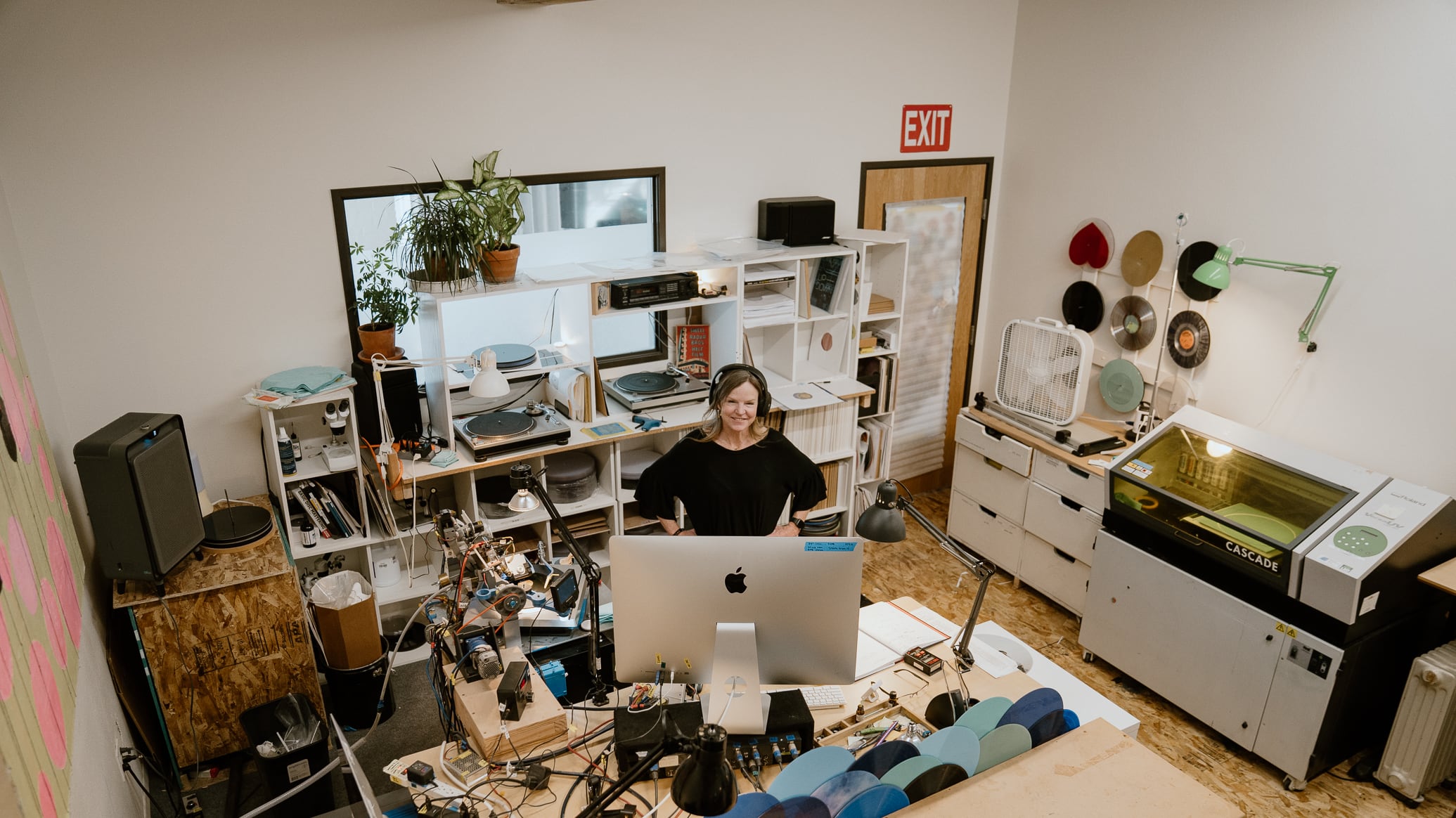
In the late 1990s, Jen Dawson began a yearslong, long-distance friendship with an indie-rocker from Portland. Then they became partners—in business as well as life. Then her partner died. Now she’s working not just to keep his vision alive, but to scale it up.
That vision? Extremely short-run vinyl pressings that spare bands minimums and upfront costs.
“David did something really amazing, and I feel like his vision deserves some recognition,” Dawson says. “Whenever I tell somebody what I do or what’s going on here they go, ‘That is so cool.’ I thought maybe more people should know about it.”
The David in question is David Freel, a songwriter other Portland songwriters talked about. We’ll meet David in a minute. But first, here’s the story of how Dawson met David. Stick with us, it’s a pretty good story.
In 1998 or 1999, Dawson says, she was working with John Hughes as vice president of development for a production company he ran at the time. Yes, that John Hughes, the writer-director who churned out one hit comedy after another in the 1980s (Pretty in Pink, Home Alone) but who went somewhat quiet in the 1990s, though, according to Dawson, he never stopped writing.
Dawson turned Hughes—a massive music fan whose soundtracks are among his signatures—on to the music of a band called Swell that formed in San Francisco in 1989. Hughes wanted to use one of their songs on the soundtrack of a film he was working on; Dawson reached out to David Freel, the band’s songwriter and vocalist who lived in Portland.
“Whenever I was contacting artists and said, ‘Oh, I’m working with John Hughes,’ they would call me so fast, or be in the studio,” Dawson says. “I wanted to use Swell in one of our projects. I couldn’t find [David]. And then when I did, he wasn’t interested. And that fascinated me.”
That exchange kicked off a 15-year, online correspondence. In 2014, Dawson traveled to Portland to meet Freel. She ended up staying.
Anyway, that brings us to the vinyl. Freel was using a lathe—a T560 he’d automated—to cut records for Swell fans (“kind of unauthorized,” Dawson says, “but nobody really cared that he was doing it”). Dawson had the idea to start making mixtapes on vinyl; Freel was game to try it out. In 2015, they launched Vinyl on Demand as an Indiegogo campaign and an Etsy store; the idea was to cut and sell records at a very small scale (which makes the mixtape concept legal, though Dawson says the company faced a challenge from the industry at first).
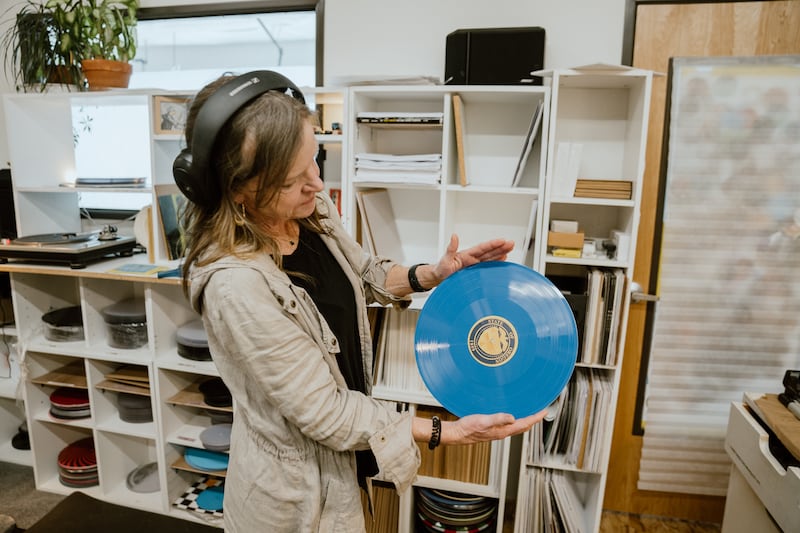
So the same technology is used for two brands: Vinyl on Demand, which does extremely small-run vinyl pressings for bands and artists, and Mixtape Vinyl, which presses mixes of legally purchased songs, but makes no more than two copies of each record to stay legal under the Audio Home Recording Act of 1992. (According to Dawson, several record labels issued a Digital Millennium Copyright Act strike against Mixtape Vinyl’s Etsy store, but the company prevailed.)
“It blew up,” Dawson says. Companies like American Vinyl and Audio Geography are doing similar work, Dawson notes; there are other, similar companies she declines to name because their quality is so poor. But there’s no shortage of demand for the concept. “Now mixtape vinyls are a thing.”
As Dawson recalls, Freel also wanted bands to be able to offer vinyl and not have to deal with minimum orders and turnaround times required by large pressing plants, but the process is also slower, with each record being cut in real time, the way a cassette tape is dubbed.
That makes the process expensive. (“I deal with sticker shock,” Dawson says.) A pressing of 10 records costs at least $350, or $35 a record. That means fans of an obscure band pay $40 for an album—or more, if the band wants any profit margin at all. It turns out music lovers will pony up.
“David’s vision was, ‘I can’t make this affordable, but I can make it high quality, and also they can be on demand,’” Dawson says. “And fans, shockingly, are willing to pay more for the opportunity to have a tangible format.”
In 2022, Freel was in the process of building a second lathe, and he planned to operate it out of a live-work space he’d recently built in Astoria. But then he went in for a heart procedure and died of complications. (By that time, he and Dawson were engaged.)
“You know, David did something really amazing, and he wanted this to grow, and he died at the exact worst time in terms of where we were at,” Dawson says. They had just closed the business so they could scale it up. At first, Dawson considered selling it, but she ultimately decided to keep working on it.
The vast majority of Dawson’s clients are individuals seeking small runs of records with custom playlists—maybe 80% are people who want vinyl mixtapes for their weddings, she says. Dawson also sometimes works with bands looking for demos, as Freel envisioned; one client snuck a marriage proposal onto a record, and several have reached out about gifts or tributes to family members, like one family that committed recordings of a grandparent’s World War II stories to vinyl.
Currently, Vinyl on Demand employs six people; Dawson wants to scale it up, in part so she can bring prices down, but she isn’t sure exactly what that looks like. She’s considered various models for the business, including a brick-and-mortar store where people can make records on demand, or she simply build more lathes. She’s speaking with investors, and has also connected with organizations like the Oregon Manufacturing Extension Partnership, which presented U.S. Sen. Jeff Merkley with an album made at Vinyl on Demand printed on blue and gold vinyl like the Oregon flag and featuring only Oregon songs. (“He was super excited to find out Dolly Parton wrote one,” Dawson says, referring to “Eugene, Oregon,” which was released in 2009 but describes a 1972 visit to Tracktown.)
Mike Vanier, OMEP’s president, says Business Oregon and Gov. Tina Kotek were also presented with Oregon records, and staff from both offices still bring it up in conversation. Kotek’s office keeps the record on display, he says.
“It’s a cool process. They’re using some current technologies to reinvigorate a market that—I don’t want to say it was dying, but it was a small market,” Vanier says.
For now, Dawson is enthusiastic about the technology itself—and about honoring Freel’s legacy.
“David had a vision, and I’m trying really hard to fulfill it,” Dawson says, “and I’m closer than we’ve ever been.”