Skip to main content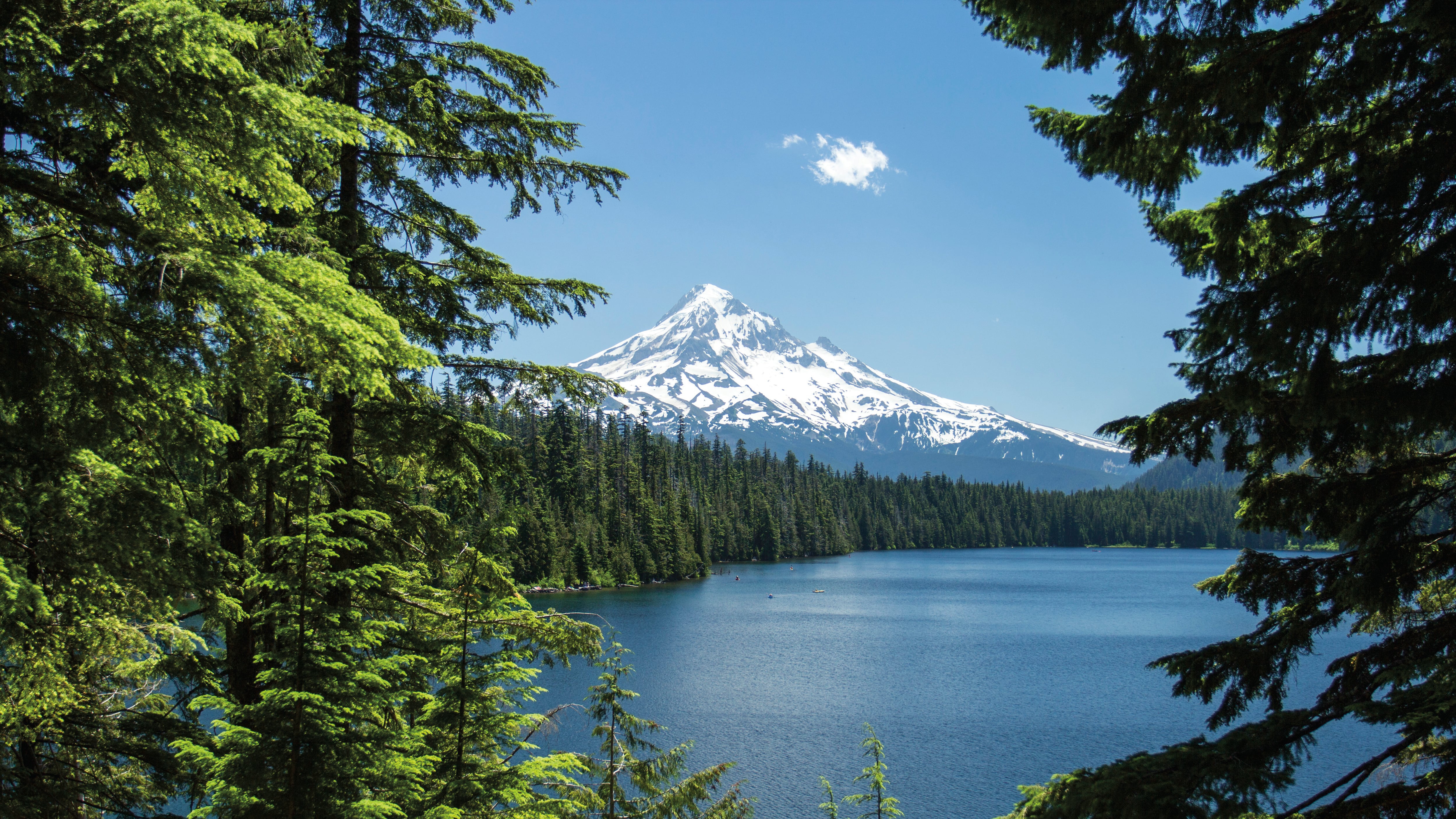
When the city gets hot and dusty, it’s time to get lost.
Oregon has lots of great options for dropping off the grid to unwind, but few places so close to Portland offer such a perfect mix of easy accessibility, waterfront amenities, and just the right amount of solitude as Lost Lake.
It’s easy to see how it got its name—this is a spot of splendid isolation right beneath Mount Hood, with only a single road offering access to a picturesque lakeside lodge and campground. Someone at some point decided to call it a resort, but that seems a bit overdone to me and, quite frankly, not what you should expect if you visit.
Because the greatest resort luxury you’ll find here are the cool, clear waters of the lake itself.
Located at an altitude of just over 3,000 feet, Lost Lake almost always has cooler temperatures than down in Portland. And with the waters fed by mountain snowpack, you’ve got the ideal conditions for escaping that city heat.
Even better: There is no Wi-Fi and cellphone coverage is extremely spotty here, so prepare to unplug for a day or two.
But first, you have to get there.
The approach is a delight. After you’ve left behind Hood River and the last signs of civilization, the road narrows and you begin to ascend a slight incline. Much is heavily forested, as to be expected in Oregon, but there are also stretches of rolling hills with some nice views. In early summer, this path is likely to still be covered in wildflowers. Traffic dwindles to near nothing—the only people traveling here are those on their way to and from the lake.
Eventually, you’ll make it to the top of the gentle bowl containing your destination. As you start to descend, you’ll pass an A-frame ranger station at the entrance.
One of the state’s oldest campgrounds, Lost Lake also offers lodge rooms, cabins and yurts for rent. But those sell out fast and booking them requires a level of strategic planning months in advance that my family apparently lacks. So we reserved two different camping spots for a couple of nights. Both were great, but you might want to choose yours according to how close you want to be to the lodge and its amenities.
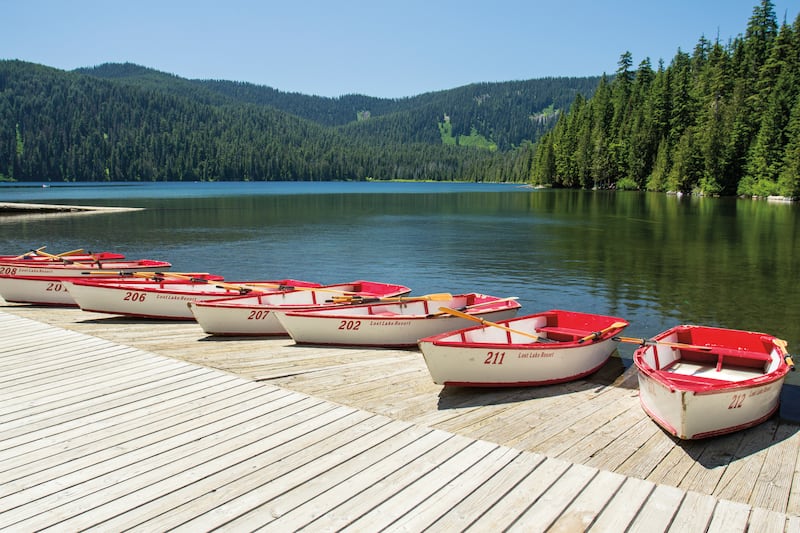
The campground is situated on the slopes above the shoreline. Next to the lodge, which is close to the water, there’s a well-stocked general store with an adjacent burger joint. You can rent standup paddleboards, kayaks and rowboats at the nearby launch. No motors are allowed anywhere at Lost Lake, but you’re welcome to bring your own watercraft.
If you head over a wooden footbridge along the right-hand side of the lake from the lodge, you’ll soon discover some terraced picnic tables. On weekends, these can get a bit crowded with day trippers, and some people reserve them in advance. But if you’re patient, you’ll find a spot for free. Or just keep going—if you’re willing to walk a bit, the crowds quickly begin to thin out and eventually you’ll find a perfect place to both eat and take a dip in the cool, clear waters. Not to mention, the north shore is the side where you’ll get that postcard-perfect view of Mount Hood reflecting back onto the waters of the lake.
If you’re feeling particularly ambitious, a full loop around is about 3 miles and takes just over an hour to complete. Keep an eye out for tasty huckleberries: Before white settlers had trouble finding the lake—hence the name—Indigenous peoples came here in the summer to harvest the wild relative of the blueberry.
There are several other trails near the lake, and even a popular bouldering field, but let’s be honest: You’re here to float—not hike. So hop on your SUP, inflate your inner tube or rent a paddle boat with the kids. If you cruise far enough to the left of the boathouse (facing out into the lake) you’ll also be rewarded with that spectacular view of Mount Hood from the middle of the water.
Do you fancy a bit of fishing? You’ll be happy to hear the lake is stocked with trout each season. Just keep an eye out for Walter, the local monster fish purported to weigh 50 pounds, who likes to rip the bait off unsuspecting anglers’ lines. The boathouse rents fishing poles, worms and tackle, but you’ll need to bring your own fishing license if you’re over 12.
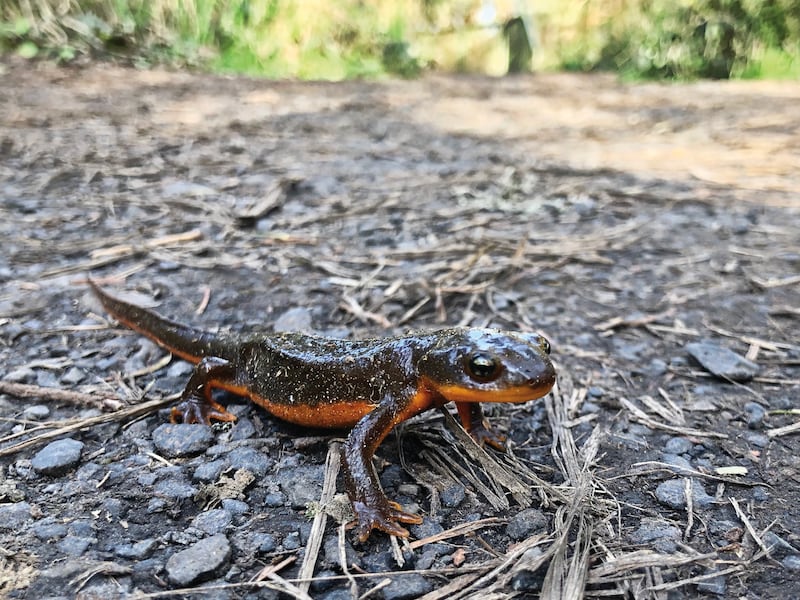
Speaking of the local wildlife, if you spend any time on or near the water, you’ll soon see what look like mini Godzillas casually cruising around. These are the rough-skinned newts of Lost Lake. They look kind of cute and friendly but are, in fact, highly toxic. In what appears to be a textbook case of an evolutionary arms race, the newts have boosted their toxin levels over the centuries as common garter snakes have increased their tolerance for it.
One story claims a group of Oregon hunters died after a wayward newt happened to end up in their coffee pot. But brushing a newt while swimming in the lake won’t hurt you. Just don’t let your dog chomp down on one.
Leave the newts for snakes to snack on—if you’re feeling suddenly peckish and can’t stir motivation to fire up your Coleman stove, the Lost Lake Grille has pretty decent burgers and milkshakes considering you’re in the middle of nowhere. However, be warned: A lot of people realize having the Sasquatch Burger instead of that can of baked beans they brought for camping is a fantastic idea, meaning service can be glacially slow sometimes.
If you really want burgers during your stay, I’d recommend grilling your own and picking a strategic time for a Belgian waffle or ice cream instead. Or just plan a little extra time when ordering and remember you’re here to slow down anyway.
As tempting as the lakeside amenities are, it’s important not to lose sight of why you came to this lovely spot in the first place: cooling off in those crystal-clear waters.
And let’s talk about that water a bit—according to the Atlas of Oregon Lakes (yes, that exists) it is considered oligotrophic, which means it’s low on nutrients for algae and rich in oxygen. Lost Lake abuts the Bull Run Watershed, which is the source of Portland’s drinking water, so the quality is naturally excellent. At 175 feet, it also runs quite deep and stays relatively cold year-round, which is exactly what you need to forget how blazing hot the city is.
So if you’re looking for a quick summertime getaway offering prime swimming, paddling and kayaking fun, to be lost is to be found.
HOW TO BOOK
Lost Lake Resort & Campground (9000 Lost Lake Road, Hood River, 541-386-6366, lostlakeresort.org) has its own website, but to book a campsite, you’ll be redirected to the official recreation.gov website. You can book spots six months in advance and there are limited tent-only, first-come, first-served sites located in the F Loop.
HOW TO GET THERE
Lost Lake is a 90-minute drive from Portland. The fastest route is down Interstate 84 toward Hood River. But turn off before you make it into town. Take the 281 past the airstrip and cross Birdie Creek at the small outpost named Dee. After that, just follow Lost Lake Road the rest of the way. The resort opens May 1.
Pro tip: If you’re one of those people who really needs a campfire while camping, be sure to go as early as possible in the season. At some point in the summer, Lost Lake bans open fires (cookers and stoves are still fine) to reduce the risk of sparking a wildfire.
This story is part of Oregon Summer Magazine, our annual guide to refreshing destinations, cool escapes, and the best ways to stay hydrated all summer long. See more stories from Oregon Summer Magazine here, or check this map to see where you can pick up a free copy of the magazine.