Skip to main content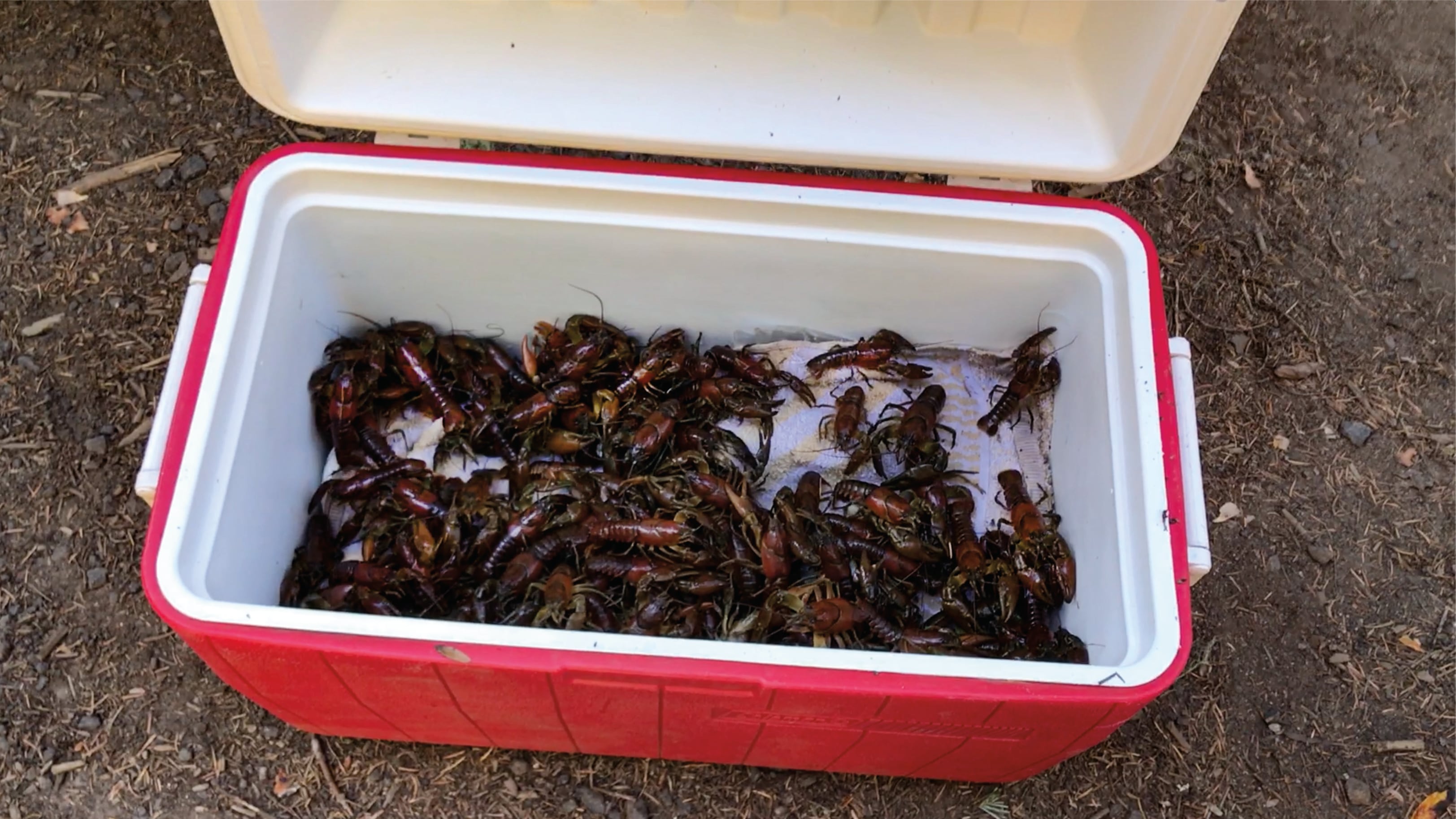
Morning mist rises from the water, the stillness broken only by the slurp of my paddle or the jump of a trout. I head toward a distant bobbing white jug, where my hopes are hanging from about 15 feet of rope.
Landing my kayak on the rocks, I toss the anchor ashore and step in—the cold water quite comfortable around my hip waders. Anticipation grows like the twist of rope in my hand, a simmering gambler’s faith that the trap at the other end will be stuffed with crawfish.
Everyone understandably associates crawfish with Louisiana and Cajun cuisine, but Oregon, perhaps surprisingly, is the country’s second-biggest commercial producer of these tasty freshwater crustaceans.
Found in abundance in the waters of the Pacific Northwest, they’re easy to harvest with a little knowledge, and you don’t even have to pole your pirogue down the bayou. With a few traps, either purchased or made DIY, you can host yourself a pro-level crawfish boil and fulfill all your Clifton Chenier dreams. I catch about 50 pounds each season and so can you.
But before we cast our traps too far, let’s answer the perennial question—what exactly are these creatures called? Much like the interchangeable terms soda versus pop, the crustacean that biologists formally call a crayfish has many regional names, all of them correct. Crawfish, crawdad, mudbug, take your pick. The Oxford English Dictionary notes both “craw-fish” and “craifish” appeared in print as early as the 1600s, evolving from the Middle English word “crevis,” which, in turn, was borrowed from French.
Myself, I use the New Orleans-favored crawfish, and really, it’s just more fun to say, since it just rolls off the tongue. (Say it right and it’s one syllable.) Plus, there are the classic Cajun dishes like crawfish étouffée and crawfish Monica.
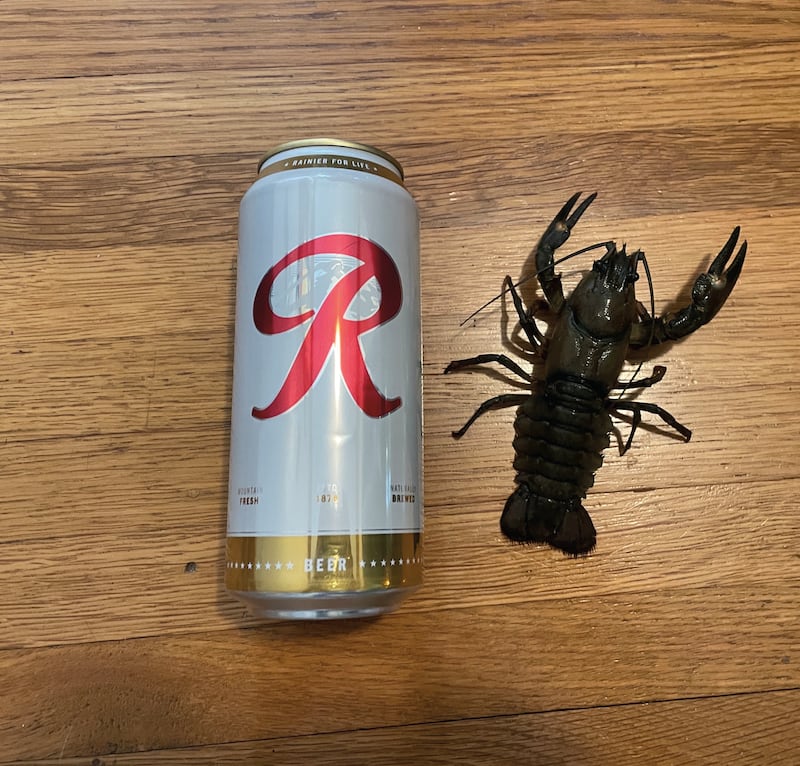
Aficionados consider the Pacific Northwest’s native signal crayfish (Pacifastacus leniusculus) better tasting than Louisiana’s red swamp crayfish (Procambarus clarkii) thanks to our famously clear waters with rocky bottoms resulting in a “cleaner” flavor that some compare to shrimp. They also grow larger here. Sometimes called “lobsterettes,” they can easily reach the size of a Rainier tallboy. And serendipitously, the Pacific Northwest season begins around June, which is when Louisiana’s ends as the water gets too warm. It’s almost guaranteed that any restaurant in the United States serving live crawfish after June has sourced them from Oregon.
The “signal” in their name refers to the crustacean’s distinct white spot at the defensive claw joint. There are other obvious physical differences between them, such as how red swamp crawfish are covered with nubby bumps and red-colored when alive, while the signal ranges from brown to blue (but still turns bright red after boiling). Signal crayfish also have enormously bigger fighting claws, yielding almost double the meat of a red swamp.
Crawfish season and regulations
Oregon has no official recreational crawfish season; they can be caught anytime, no fishing or shellfish license required. But realistically, the season in the Pacific Northwest is roughly June to the end of September, depending on how fast the water warms in summer and cools in fall. In higher, colder, alpine lakes, they may be sparse and small until late July. You can catch 100 crayfish per day with a max of three traps but must throw egg-bearing females back. Oregon has no size limit, but anything under 5 inches isn’t worth keeping, as it will have minimal meat. Let the little fellers go!
Trapping crawfish
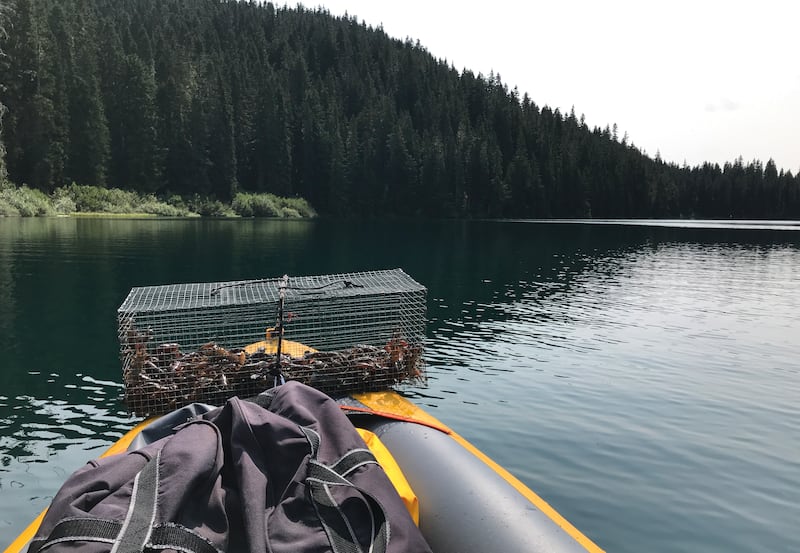
You can always spot experienced crabbers if they call crawfish traps “pots.” While functionally the same—crustaceans are attracted to bait and can’t find their way out—the proper terms are “crab pot” and “crawfish trap.” There are plenty of options out there, whether store-bought (around $20) or DIY using hardware cloth, but my favorite is built with $5 worth of Dollar Tree items: two wire wastebaskets for the body and two wire pencil cups for the entrances. For multiday trips, be sure to bring along an extra holding pen to keep your harvest secure and healthy underwater while you catch more.
Finding crawfish
Crawfish prefer clean water and are sensitive to oxygen content. Since warm water holds less oxygen, crawfish seal themselves in mud to preserve moisture and breathe air until winter. Thus, the reason why Louisiana’s crawfish season ends around June.
There’s no need to drop traps any deeper than 10 feet, and some of the best spots may be only a foot underwater. Observe what sort of hiding places are available to the mudbugs, such as rocky or weedy areas. Fast-flowing current will push them away, so in a river, focus on pools and bends. There are plenty of crawfish predators such as raccoons, fish, herons and otters, so they mostly hide during the day. Prime trapping time is at night. In summer camping, my mornings usually start with the thrill of checking the overnight traps, like an aquatic slot machine.
While there are crawfish almost everywhere in Pacific Northwest waters, you certainly do not want to eat them from everywhere. A few clean and productive locations near Portland include:
All along the Clackamas River (Milo McIver Park, Barton Park, Promontory Park)
All along the Sandy River (Oxbow Park, McNeil Campground)
Metzler Park in Estacada (Clear Creek, Swagger Creek)
Most alpine lakes around Mount Hood
Timothy Lake
Baiting crawfish
While crawfish are scavengers, they are also predators, feeding on small fish, insect larvae, and each other. So they greatly prefer fresh food over stinky things, and the rancid stuff you might use for crabs and catfish will not produce good results with crawfish. The most logical thing is to use bait that lives alongside the crawfish. Any angler with a stringer of trout knows how fast crawfish will attack them, so I personally prep for the next outing by saving leftover fish guts, heads and tails, vacuum packed in the freezer. When I’m camping, I strive for a sweet cycle of catching and cleaning fish during the day, then baiting my crawfish traps for nightfall.
Transporting crawfish
Crawfish are amphibious—they breathe both air and water. Forgetting this is how many people kill their catch by taking them home in a container of water. A mass of crawfish will quickly use up the oxygen in the water, suffocate and die. The way to transport your haul is in a cooler with a damp towel on top, and they’ll breathe air just fine. If I’m traveling light, I put them in a wet cotton bag hanging outside the car, which keeps them chilled and oxygenated. At home, crawfish can live in your fridge for two to three days. The cold slows their metabolism, and they can’t climb out. But if you prefer to cover your container, be sure to leave a gap for fresh air.
Purging crawfish
It is necessary to purge crawfish, which basically means encouraging them to empty their digestive tract before you boil them. You should allow a couple of hours purging time to do it right. As a novice, I once eagerly boiled some nonpurged crawfish at a campsite and…not good. Don’t be like me.
There’s an ongoing debate about using salt when purging. For hundreds of years, that was the standard practice, as it irritates them and triggers purging. But more recently the idea that it’s cruel to the animals has grown. Many people claim they get a fine purge simply using cycles of fresh water, changed every hour or so until it’s clean. I think salt is more effective and faster, but you do you.
Cooking crawfish
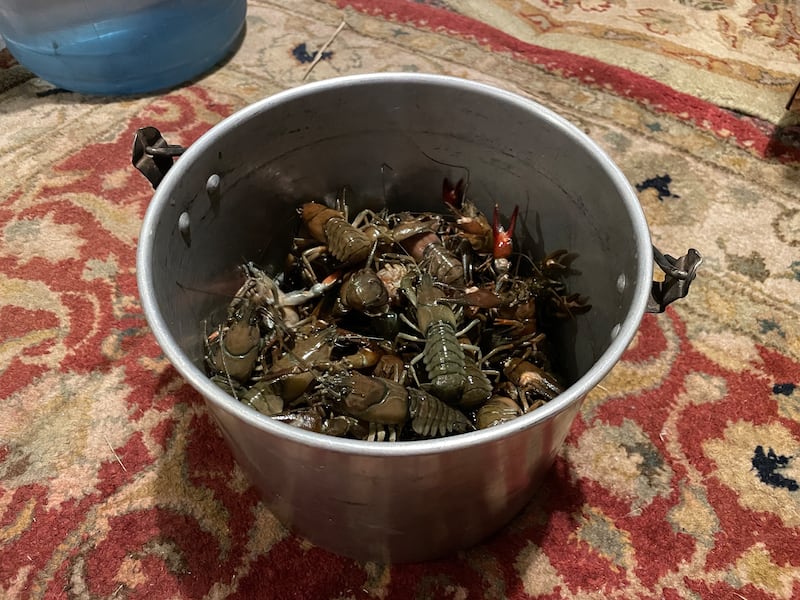
Crawfish must be boiled alive. Bottom feeders like crayfish and crabs are loaded with bacteria kept in check by their active immune systems. Once dead, the internal bacteria multiply rapidly, especially in the summer heat of crawfish season. Discard anything already dead before cooking.
There’s the classic Southern boil using a spice mix such as Zatarain’s or Old Bay with anything else dropped in the pot that might taste good seasoned, such as sausages, potatoes, corn, eggs, mushrooms. But also consider a mild and aromatic French court bouillon, a Thai curry and coconut, or a traditional Swedish style, which definitely exudes a Pacific Northwest vibe: The crawfish are boiled in brine with dark beer, honey and lots of dill, steeped overnight and served cold, often with cheese and aioli.
Active boiling time is quick, less than 10 minutes. They’ll float when done, indicating the meat has cooked, pulled away from the shells and is extractable—but they’re not ready yet. Turn off the heat and leave them covered for at least a half hour. A common mistake is not letting crawfish steep after they’re cooked, but this period is when the spices actually reach the meat through cracks in the carapace. The longer they’re in the water, the spicier they’ll become.
Most people are familiar with the tradition of eating them right from the pot dumped on a table, but there are plenty of options for using shucked meat. Étouffée, if you’re ambitious, but even a simple crawfish salad sandwich is pretty swell (use New Orleans Blue Plate brand mayo for more authenticity). Any recipe where you’d use crab or shrimp will translate great to crawfish. Definitely save the shells and simmer them into a buttery stock then freeze it. You can relive your summer memories all winter.
This story is part of Oregon Summer Magazine, our annual guide to refreshing destinations, cool escapes, and the best ways to stay hydrated all summer long. See more stories from Oregon Summer Magazine here, or check this map to see where you can pick up a free copy of the magazine.