Skip to main content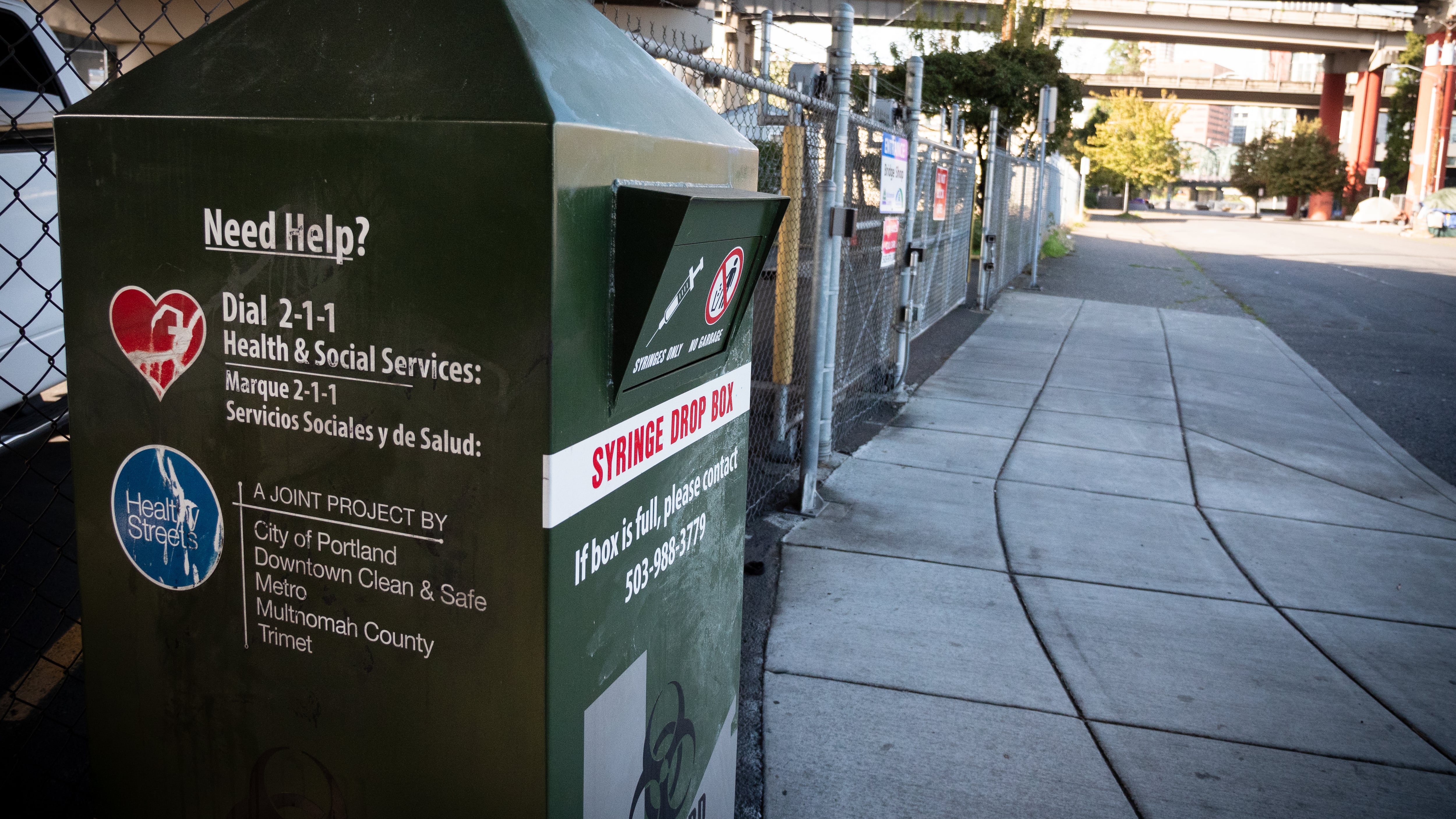
Multnomah County commissioners unanimously passed an ordinance banning mobile syringe service programs from operating within 1,000 feet of K-12 schools on Thursday.
The ordinance, co-sponsored by Commissioners Julia Brim-Edwards and Meghan Moyer, takes effect on Aug. 24. The board has budgeted $159,800 for the effort. It comes after a similar bill died in the Oregon Legislature’s short session. County officials have stressed that the local measure is a temporary one, meant to serve as a bridge until the state takes action. To that end, the ordinance will sunset on Jan. 1, 2028. (Some supporters of the bill urged commissioners to tie the sunset to state action on the issue, but the ordinance was passed without such a provision.)
Those who have spoken in support of the policy have largely been community leaders from the Stadiumhood neighborhood, who have long complained that the Portland People’s Outreach Project’s operations near Cathedral School are causing increased drug litter. (PPOP is a mobile syringe service. Its pop-up by Cathedral moved more than a year ago, according to volunteers.)
“What the PPOP volunteers refuse to do is look up and look around at the community around them. I have not heard a single harm reduction provider acknowledge that children are also a vulnerable population,” Kara Shane Colley, a Friends of Couch Park board member, said at Thursday’s meeting.
Opposition to the ordinance came from a small group of people working in harm reduction who argued that the ordinance would hurt people with addictions by making safe syringes less accessible. In response, commissioners on the whole emphasized that they support harm reduction, but that prohibiting needle distribution near schools was a reasonable restriction to protect children.
Those in opposition have also argued that academic literature suggests needle distribution services don’t increase drug litter. But supporters have disputed this, citing their own anecdotal experiences.
Moyer, in particular, took issue with how opponents of the bill characterized those in support of it. “I don’t like feeling like my position is out of ignorance,” Moyer said at the board’s June 12 meeting, “I do take umbrage with the assumption that to want to create a buffer zone is to not care, or be ignorant, or have a lack of understanding.”