Skip to main content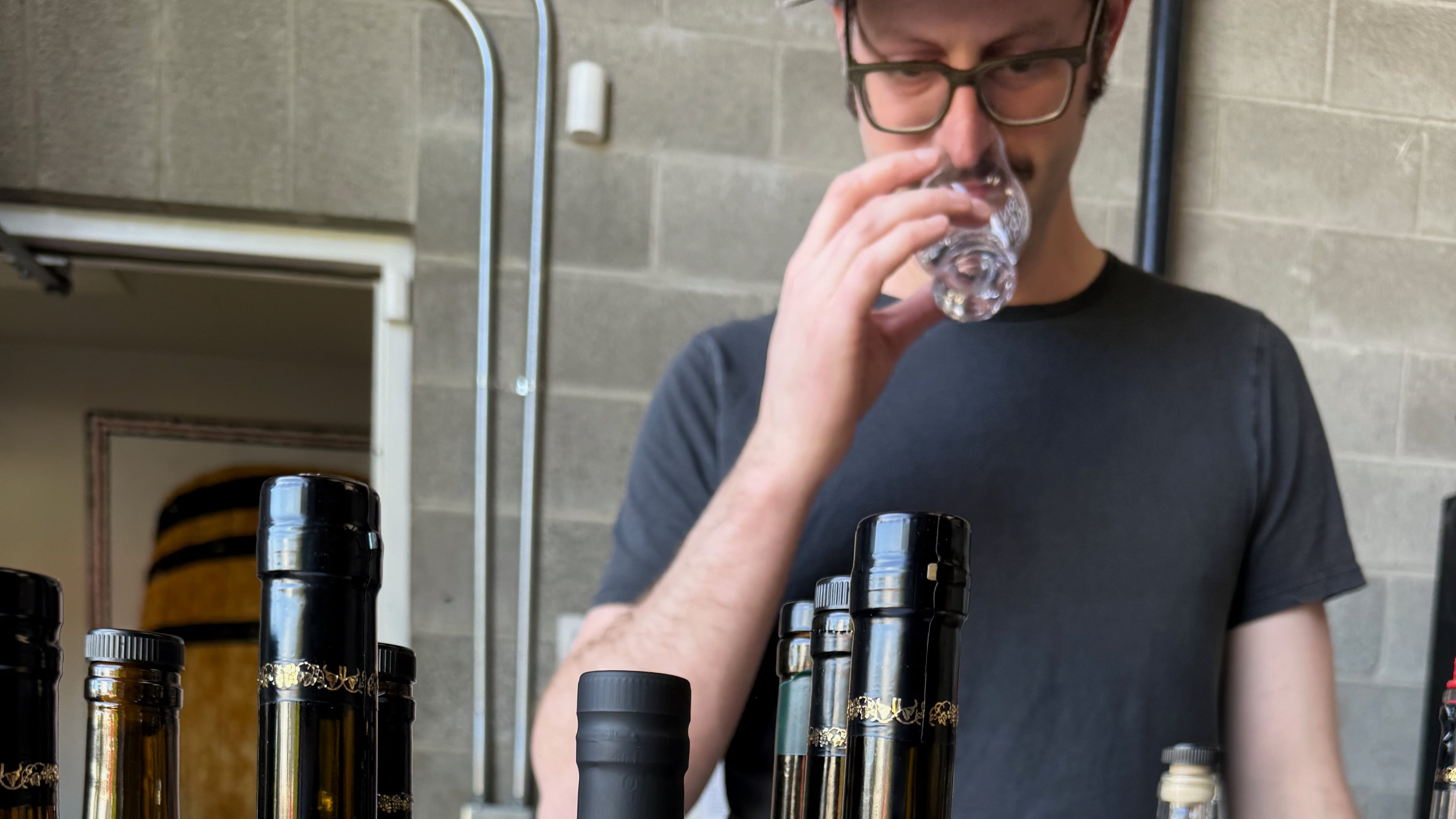
Portland has long been a mecca for all things fermented, but few are concocting spirits as delightfully weird as Tuff Talk’s. This operation is the brainchild of Andy Garrison, lead distiller for Stone Barn Brandyworks since 2012 while also spending some years pulling double duty at Westward Whiskey. Or as he puts it, “working at both the smallest and largest distillery in Portland at the same time.”
In between handling operations that also include contract distilling for wineries looking to source brandy for their ports and other needs, Garrison has always experimented with any ingredients he can get his hands on to create gleefully off-kilter brandies, whiskeys, grappas and anything else he dreams up.
“I have a lot of experience distilling and it’s spread across doing a zillion things,” he says. “I’ve made gin, vodka, whiskeys, rum, fruit brandies. So you build this kind of like repertoire of thought patterns and modes of working.”
The fascination with new things combined with his passion for researching historical spirits led Garrison to officially launch his own Tuff Talk Distilling in 2024 and start selling his hooch to the public. This is about as direct-to-consumer as it gets, with Garrison using his own creative methods to make labels (sometimes using Canva), hand-bottle, and invite customers into the distillery to taste and purchase spirits.
He never repeats the same spirit twice, and every label is different, even when happy accidents like his “Ook” banana brandy and his “Rye on Rye” rye bread–flavored rye whiskey become wildly popular as cocktail nerds get wind of them.
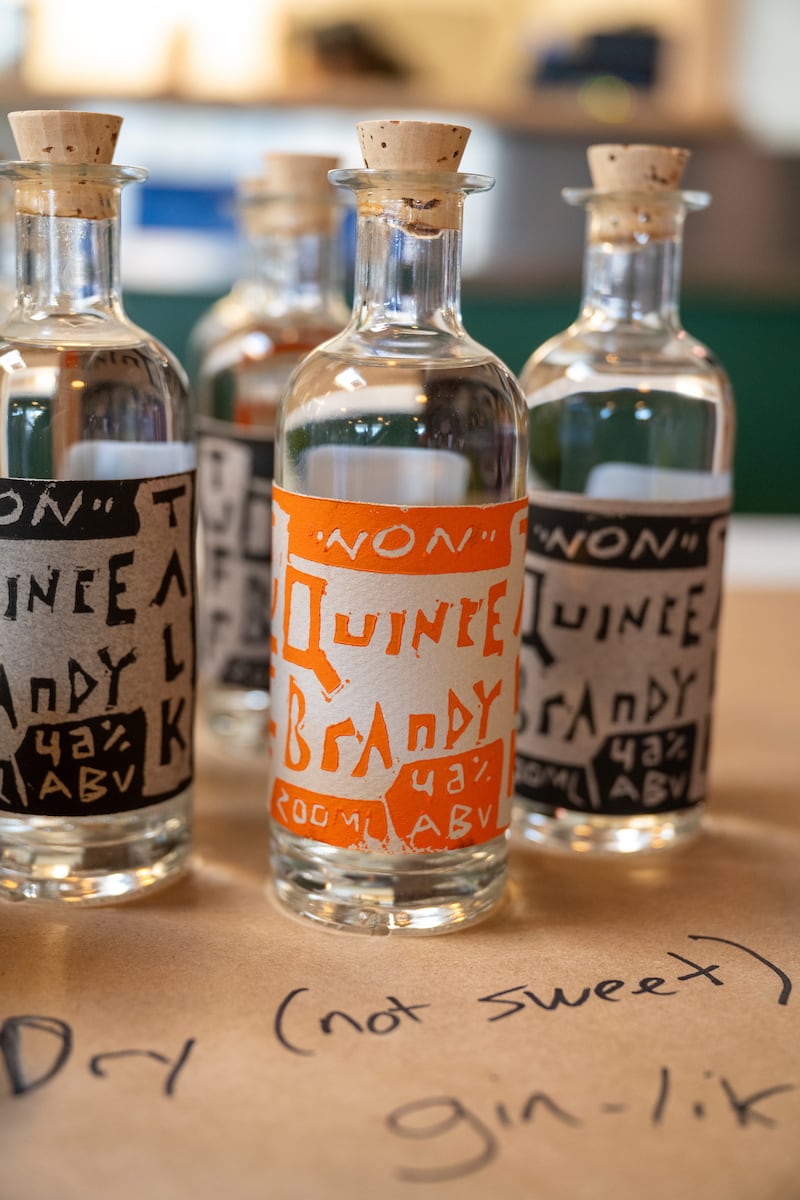
“The point for me was to take all the skills I built and then just let the chaos of the universe dictate what I’m making. So I don’t make a production plan. All the Tuff Talk releases are one-offs and once they’re gone, they’re gone. ”I’m not looking to redo any of them,” Garrison says. “Some of the biggest fans of Tuff Talk are cocktail people because they’re creative, and you can go left field on it. What drink do you make with rye bread–flavored rye whiskey? There’s no cocktail book that has that in there.”
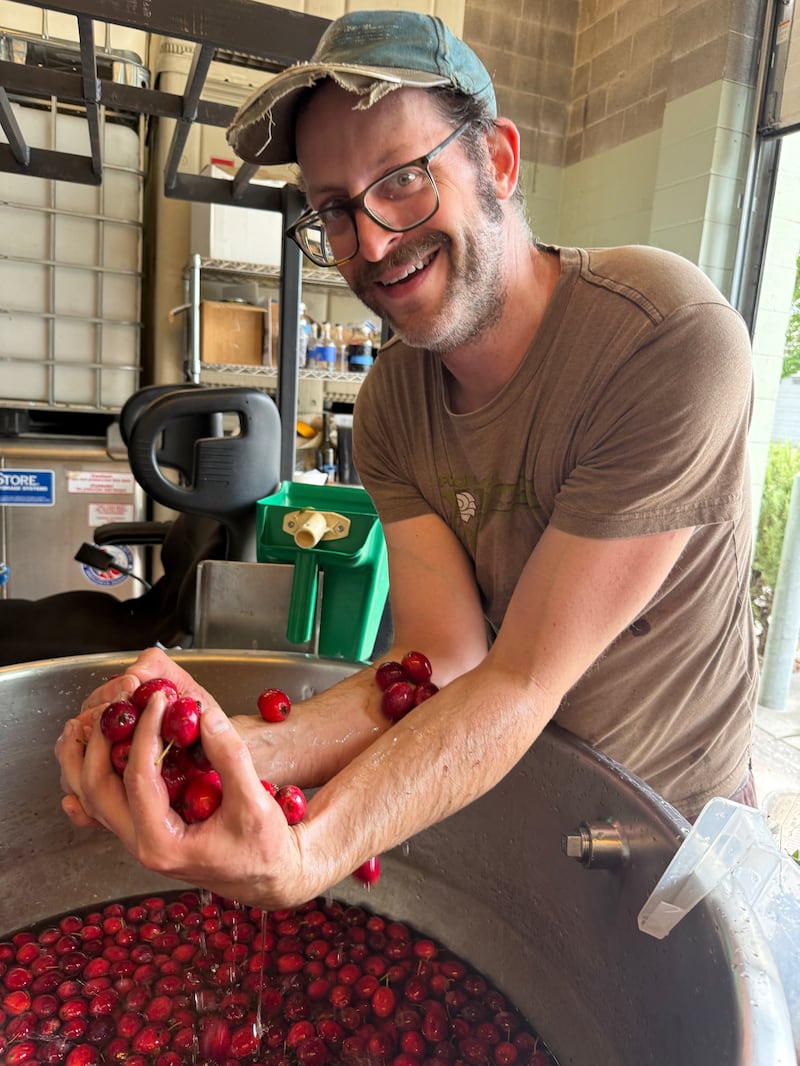
Entering the Southeast Portland space where Garrison combines his work for Stone Barn, contract projects, and Tuff Talk is like stepping into the lab of a mad scientist. Glass carboys and stainless steel vessels line the floor, each marked with a Sharpie on painters tape indicating the spirit, distilling date, and ingredient used. Garrison excitedly checks a large tank currently fermenting a giant batch of blueberries that he snatched up after getting word from friends at the Portland Fruit Tree Project that they had received an offer for donation.
This is how each spirit often transpires at Tuff Talk: Garrison hears about some excess produce—bananas, wine grapes, apples, plums, quince, even carrots—that would otherwise go to waste, and he quickly arranges a pickup. Sometimes he forages, and sometimes he makes ingredients, like when he used his homegrown roses to make a rose syrup added to his Late Summer Plum Brandy.
“Distilling is a way to deal with agricultural surplus. If you grow plums, your plum tree might produce 400 pounds of plums. So making plum brandy is a totally logical thing. They do it all over the world, but it kind of relies on small-scale agricultural production, where you grow a little bit of fruit and you make a little bit of brandy,” Garrison says.
“So for me to buy fruit to turn it into brandy, it makes a very expensive product that maybe there’s a limited market base for. But for me to go out to the Portland suburbs and find abandoned farmsteads from 100 years ago and pick the plum trees that are still standing there makes sense.”
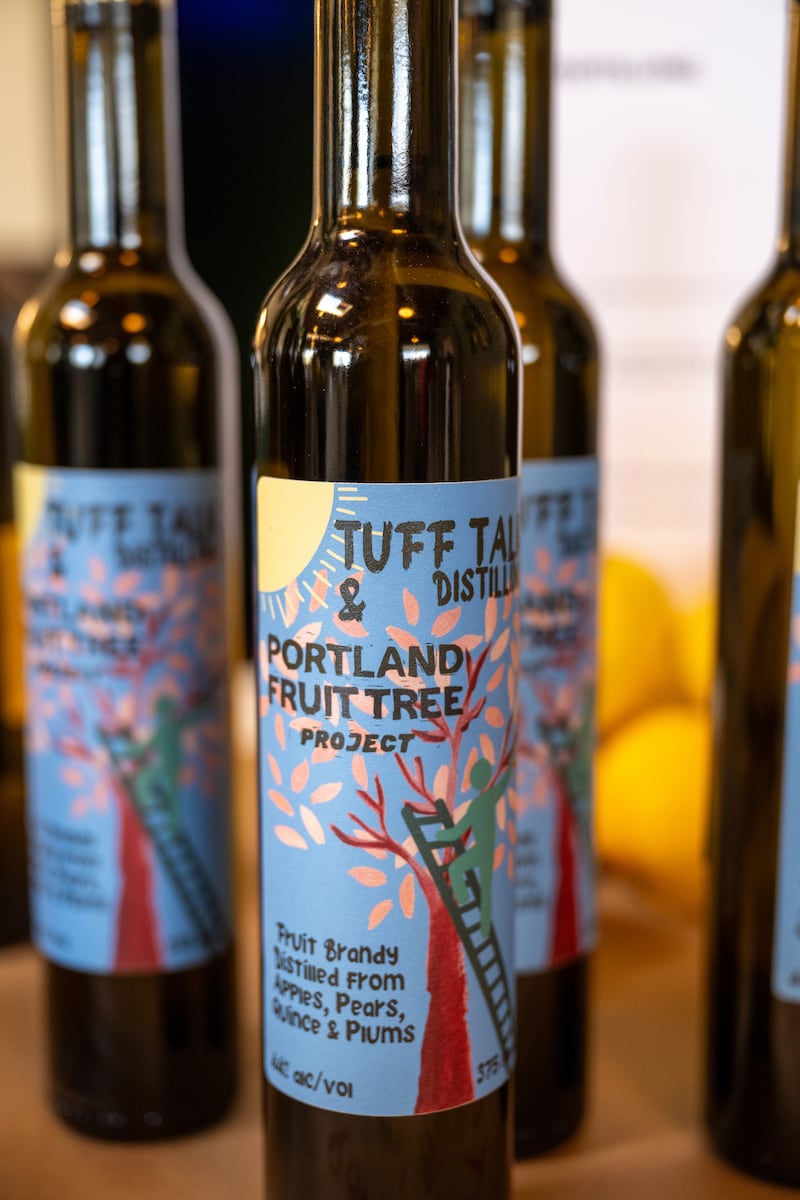
Besides the strangely delicious magical potions, one thing that separates Tuff Talk from other distilleries is the communal approach that Garrison takes. Many of his releases are collaborations with local restaurants, breweries, and even community organizations like the Portland Fruit Tree Project, which he worked with to make a special brandy using apples, pears, Asian pears, plums, and a “surprising amount of quince” that quickly sold out with all of the proceeds going back to the project.
To date, he’s worked with acclaimed French restaurant L’Échelle on a series of brandies distilled from wine grapes; teamed up with Balkan restaurant Alma to make its very own version of the traditional Bosnian spirit rakija; made a cuvée of plum brandies for Alpenrausch; crafted a grappa to complement the East Coast Italian food at Gabbiano’s; and conjured his own Basque-style apple brandy with Hood River cider outfit Son of Man.
“People know me for doing weird stuff. So if they have a weird idea, maybe I’m the person they call,” Garrison says, adding that many of his industry friends have him listed in their phone as “Brandy Andy.”
With each new bottling, Tuff Talk seems to stir up more curiosity and buzz among Portland’s cocktail aficionados, bartenders, and more adventurous boozers. Even still, Garrison has no plans to try and expand into distribution or even get to a point where it is more than a one-man operation. He hopes to earn enough money to sustain himself and keep Tuff Talk going. At a time when alcohol consumption is down and distilleries across the country are shutting down or scaling back their operations, and breweries and wineries are struggling as well, Tuff Talk stands out for its spontaneity and creativity.
It’s not uncommon for Garrison to describe his process as a “chaos lottery” as he constantly pivots to accommodate the latest batch of raw ingredients he has found himself with. To put it more eloquently, he likens it to the jazz music he often blasts while distilling: “I try to get into the improvisational spirit of it, you know? Hopefully, it sounds good.”
DRINK: Tuff Talk, 3315 SE 19th Ave., 503-575-8942, tufftalkdistilling.com. Tastings by appointment.