Skip to main content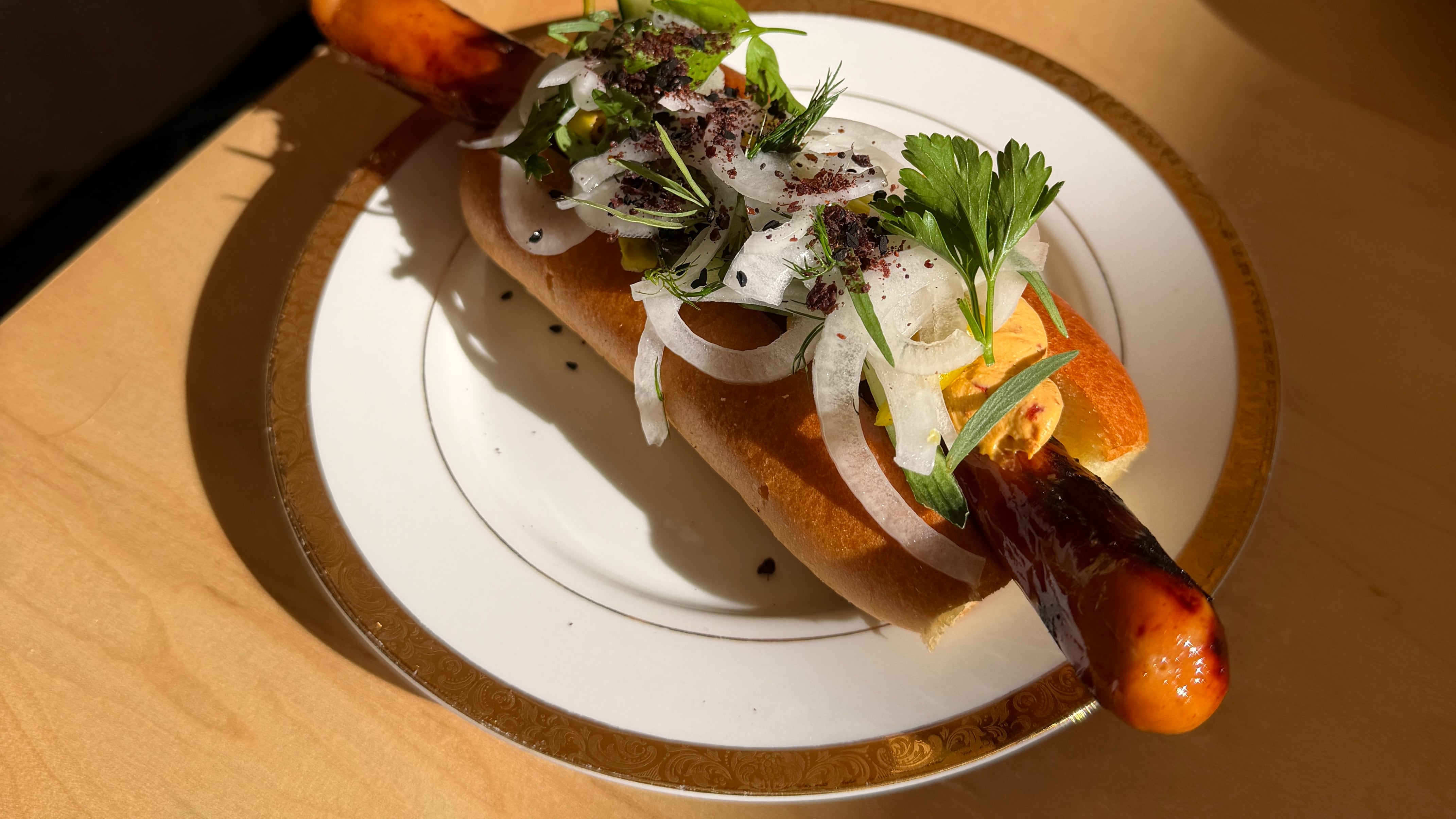
When you think about cities with great outdoor dining, chances are Portland doesn’t come to mind. But every summer we’re blessed with a brief, beautiful window when everyone clamors to eat alfresco. Farag’s was made for that moment.
The ephemeral restaurant set up shop in a parking lot behind Güero for the past two summers, turning what was once a motor oil–stained strip of asphalt into a lush oasis. Canvas covers shade long picnic tables and two-tops. Cafe lights drape overhead. Big terracotta pots with crawling jasmine vines and sculptural trees line the perimeter. The overall effect is reminiscent of Ojai, a Balearic island or some other sunny and chill destination.
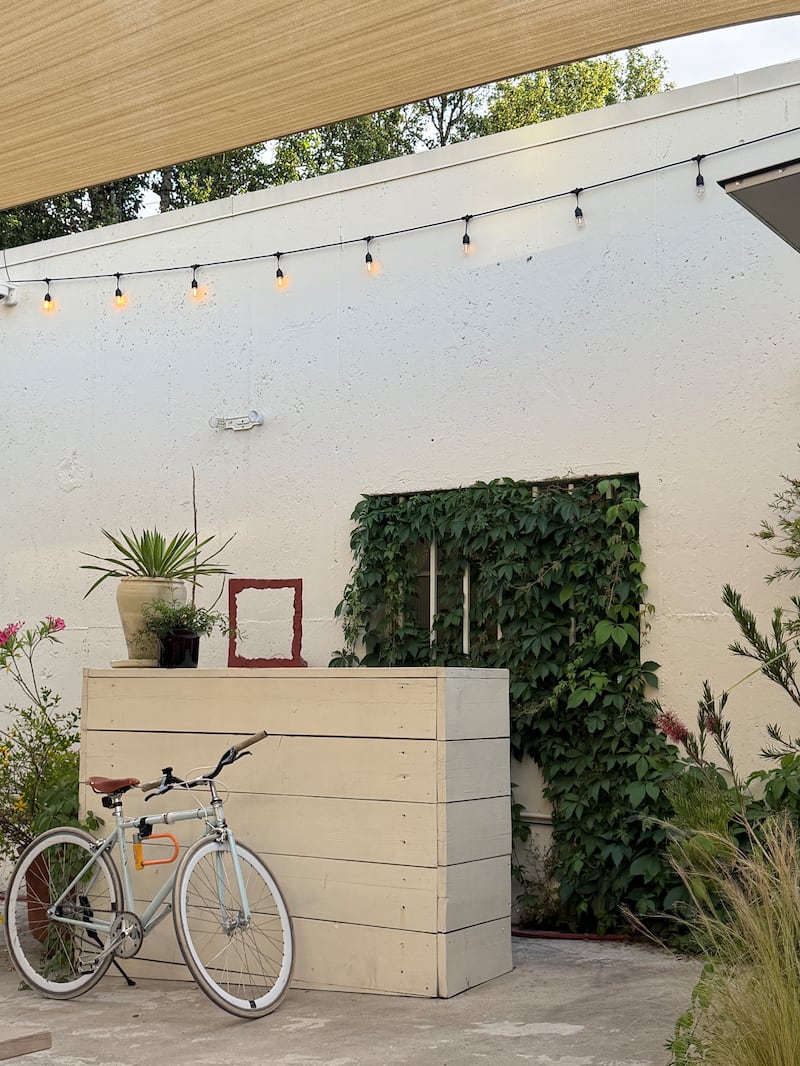
So, not your typical Pacific Northwest patio. But that’s what makes Farag’s so special. It’s here for a good time, not a long time. That and the unlikely combination of warm-spiced, brightly flavored Egyptian food and a mezcal- and sake-forward cocktail menu.
During the pandemic, Güero chef and owner Megan Sanchez had the opportunity to buy the near-empty lot behind her restaurant. She took it before even considering what it might become. There was no roof, no kitchen and no budget. It took years for her and Ben Skiba, Güero’s GM and bar director, to suss out how they wanted to bring the space to life. First it was an overflow space for Güero, then a mariscos pop-up, then they tried hamburguesas.
But in the spring of 2024, they took a leap on a hyperpersonal passion project.
“I wanted to make riffs on the Egyptian food I grew up with, serve it in a garden, and operate like a Parisian cave à manger,” she says. The end result was Farag’s.
The menu at Farag’s is inspired by Emtisal Farag, Sanchez’s grandmother. More in style than specific recipes. It pays homage to the looseness with which she cooked—ensuring everything was plentiful and satisfying, always heavy on sumac, cardamom, cumin and allspice. Sanchez also adopted her trick of using a dash of cinnamon in everything.
“The word to best describe it is abundant,” Sanchez says.
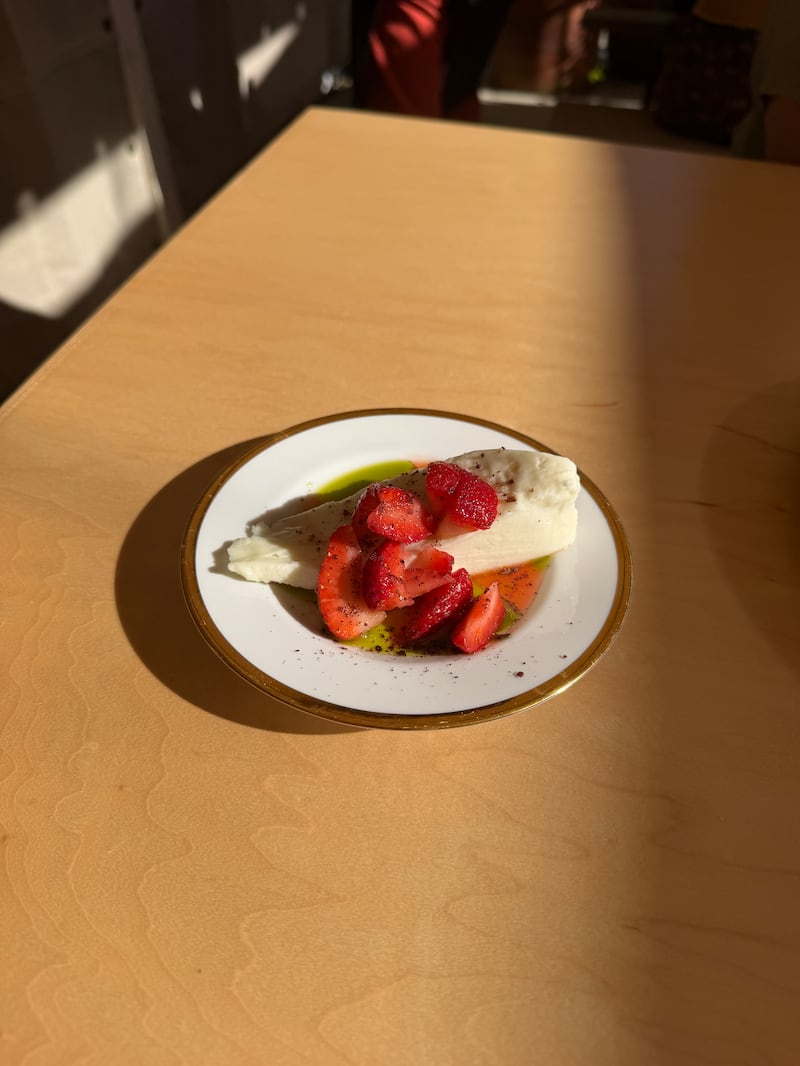
Farag’s dishes out mezzes and larger, shareable plates, like fresh soft cheese with electric green fig leaf oil, sliced strawberries and sumac. Leafy salads get a sidecar of “Egyptian whiskey” vinaigrette—a cheeky term for the amber dressing leftover at the bottom of a salad bowl. Sanchez mimics the byproduct vinaigrette by juicing tomatoes, cucumbers and chiles.
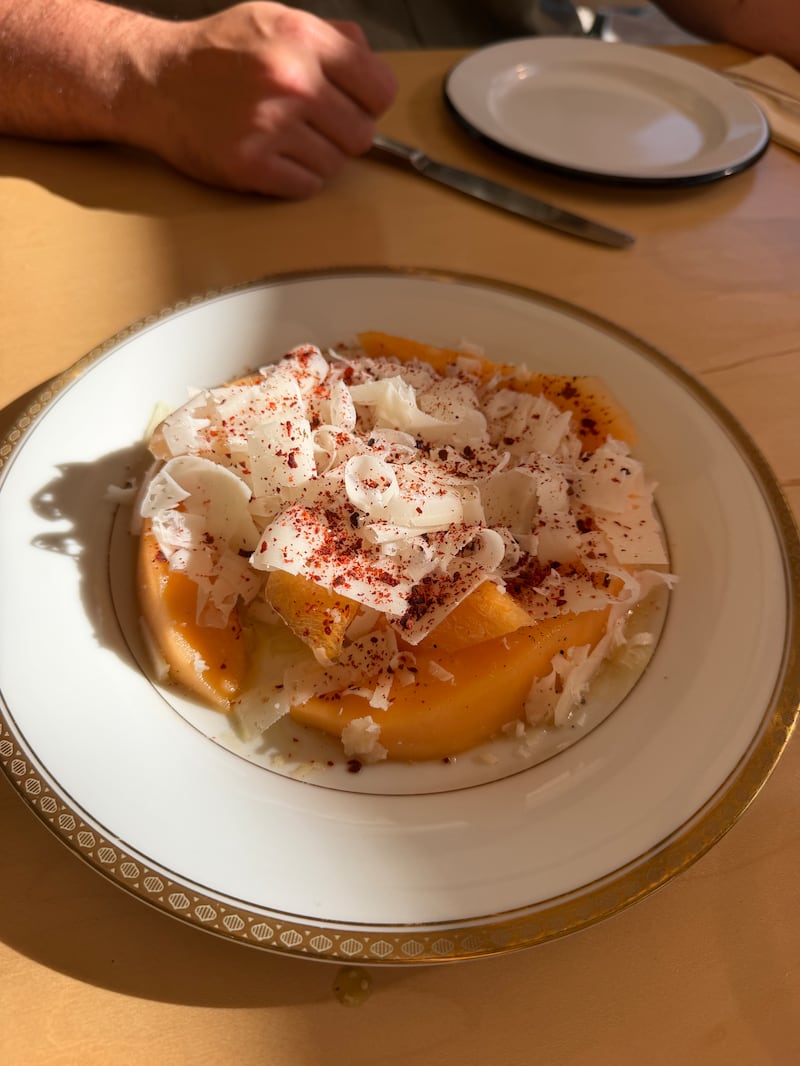
If you’ve seen one Farag’s plate, it’s most likely the restaurant’s very Instagrammable melon dish—thick slices of cantaloupe topped with curls of manchego and Aleppo pepper. It’s photogenic, for sure, but also delicious.
More substantial plates include Oregon albacore tuna wrapped in grape leaves and served with an onion confit, capers and black limes. Sticky-sweet, date-glazed pork spare ribs are adapted from the way Sanchez’s grandmother cooked lamb. On occasion, Emtisal’s exact kibbeh (a torpedo-shaped combination of bulgur and ground meat) hits the menu, too.
For Sanchez, her menu’s unsung hero is beans. Modeled after foul mudammas—a fava-based Egyptian breakfast stew she and her family used to eat—heirloom beans are added to a sauce that uses all of the “liquid gold” left in the pan from Güero’s tamarind-roasted tomatoes. That liquid is already perfumed with rosemary, avocado leaf and habanero, and Sanchez finishes them off with lemon, tahini, nasturtium leaf and shallot oil.
There’s only one dessert, but it’s a nice one—velvety labneh spooned over dense, nutty carrot cake and dusted with citrus zest.
Sometimes guest feedback influences the menu, too. For example, the Farag’s Frank—a footlong frankfurter topped with harissa, thinly sliced cucumber, guindilla peppers, lots of raw onions and herbs—was supposed to be a short-lived special during its first year. After receiving “aggressive messages” during the offseason, Sanchez conceded. Now she brings it back occasionally, including this past July 4 weekend.
Skiba’s beverage program is equally distinct, albeit less democratic. He’s spent nearly a decade learning from and building relationships with small-batch agave spirit producers in Mexico and then bringing them back to serve here in Portland.
Last summer, Skiba built a martini around a batch of mezcal he’d helped import. It was a favorite of mine, and many others, but unfortunately it’s not coming back this year. The most recent batch from the same producer tasted entirely different, so Skiba adapted this season’s cocktail list to follow suit.
Sanchez and Skiba started dabbling in sake last year as well, under the guidance of Nina Murphy from Buckman neighborhood sake shop Sunflower Sake.
“Sake may feel out of left field at our Egyptian restaurant, but I am constantly amazed at how perfectly the sake and food menus pair,” Sanchez says. “There are some transcendent combos to be found in there.”
On a breezy summer night, after a few drinks, you might find yourself wondering why Farag’s doesn’t keep this up all year long.
“When the weather is perfect, misters are misting, plants swaying in the breeze, and every guest looks like they are on vacation, you think, ‘Why aren’t there more outdoor restaurants in town?’” Sanchez says. “The next day, you’re sitting helpless in the Portland rain and you realize exactly why. The experience is high risk, high reward for everyone.”
EAT: Farag’s, 2821 NE Davis St., guerotortas.com/farag-s. 4–10 pm Thursday–Sunday.