Skip to main content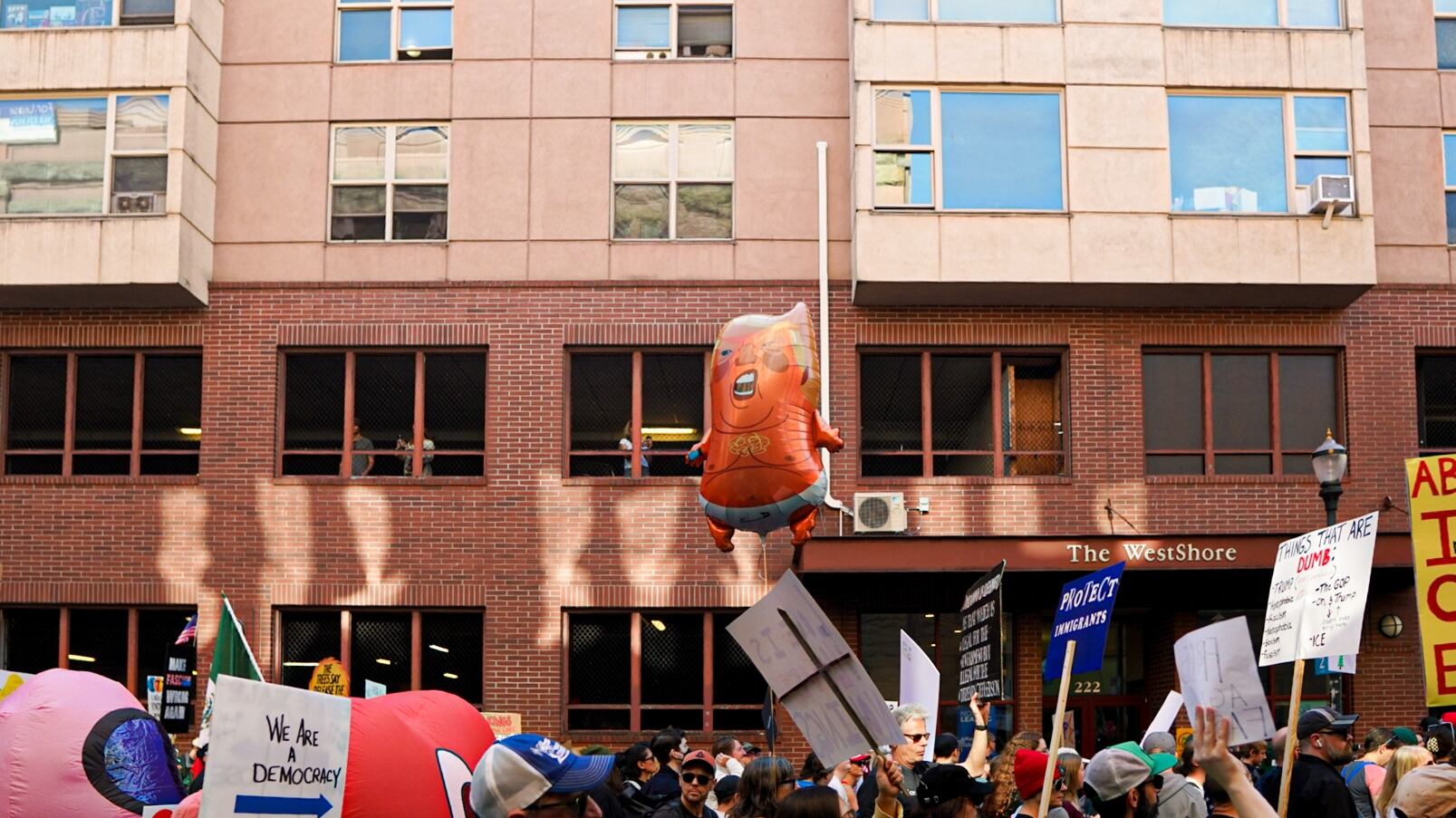
In her opinion last week finding that federal officials overstated the dangers posed by protesters outside Portland’s U.S. Immigration and Customs Enforcement facility—and that, despite President Donald Trump’s analysis that Portland was a war-ravaged hellscape, circumstances in the city did not meet the relevant legal conditions for deploying the National Guard—the presiding judge seemed to be working under the assumption that hers would not be the last word.
The precise standard for marking the line past which the president could legally deploy the military in the streets of American cities is, U.S. District Judge Karin J. Immergut wrote, “ultimately a question for a higher court to decide.”
With an eye toward this and related legal disputes that may yet arise, WW visited Jeff Feldman, a University of Washington law professor who co-directs the school’s Ninth Circuit Appellate Advocacy Clinic. The conversation, which has been edited for concision and clarity, occurred last Friday, shortly before Immergut issued her decision.
WW: There’s this particular law the Trump administration has been citing to justify the effort to deploy the National Guard in Portland. There’s another law that seems like it would be easier for them to cite—the Insurrection Act. “Whenever the President considers that unlawful obstructions, combinations, assemblages …” Doesn’t that offer him a more explicit emphasis on the president’s assessment of the situation?
Jeff Feldman: Justice Sandra Day O’Connor—appointed by President Reagan many years ago—once famously said that every case is about one of two issues, or both: One issue being “Who decides?” And the second issue being “Where is the line drawn?”
The statute doesn’t leave much question as to who decides. That statute says expressly, “The president makes this determination.” All good. Doesn’t mean the president can make that determination without any sideboards though, because you still have the “Where is the line drawn?” issue.
Obviously if the president wakes up tomorrow and decides that he wants to send troops into Bellevue to keep guard at the Bellevue Mall, there’s not going to be much basis for it, and even though the statute gives him the authority to make a determination, he can’t make an unreasonable, unsupported, unconstitutional determination. There are other things that kick into place beyond that one statute.
And I actually think that’s where these cases all will be decided—which is to say, the line has to be drawn as to how noisy, how violent, how destructive does a demonstration have to be before it crosses over into the zone where the act allows the president to then take action.
One argument that some DOJ lawyers have made is that really this is not a matter of judicial review in the first place. Is it within the president’s power to determine whether these conditions are met?
We’ve had lots of events in our country’s history that have caused the president to take unilateral action. We locked up a lot of Japanese-American citizens during World War II. And in many instances with nothing more than a presidential order.
That was challenged in court by a legendary case called Korematsu. And even in an era—which is where we seem to be now—with a Supreme Court that seems very solicitous of executive authority, I don’t think we’re yet, and I hope we’re not yet, living in a world where anyone’s really of the view that the president’s authority is so complete as to not be subject to any limitations under any circumstances.
Even in the Korematsu case, the court didn’t rule that it didn’t have the authority to review the executive’s action. That’s not what the court found. The court did review the executive’s action, and it affirmed the detention of Japanese American citizens because the government advanced a factual showing that they presented a risk to national security for a variety of reasons.
By the way, all those reasons were later shown to have been completely fraudulent. And a justice of sufficient conservative pedigree—our Chief Justice John Roberts—in a decision during the first Trump administration, gave us a footnote that said that the Korematsu decision was a stain on our country’s legal history.
So the result was impaired. But the result was driven by not the fact that the court couldn’t review what the president did. It was driven by the fact that the court simply deferred to, or accepted the government’s rationale for what the president did, and that was sufficient.
That seems like a fine distinction.
It is a fine distinction. If you want to say, “If you’re going to stab me in the back, I don’t care whether you tell me about it first, you’re still stabbing me in the back, it’s the same result,” I guess you could say that.
But legally, there actually is a difference, and I think it would make a difference here. If the government could manage to present a credible showing that the need for this level of force was there, I don’t doubt that the courts, or at least the Supreme Court, would support the president’s decision.
But to win that, even for this Supreme Court, I think the government’s going to have to do better than what it’s been doing in terms of presenting facts. To the credit of the demonstrators in Portland, they haven’t burned down the ICE building or anything else even close to that. The minute that happens, it’s an entirely different situation. And the use of that force is going to suddenly seem arguably more justifiable.