Skip to main content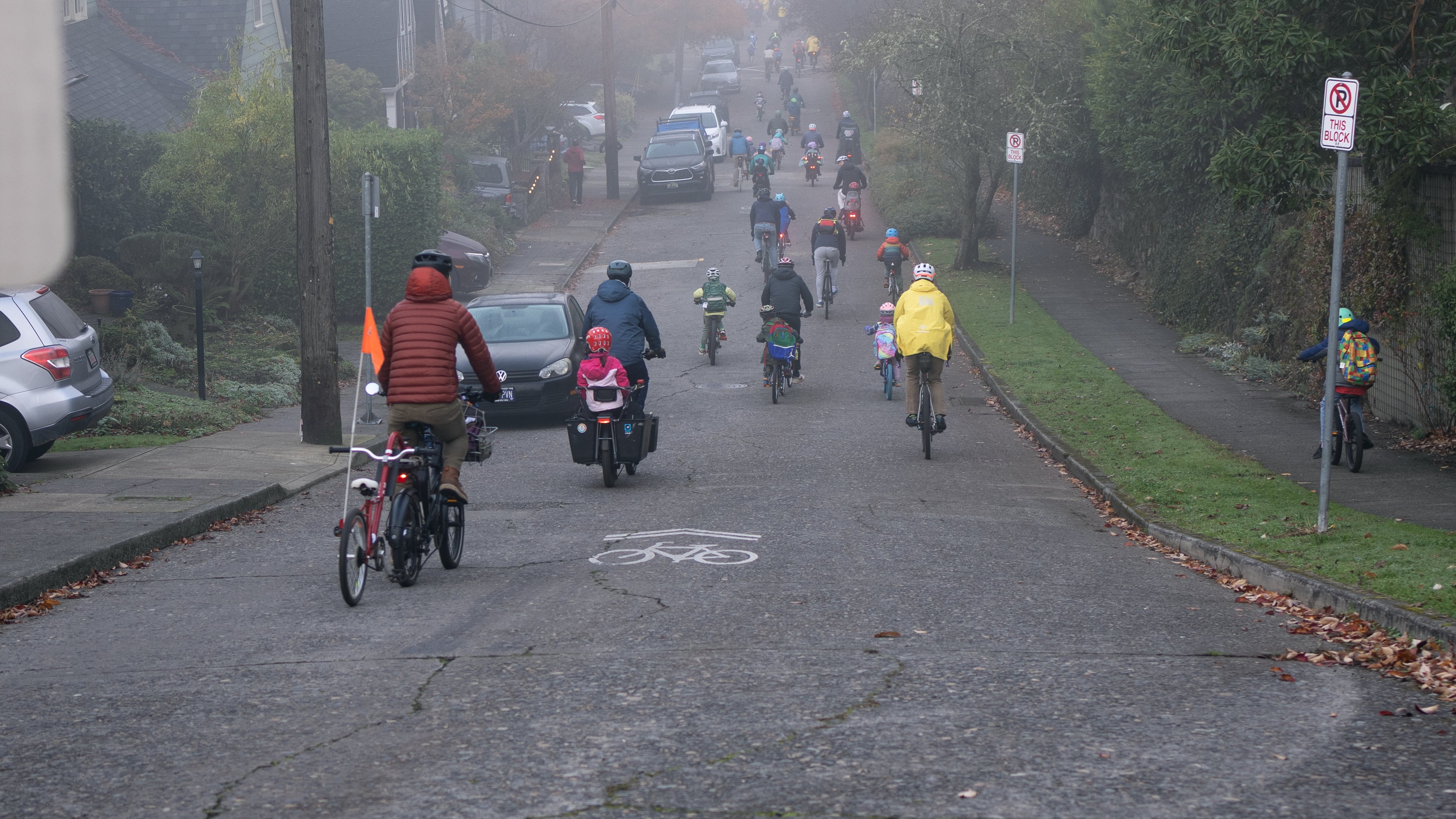
PPS REVERSES HIGH SCHOOL CLOSURE: On Feb. 27, Portland Public Schools reversed a decision to close the high school grades at Metropolitan Learning Center, a K–12 alternative school in Northwest Portland. Students and families at the school, which borders Couch Park, were notified abruptly Feb. 10 that PPS officials planned to close the high school grades beginning with the 2026–27 academic year. The decision, which PPS officials admitted they made without engaging students, parents, or most school staff, led to outcry from the tight-knit community. Advocates worried that MLC, which serves large percentages of neurodivergent, queer and transgender students, was the last safe space in the district for its students, many of whom had experienced severe bullying (“Lost at MLC,” WW, Feb. 25). The district, which faces budget woes, had justified closing the high school at MLC because of low enrollment (it enrolled 41 students this year). But amid a pressure campaign by advocates, who even rallied some on the Portland School Board, PPS ultimately backtracked. Superintendent Dr. Kimberlee Armstrong told WW the district is now committed to helping MLC boost its enrollment through communications, marketing and operational support. “As MLC focuses on building a strong ninth-grade class,” Armstrong said, “central office teams will partner with the MLC community to strengthen programming and visibility.”
HOSPITAL IMMIGRATION BILL ADVANCES: Prompted by reports of federal immigration agents bringing aggressive and sloppy energy to health care settings, a bill establishing standards for how Oregon hospitals interact with law enforcement is headed to the governor’s desk. The so-called Healthcare Without Fear Act (Senate Bill 1570) is defined by a central limitation: The Oregon Legislature can’t tell the feds what to do. Thus, it tells hospitals and federally qualified health centers what to do instead. Many already have guidelines governing their dealings with law enforcement, but in some cases—namely at Legacy Emanuel Medical Center, according to the Oregon Nurses Association—hospital leaders were not adequately applying them. (Legacy denies this.) The bill’s backers say the idea is to establish clear and enforceable standards. “When rules are respected, outcomes are better, and when humanity is centered, trust can be restored,” Rep. Dacia Grayber (D-Southwest Portland) told colleagues at a recent hearing. “This legislation protects patients and it protects caregivers.” Among other things, it would require hospitals to designate areas that are not open to the public, and to designate an administrator to respond when law enforcement shows up (Oregon Health & Science University Police are exempted). It would also restrict the disclosure of certain immigration-related patient information, and prohibit hospitals from disciplining employees for distributing educational materials about legal services and immigrant rights. The Hospital Association of Oregon had opposed the bill, but said it became neutral after amendments that gave hospitals more flexibility on implementation.
HOTEL TAX HIKE ALARMS BUSINESS INTERESTS: Among the most contentious battles in the Oregon Legislature this session is one over a proposed increase in the transient lodging tax. House Bill 4134 would push the tax on hotels, Airbnbs and other short-term lodgings from 1.5% to 2.75% in order to raise money for Oregon wildlife, which draws tourists and, according to backers, should be protected with tourism dollars. HB 4134-A passed the Oregon House and is heading to the Senate, where business interests hope to head it off, arguing that Oregon is in no shape to put up barriers to tourism. Visitors still shun the state after COVID-19 and the 2020 riots downtown, they say. The fight got hot after the Oregon Conservation Network published a two-page flyer describing “common misconceptions” about the bill. Among them: Increasing the tax would deter tourists from coming to the Beaver State, and Portland tourism needs more time to recover from the pandemic. Both, and more, are false, the flyer says. The Portland Metro Chamber responded with a 16-page memo dissecting what it called “a poorly researched, factually incorrect and misleading document.” The OCN flyer “takes such extreme liberties with the facts that its authors must have been counting on legislators not following or reading most of the links, which often stated the exact opposite of what the authors claimed,” the chamber wrote. Another chamber beef: Legislators are using outdated data to assess the economic impact of HB 4134-A. In an email responding to a request for information from Sen. Mark Meek (D-Gladstone), Travel Oregon staffer Kate Baumgartner said her agency had provided “feedback that the increased tax on lodging could negatively impact demand” and that assumptions in the revenue impact statement “are not aligned with current market dynamics.”
SAFE ROUTES TO SCHOOL STANDS TO LOSE $17 MILLION: The most delicate political dance in Salem pirouettes around the $289 million gap in the Oregon Department of Transportation’s 2025–27 budget. After a transportation tax was swamped by a Republican backlash, Oregon lawmakers are making cuts to patch that hole, and one of the proposals has active transportation advocates sounding alarms: Safe Routes to School faces a $17 million cut. Currently, state law sets aside $15 million a year for the program that funds efforts to make it easier for students to walk or bike to school. Funding is spread across the state, though Portland has certainly been a beneficiary, receiving about $20 million since 2016. According to ODOT, Safe Routes to School has $27 million in unobligated revenue over the next 18 months. The proposal to reallocate funds from Safe Routes to School, first reported by the Oregon Capital Chronicle, is included in an amendment to Senate Bill 1601. “I understand you have difficult choices in front of you, but raiding monies from…Safe Routes to School is like stealing a kid’s lunch money,” wrote Eva Frazier, board chair of BikeLoud PDX, in testimony opposed to the bill.