Skip to main content
U.S. Senate
Jeff Merkley
Democrat

Jeff Merkley hasn’t faced real competition for a while. Since unseating then-U.S. Sen. Gordon Smith (R-Ore.) by 3.4% in 2008, Oregon’s junior senator has enjoyed a firm hold on his seat, mulling a run for president while toying every six years with Republican opposition that might as well have been wearing a red rubber nose. In 2014, he took down the mismanaged campaign of moderate physician Monica Wehby. In 2020, he overcame QAnon conspiracy purveyor Jo Rae Perkins. He briefly considered retirement; it was facing down President Donald Trump that animated him rather than any Beaver State challenger.
Now seeking a fourth term, Merkley, 69, talks of preserving democratic institutions from a strongman president who acts like a king. He carries around a self-published booklet about that topic. It calls this the most perilous moment for our democracy since the Civil War. As the ranking Democrat on the budget committee, Merkley’s had a front-row seat as the national debt has climbed trillions higher and millions of Americans lose health insurance due to the GOP cuts.
This time around, Merkley faces state Sen. David Brock Smith (R-Port Orford), a more able contender than Perkins or Wehby. Representing Senate District 1, which includes Curry County and parts of Coos and Douglas counties, Brock Smith is eager to talk about problems close to home—wildfire prevention through forest management and delayed maintenance at the Port of Coos Bay. Amiable and possessing a powerful handshake, he’s regarded as a dealmaker in Salem willing to work across the aisle on issues like emergency preparedness and education. In February, he was one of five Republicans to sign on to Senate Bill 1538, which adds immigration status as a protected class under anti-discrimination laws in Oregon public schools.
Most of Brock Smith’s résumé comes at the state level, so it’s understandable he’d tout local talking points and achievements. It’s also understandable given historically low approval numbers for the Trump administration. And Brock Smith is an avid supporter of Donald Trump.
With this in mind, Merkley and Brock Smith clash on just about every major issue. On AI, Merkley raised the security risks presented by autonomous drones and deepfake political ads. Brock Smith stressed the U.S. must lead the AI race to compete with China. On election integrity, Merkley maintains Trump’s claims of voter fraud aren’t merely unfounded but part of an authoritarian plan to undermine democracy. Brock Smith calls for stricter verification to ensure only citizens vote.
The race also features Libertarian candidate Gary Dye and Chris Henry, representing the Progressive Party and Pacific Green Party. Henry proposes radical economic shifts like tripling the federal minimum wage, creating a U.S. Department of Peace and transitioning toward green industries like industrial hemp.
But the fundamental reality of this race is that Democrats are poised to bring about a reckoning for a president who has held himself above the law. Merkley has fought for this day during long, bleak months when it looked like Trump’s dark vision of blood-and-soil nationalism couldn’t be curtailed. He has earned a chance to hold Trump to account. We hope he gets it.
Merkley’s silliest childhood fear: He feared nothing. “I can’t think of anything that slowed me down.”
U.S. House District 1
Suzanne Bonamici
Democrat

District 1 is the whole top left knob of our state, encompassing urban, suburban and rural parts of Oregon. We’re talking Astoria, Beaverton and Portland’s westside, plus all the Columbia River ports of call in between. Suzanne Bonamici has represented this district since David Wu flamed out in 2012, and she is a shoo-in to keep the job.
Bonamici, 71, is a former lawyer and state legislator who has stood up for her constituents in ways flashy (loudly opposing the Trump administration’s effort to deploy U.S. troops in Portland in fall 2025) and utilitarian (voting to protect bird habitats and reduce diesel emissions, to choose two of her environmental votes from last month). Bonamici recently introduced legislation to establish guardrails around AI and a big education bill that would, in part, give more funding to help students with disabilities.
Bonamici’s Republican challenger is political newcomer Barbara Kahl, a veterinarian who does not live in District 1—she is a mile and a half over the line in Yamhill County, which is legal. Her platform centers on education, specifically getting schools to refocus on academics rather than social-emotional learning. She is endorsed by anti-vaccine mandate group Stand for Health Freedom and believes that citizens should “do their own research” on vaccines.
That’s a hard pass on Kahl. Voters should feel confident giving the incumbent two more years in Washington.
Bonamici’s silliest childhood fear: “I took ballet, and I was kind of afraid of performing in public. I definitely don’t have that fear now.”
U.S. House District 5
Janelle Bynum
Democrat
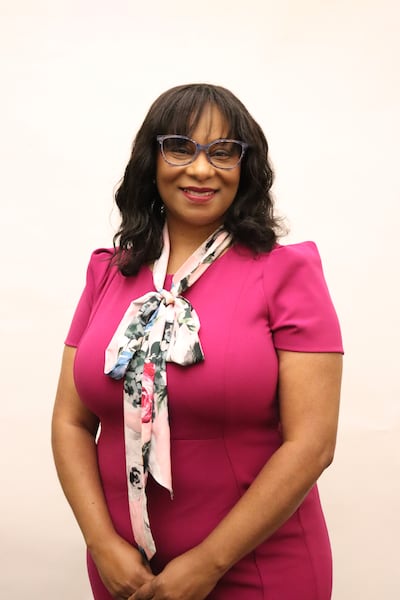
Two years ago, Janelle Bynum won a narrow race to represent Oregon’s purplest district, which spans south from South Portland through Albany, before swinging east into the Santiam Pass to cover Redmond, Sisters and Bend. Bynum ousted the incumbent, Lori Chavez-DeRemer, by just under 11,000 votes—about 2% of the total cast.
A lot has happened since then. President Trump appointed Chavez-DeRemer as his secretary of labor. She promptly squandered that job with buffoonery outlandish even by this White House’s low standards, including allegedly demanding that her limo driver place dollar bills on the nude body of an exotic dancer in a Southeast Powell Boulevard strip club. She left the Cabinet to lobby for data centers. Who says there are no second acts in American lives?
Meanwhile, Bynum, 51, spent her freshman term forging a string of bipartisan relationships. She is proudest of a resolution that she co-sponsored mandating a yearly report to illuminate challenges rural businesses face in accessing investments. (That bill is sitting on the president’s desk.) She’s also pushed through some smaller bills related to housing: one to help accelerate homebuilding and another to address a shortage of home appraisers. A former electrical engineer, Bynum says her party has been too cautious on AI regulation and shied away from important conversations—she wants to face the problem head on.
A centrist who once co-owned a four-piece of McDonald’s franchises, Bynum has displeased some in her party with votes that include giving ICE the power to detain foreign nationals arrested for crimes that range from manslaughter to shoplifting. Bynum may have to defend that vote to constituents, but it probably won’t be an issue in her race against Deschutes County Commissioner Patti Adair, who resides in Sisters.
Adair, 75, says she’s sick of seeing Oregon at the bottom nationally in education and hopes she can make life more affordable for the average Oregonian. Yet she criticized Bynum’s vote against H.R. 1, Trump’s Big Beautiful Bill, which is jeopardizing Medicaid coverage for about 600,000 Oregonians.
Adair wouldn’t comment on whether she thought Chavez-DeRemer’s conduct as labor secretary was disqualifying, dodged a question about her support for President Trump, and said Oregon’s guarantee of a right to abortion was not in line with her personal views, though she was glad abortion was back to being a state issue. Vote Bynum.
Bynum’s silliest childhood fear: “Some people might call it silly because we can’t get an assault weapons ban, but mine was being killed by a stray bullet.”
U.S. House District 6
Andrea Salinas
Democrat
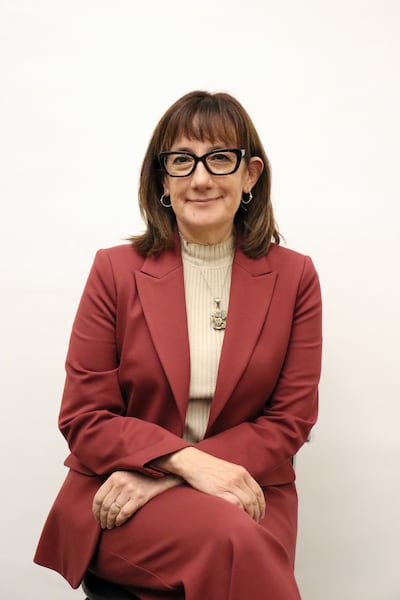
This young district, forged in 2021 when Oregon got an additional congressional seat, encompasses the Southwest suburbs of Portland, sweeps down Interstate 5 to Salem, and extends west into Polk and Yamhill counties. It has only ever had one U.S. representative: Andrea Salinas. She wants voters to send her back for a third term.
Salinas, 56, started her political career as a congressional staffer in D.C. and then Portland—for U.S. Rep. Darlene Hooley, among others. She did several years of policy advocacy for environmental and other groups, then represented Lake Oswego in the state Capitol before eventually winning Oregon’s new congressional seat.
Salinas co-chairs the Congressional Bipartisan Mental Health Caucus, where, she says, if Dems take back the U.S. House, she intends to push policy that would structurally put mental health more on par with physical health. She’s also on committees tied to science, technology and agriculture, and touts a bill she sponsored with U.S. Rep. Pat Harrigan (R-N.C.) that would push the federal government to research geothermal energy potential in more concrete ways. The Next-Generation Geothermal Research and Development Act passed the House, but has stalled in the Senate. (You could say it’s still bubbling.)
Her opponent, David Russ, 63, describes himself as a longtime corporate executive, listing stints working in sheet metal, property management and clothing at Fantasyland Costume Company, among other firms. He spent a decade as mayor of Dundee, a Yamhill County town of about 3,200. He wants to make it so federal laws don’t come with strings attached; for example, if the feds want to give Oregon money to build a road, they shouldn’t be able to make the state, say, limit the speed limit or not kill spotted owls as a condition.
A Christian, Russ says he prioritizes strong moral character. Asked what he thinks of President Trump’s moral character, he says, “It’s all hearsay”; he’s not in a position to form an opinion because he and Trump have not personally spoken.
Salinas projects competence and a level head. She’s earned another two years in D.C.
Salinas’ silliest childhood fear: Ghosts, which no longer scare her.
See the rest of Willamette Week’s Fall 2026 Endorsements here!