Skip to main content
County Chair
Shannon Singleton
Julia Brim-Edwards
Sharon Meieran
Chairing Multnomah County is one of local government’s most powerful positions. The chair has the great authority to set the Board of County Commissioners’ agenda, produces a budget for other commissioners to modify, and is the county’s chief executive and personnel officer. The unusual power of the county’s chief becomes more apparent when the job is done poorly—and few have performed so miserably as incumbent Chair Jessica Vega Pederson.
Her tenure atop the county has been a series of prominent failures. A few lowlights: She displayed no urgency in spending the millions of dollars metro-area voters paid to reduce unsheltered homelessness, letting the money pile up until WW questioned why it wasn’t being deployed. She bungled the launch of a “deflection” center where people arrested for drug possession could detox and get addiction treatment, which is to this day underused. And she failed to notice that the director of her flagship initiative, Preschool for All, herself owned a preschool—one that was squandering public dollars.
Little wonder that all three of the major candidates seeking to succeed Vega Pederson give her low marks, ranging from D-minus to F. How they would change the status quo differs, however, which is why this race has become also one of the fall’s fieriest. Perhaps nothing shows the tone of the contest more clearly than a question we put to the three candidates, asking whom they’d cast their vote for if not themselves. For Julia Brim-Edwards and Sharon Meieran, we may as well have asked them to inject poison.
This November is the first time that county voters are presented with a ranked choice ballot. We suggest they rank all three of the main candidates—but give the top spot to Shannon Singleton.
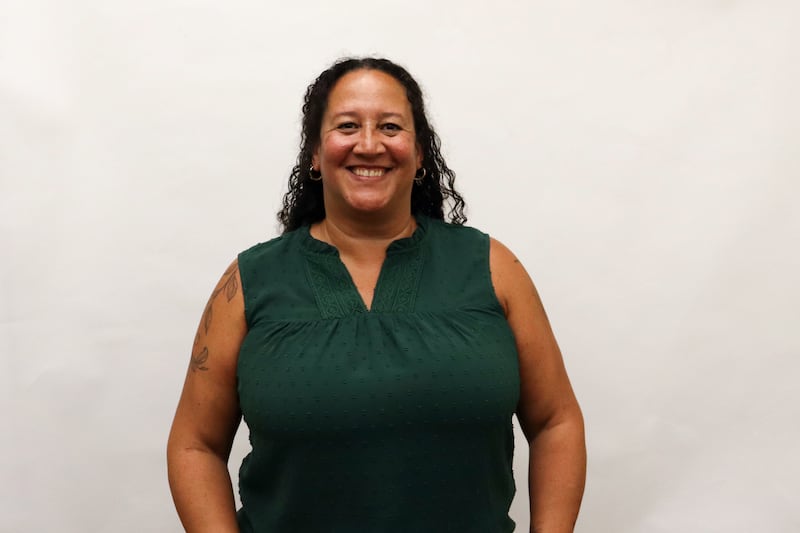
Singleton, 49, is relatively new to the Board of County Commissioners, having assumed her seat late in 2024. But she’s no stranger to some of the county’s biggest issues. She has a master’s degree in social work and, in the decades since, has built her career around homelessness and behavioral health, serving in the office of former Gov. Kate Brown, at City Hall and, for eight months, as the interim director of the Joint Office of Homeless Services. (Sources close to the matter tell us Singleton ran that beleaguered office about as ably as any interim director could, leaving it marginally better off than she found it.)
The conventional wisdom says Singleton is cut from the same cloth as Vega Pederson. But that narrative runs counter to her actual record. In the 22 months she’s served on the board, we’ve repeatedly found Singleton to be the most bold and practical member of that body. She shares values with the city’s left but doesn’t shy away from breaking with her base, and she has on many occasions stood up to the county chair.
Most crucially, it was Singleton who averted a budgeting catastrophe that Vega Pederson had introduced by allocating one-time dollars to fund many of the homeless services programs at the core of the county’s mission. Only Singleton’s judicious use of amendments to build the 2025–26 budget on recurring funds saved the county a year later from a fiscal cliff—the kind Mayor Keith Wilson walked the city over when he opened a bevy of shelter beds, then had to close them months later. Similarly, Singleton worked closely with Brim-Edwards on requiring lobbyists to report their meetings with county officials, but it was Singleton who crafted a disclosure policy that was tailored to how the county operates.
Singleton demonstrated real political courage in championing public funding for a Moda Center overhaul when she knew it would likely cost her a pivotal endorsement from AFSCME Local 88. Brim-Edwards helped craft the arena funding package called Project Mount Hood in closed-door meetings, but later grew alarmed by the size of the county’s financial contribution.
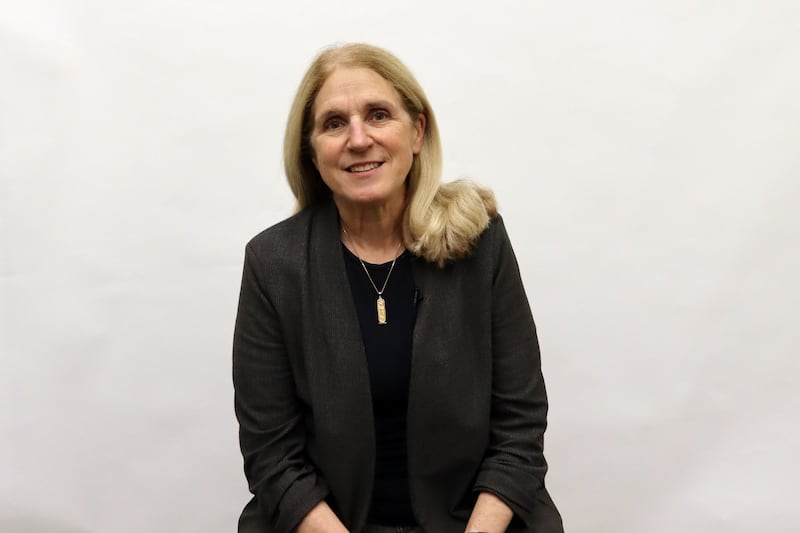
Julia Brim-Edwards is still our second choice for chair. The now-retired Nike executive has been a public servant for two decades, including serving three terms on the Portland Public Schools Board, and has been a county commissioner since 2023. In this race, Brim-Edwards is the establishment choice. She’s got the endorsements of all six mayors in the county, powerful unions, and almost everyone in between.
Brim-Edwards, 65, has a reputation as a fixer—somebody you call when elected officials are about to make a mistake. As a watchdog, she has often proven valuable. For instance, Brim-Edwards was behind an effort to push for new demographic forecasting for Preschool for All, which had used projections from 2020 to determine it would need about 11,000 seats to reach universality, and produced financial modeling with that target in mind. Brim-Edwards, who’s seen enrollment decline plague PPS, challenged that modeling. As it turns out, the universal preschool program now needs just over 8,000 seats to reach universality.
Brim-Edwards says the county needs a leader who can get things done. We agree. But after 20 years of watching her in multiple areas of civic life, we still struggle to understand what her animating principles are—and we see a worrying pattern of Brim-Edwards placing political expediency above principle. No example illustrates this better than Brim-Edwards’ dealings with the most recent Portland Public Schools bond. Just weeks ahead of its referral, she revived a months-old proposal to include a $40 million commitment to a Center for Native Student Success, even as her fellow board members were largely concerned about the bond’s ballooning costs. As they struck down the measure, she got to look like the champion for Native students.
In that same cycle, she pushed for the district to pause its high school projects to find cost savings as PPS made headlines for some of the most expensive school rebuilds in the nation. The effort led to minimal cost savings, and the pause ended up increasing some of the costs of construction. Later, when the measure appeared in danger of being rejected by voters, Brim-Edwards disengaged from the campaign to pass it and took her concerns public. Then, she took a victory lap after it passed anyway.
In late July, seven of Brim-Edwards’ School Board colleagues expressed similar concerns in an open letter, writing that she struggled to collaborate with them and often picked the path that benefited her political prospects, even when it damaged long-term outcomes. When asked whether she’d change anything about her time on the School Board in response to that letter, Brim-Edwards said she would not. The note lacked specifics, she said, and reflected only that former colleagues were upset she was able to get things done.
We are grateful to Brim-Edwards, and see her as worthy of ranking. But we worry about embracing a leader whose guiding principles are so murky.
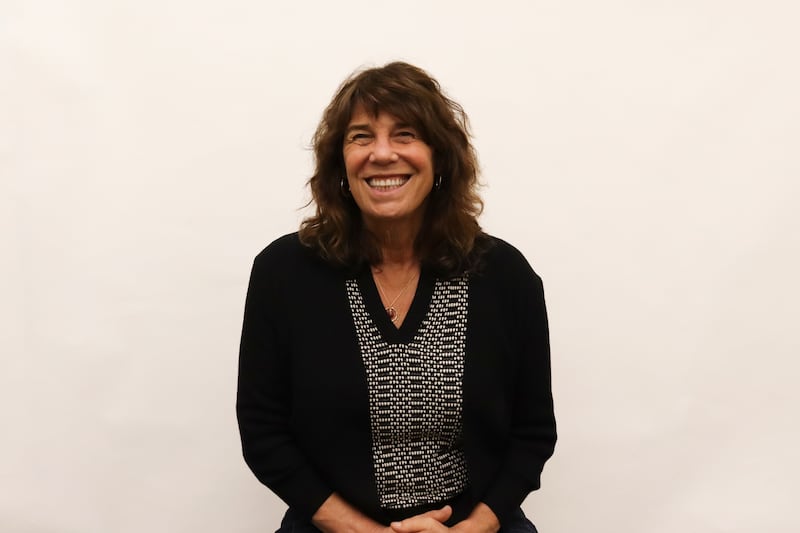
Our final pick for chair is Sharon Meieran, who came in second to no one in the competition to irritate Vega Pederson. The ER doctor and former county commissioner was known for being a loud dissenter in her two terms on the board, and has navigated her campaign with a similarly combative style. At the core of her campaign is a 23-page document she terms the Comprehensive Multnomah County Turnaround Plan. (Meieran’s choice to use a political action committee to fund that plan and its potential skirting of state and county campaign finance laws are the subject of an elections complaint.)
To Meieran, there’s no better solution than starting from scratch. She says there’s no way to fix the county bit by bit, and that instead there needs to be an overhaul of the entire operational foundation of the government. Her plan touches on reforming everything from department structures to the county budget, asking that each public dollar be tied to an outcome the county tracks. With each new fiscal year, she says, the county would have departments prove why they deserve to be funded. And she wants to see power distributed away from the county chair, potentially hiring a county manager and giving more leverage to commissioners.
We don’t deny that some of Meieran’s ideas sound appealing—even as commissioner, she regularly had a finger on the pulse of the problem. But the scale of such reforms with Meieran at the helm concerns us; we’re worried the county would spiral into chaos under her lead. She’s made many an enemy at the county, and she often failed to build the momentum to support any sort of solution. And her conduct during our endorsement interview was childish and unimpressive—she spent much of her opponents’ speaking time rolling her eyes and grimacing, and would still have to work with Brim-Edwards if elected.
All three candidates merit ranking, but Singleton is the clear choice.
Singleton’s, Brim-Edwards’ and Meieran’s silliest childhood fears: Singleton was worried ghosts might be sitting on her bed through the night. Brim-Edwards was scared of reading out loud at school. And Meieran was scared that if she didn’t totally tuck in her bedsheets, “there would be weird creatures that would bite me and bite my legs.”
Commissioner, District 2
Bri Williams
Serena Cruz
Incumbent Commissioner Shannon Singleton opted to run for county chair, which opens this seat that covers the bulk of North and Northeast Portland to a wide field. Seven candidates submitted statements to the Voters’ Pamphlet, but we recommend you rank the two who stand head and shoulders above the rest.
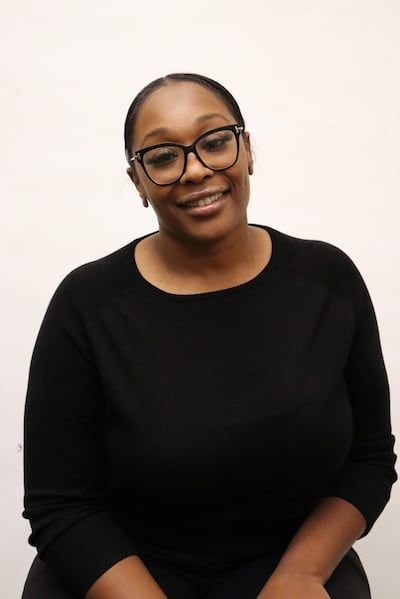
We are narrowly giving our top endorsement to Bri Williams, a county employee launching a progressive bid for the seat. Williams, 38, is in tune with her constituency, and her roots stretch deep into the district she’d serve. Born into a family displaced by the Vanport Flood, Williams says she grew up surrounded by family dedicated to community service. By day, she’s a social worker and mental health consultant for the county, specifically providing services to preschool-aged children at Albina Head Start. She previously provided those services to the county’s universal preschool initiative, Preschool for All.
One of her top priorities is ensuring that District 2 sees benefits from some of the biggest projects on the horizon, notably the overhaul of Moda Center. Williams wants to make sure some of the county’s $88 million of committed arena funding is directed to minority contractors. She wants to shift the conversation around homelessness upstream to keep people housed for as long as possible—that includes stronger aid for tenants facing eviction and offering more job force training countywide. Having experienced being priced out of the district, Williams also says she’s dedicated to partnering with Albina Vision Trust and the 1803 Fund to develop affordable housing.
Williams would bring a front-line worker’s perspective to a county board that currently lacks it. While she no longer works within Preschool for All, Williams says the program needs oversight from someone who knows the right questions to ask. She’s committed to bringing more public transparency and accountability to voters about the program’s finances and operations.
When asked how she might demonstrate independence from AFSCME Local 88, which endorsed her and currently represents her, Williams said she couldn’t think of a place where the two diverged, which gave us pause. Still, we think she’d bring fresh perspectives to the county board, and is running a campaign on values worth ranking.
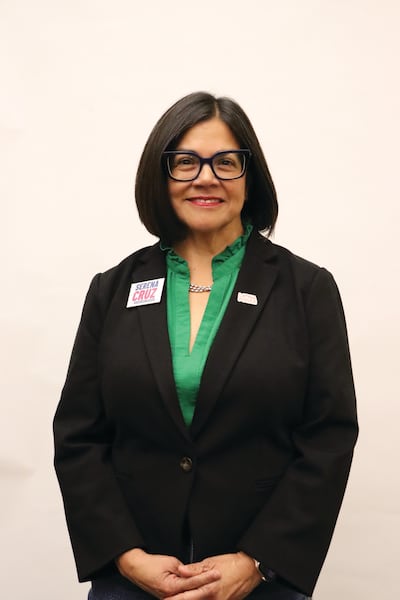
There’s no question in our minds that her main challenger, Serena Cruz, trumps Williams in experience. Cruz, 59, held this exact post between 1999 and 2006, when she was the first Latina and youngest woman elected to the role. (It was not a happy time on the board, but we’ll concede that’s ancient history.) After leaving the board, she co-founded a construction development company focused on sustainably building affordable housing. She gained executive experience as director of the Virginia Garcia Memorial Foundation, quintupling the health care organization’s private fundraising and oversight. Most recently, Cruz spent three years as the county’s chief operating officer.
That last job did not go smoothly. As WW reported in 2023, Cruz resisted efforts by regional government Metro to hold the county accountable for getting homeless services tax dollars out the door. In emails, she balked at providing monthly spending reports. Those documents show Cruz shares some blame with Vega Pederson for the slow deployment of those crucial dollars in a moral crisis—that alone gives us pause about endorsing Cruz in a moment when restoring public confidence in homelessness spending is the single greatest task the county faces.
Cruz abruptly left her job two years ago with little explanation. She now says the impetus for her departure was a break with Vega Pederson over the delayed opening of a center where people arrested with hard drugs could be “deflected” for treatment. Cruz says Vega Pederson made promises about the deflection center without consulting Cruz.
We think Cruz’s priorities are clear in this contest—and the correct ones. She wants to more clearly define the roles of the county, the city, and Metro on homeless services, and she’s come around to the idea of an accountability system to hold each government to its respective tasks.
But Cruz’s campaigning on experience rings a little hollow when said experience is running a government this dysfunctional. We’re left with little choice but to take a risk on an untested candidate in Williams, who doesn’t bear responsibility for the current mess.
Also running are Nathan Ong Norris, looking to be the first Democratic Socialist on the county board; Nabil Zaghloul, a longtime county employee currently in management; and Herman Greene, a former Portland School Board member. We don’t suggest ranking any of them.
Ong Norris has some useful experience in disaster management, but his argument that the board needs a DSA member to establish a direct line with leftist members of the Portland City Council fell flat. For all his experience, we found Zaghloul’s platform vague and uninspired—he would focus on homelessness prevention services, and aims to disrupt the status quo. Greene dodged a question about his work with Procedeo, the Texas-based construction firm whose contract with Portland Public Schools has been the subject of much controversy; the former School Board member is receiving $6,000 a month to help introduce the firm to Portland. That concern was flagged in an explosive bond audit at the district. Greene was the sole board member who tried to retain his seat in the May 2025 election but failed; we found he trailed the experience of his opponents and lacked a vision for running for county office.
Williams’ and Cruz’s silliest childhood fears: Williams was scared of long eyelashes, specifically that they might come out of the TV and kill her. Cruz feared UFOs.
See the rest of Willamette Week’s Fall 2026 Endorsements here!