Skip to main content
District 3
Steve Novick
Tiffany Koyama Lane
Kellie Torres
Portland is nearly two years into a new form of government chosen by voters to upend a perpetually underperforming, century-old structure. In its place, we got a professional city administrator who manages bureaus under the direction of the mayor and a 12-member City Council that functions like a pocket-sized legislature, setting policy and the annual budget. The council is divvied up into four geographic districts, each with three representatives elected by ranked choice voting.
It sure feels like the terrible twos. The administrative branch has seen a churn of turnover in top leadership positions. For two consecutive budget cycles, the city made painful cuts across basic functions like police, fire, parks and transportation (along with shuttering many of the homeless shelters opened by Mayor Keith Wilson). And the City Council has devolved into cliques and put-downs more suited to a high school cafeteria than a body that decides this city’s future.
If you don’t know by now (and, really, we envy your ignorance), most of the drama stems from the formation of two voting blocs. The more tightly coordinated bloc is the progressive caucus, which dubbed itself Peacock for short. Four of its members are part of the Democratic Socialists of America, and Peacock’s policy ideas have often mirrored the DSA’s platform—taxing the rich, trimming the police budget, saving union jobs at all costs, and pioneering a social housing model (roughly put, that means government control of low-income housing).
The other voting bloc is less unified; it’s telling that it never really settled on a nickname, though it’s sometimes called the “Mod Squad.” It has offered less of a cohesive policy platform than the Peacocks but routinely blocks Peacock’s big swings at policy and sweeping budget changes. The moderates—only by Portland standards would they be considered such and not at least called liberals—have generally sought to preserve the police and fire budgets and been generally supportive of Mayor Wilson’s overnight shelters.
As you can tell, just cataloging these two factions is a frustrating exercise—in no small part because each side demands its opponents be cast in radical terms. But they are largely defined by their backers: the DSA for the Peacocks; the chamber of commerce for the mods. Each hopes to flip one seat this election to secure a 7–5 voting majority.
We start in District 3, which covers most of Southeast Portland and a small portion of Northeast Portland. District 3 is the most lefty of all four districts and the second most affluent, after District 4. It’s home to commercial thoroughfares along Southeast Hawthorne Boulevard and Belmont Street, the Industrial Central Eastside, the posh enclaves of Laurelhurst and Ladd’s Addition, the blue-collar neighborhoods along Interstate 205 and 82nd Avenue, and sprawling Mt. Tabor Park.

Our top choice to return to council for a full four-year term is Steve Novick. He’s on his second tour of City Hall, having served on the old, five-commissioner council from 2013 to 2017 before being booted by tenants advocate Chloe Eudaly. As one of the few 2024 candidates who could boast city government experience, he sailed to an easy victory in District 3.
A longtime environmental attorney for the U.S. Department of Justice prior to his run, Novick was regarded as a lefty firebrand during his first term on the City Council. He championed a 10-cent-per-gallon gas tax and a surtax on companies whose CEOs made 100 times more than their average employee. After his exile, he joined the Oregon Department of Justice as a special assistant attorney general working on environmental cases, where he remained until 2024. By the time he ran for office again seven years later, the political discourse in Portland had shifted—the candidates running were either tax-and-spend liberals, like Novick, or anti-capitalists aligned with the Democratic Socialists of America. Very soon after he took office in 2025, Novick emerged as one of the council’s few swing votes, drawing the ire of both blocs of council.
We can see why he gets on colleagues’ nerves. Novick, 63, hasn’t changed much over the years: While some of his wisecracks are amusing, we wish he would take himself—and his task—a little more seriously. We know he’s clever, but can he think big? Still, Novick wins our top spot because we trust he can’t be bullied or bought. He’s not controlled by lobbyists, outside interest groups, or a caucus. He routinely held the line against dramatic budget amendments introduced by Peacocks during budget season, but provided them a seventh vote on a foie gras ban and voted with the leftists to pass a masking ban on police officers. Without Novick’s moral pressure, the council would not have reversed an embarrassing effort to abruptly strip funding from vetted Portland Children’s Levy recipients over a handful of complaints by well-connected nonprofits.
The City Council is supposed to be nonpartisan. We can’t think of an incumbent that’s embodied that spirit more than Novick over the past two years.
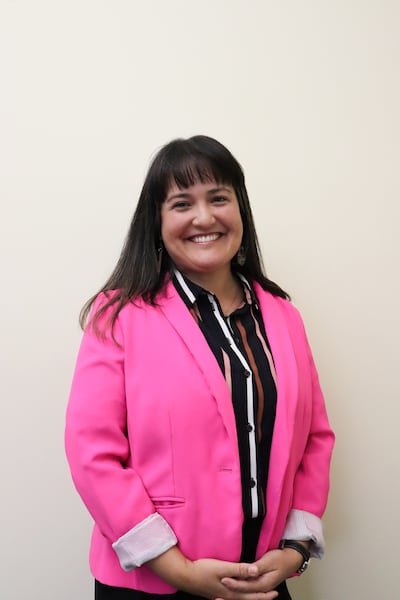
Tiffany Koyama Lane, by contrast, is a stalwart Democratic Socialist. A public schoolteacher in Portland for 16 years before running for office under the new form of government in 2024, she spent the first serving as the council vice president by a unanimous vote of her colleagues, and fancies herself a bridge-builder on a council that’s becoming increasingly divided. That wasn’t really true when she was near a gavel, but she’s getting there. She’s begun to mend a fractured relationship with Councilor Elana Pirtle-Guiney, and the two of them now craft policy together. She also helped guide the council through weeks of uncertainty when Trump attempted to deploy National Guard troops to Portland last fall, an order that a federal judge would later rule unconstitutional.
Koyama Lane, 40, has also approached the budget process with a fine-toothed comb rather than an ax, which shows an attention to detail sometimes lacking on this council. She managed to pass modest amendments to Mayor Wilson’s proposed budget, including restoring $3.2 million to keep 14 tree permitting staff. Koyama Koyama Lane is the socialist councilor we most trust to reach across whatever constitutes an aisle in this chamber. And her voice as an educator is about to become more relevant in the coming months, though we have some reservations about her misplaced focus on trying to control the decisions of the Portland School Board—a separate government body.

Kellie Torres is nearly as familiar with the workings of City Hall as the two incumbents. She’s been in various leadership positions at Portland Parks & Recreation off and on for 20 years, and took a brief hiatus from the parks bureau when she served as Commissioner Dan Ryan’s chief of staff from 2020 to 2024. She currently works as the parks bureau’s partnerships manager, a role created by the council in 2025 to seek greater public-private partnerships in order to maintain parks amid a growing $700 million backlog of deferred maintenance.
Torres, 56, is running on a fairly standard platform of protecting core services from budget cuts and better supporting small businesses that operate on thin margins and are still reckoning with damage to the city’s reputation suffered five years ago. We didn’t find her all that inspiring, nor were her policy ideas terribly original, but we think she’ll provide a common-sense vote to safeguard the city’s basic services from budget cuts as the city approaches another $100 million-plus deficit.
If everybody ranked the candidates as we suggest, the result would be Novick, Koyama Lane and Torres representing District 3. But we think two other candidates merit consideration and ranking.
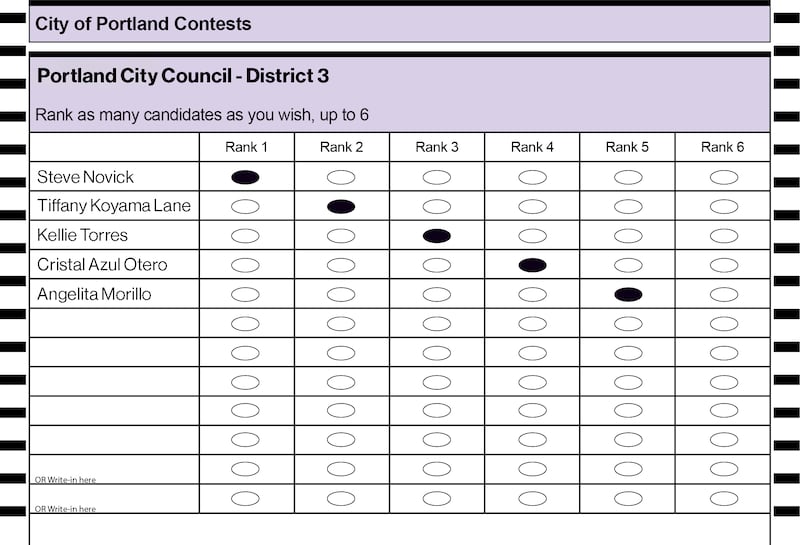
Cristal Otero is a senior program specialist at Multnomah County, where for the past six years she worked on implementation, planning and contracting under the Supportive Housing Services tax, which provides the county about $160 million a year to spend battling homelessness. Otero just recently transitioned to another senior role within the county that focuses on contractors that work specifically with families experiencing homelessness.
Otero, 43, appears to be aligned with Peacock in a number of areas. She’s opposes adding more police officers while dozens of vacancies go unfilled; she believes the council should have put more of the unspent money found within the Portland Housing Bureau to emergency rent assistance; and when asked which sitting councilors she most aligns with, she named Elana Pirtle-Guiney and Angelita Morillo. Where she distinguishes herself is in systems knowledge: She’s like a skilled plumber, but for homelessness spending. We would rank her fourth.
And that brings us to Angelita Morillo, one of the most talented and quicksilver politicians to rise in Portland in recent memory. Morillo started in public life in the office of former City Commissioner Jo Ann Hardesty, fielding calls and emails from the public to the first Black woman to serve on the City Council.
Morillo, 30, has been a crucial player in the DSA’s effectiveness in setting the terms of the council’s discussions these first two years. She passed an ordinance that bans landlords from using AI price fixing to set rents; she co-sponsored an annual fee imposed on landlords who rent to detention facilities (most notably, the ICE facility in the South Waterfront); she restored $2.3 million in funding for nonpolice response programs and the city’s Office of Violence Prevention in the 2026 budget; and she co-sponsored a resolution with Councilor Eric Zimmerman to spur housing production by cutting red tape. All the while, she’s juggled multiple social media accounts where she insults and mocks her adversaries in real time.
The debate that revolves around Morillo is now drearily familiar. Her critics say she’s effective but lacks professional comportment. She replies that she’s held to a standard never applied to a white man; she says her haters attack her on decorum because they can’t criticize her accomplishments. Both these arguments are flawed because they fail to recognize that Morillo is effective because she treats her colleagues with contempt. She has moved the window of acceptable discourse leftward in this city by painting anyone who diverges from the DSA platform as a corporate toady or a racist. She makes people afraid to disagree with her, and invites her online followers to shame and pile on anybody who does. She wants you to vote for her because this is how she gets results. We see the results—a coarsening of civic life—and rank her fifth.
There were two other candidates that ran serious campaigns that we decided not to rank. Tom Sollitt is an event producer who charmed us with his handwritten cardboard campaign signs but struggled to articulate policy ideas that made sense. Esther León is a physical therapist who aligns closely with Peacock; she said she wants to bring harmony to the council, which is a laudable goal, but she didn’t seem equipped to make difficult budget decisions.
Silliest childhood fears: Novick’s younger brother was very worried about Henry Kissinger, Koyama Lane was scared of riding a bike until she learned at age 24, and Torres was afraid of stepping on cracks.
District 4
Olivia Clark
Eric Zimmerman
Jayne Cronlund
District 4 covers all of Portland’s westside, plus a bit of Southeast Portland that includes Sellwood-Moreland and Eastmoreland. It’s the most affluent district, home to the wealthy West Hills area (which contains many of the city’s multimillionaires and one of the state’s billionaires) and downtown Portland, which now stands as a shell of what was once the city’s keystone neighborhood and its economic engine.
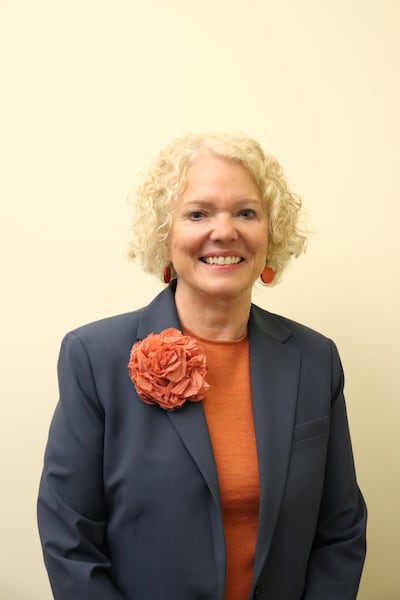
Among the three councilors elected here two years ago, Olivia Clark is the standout. She worked in government for the better part of 30 years, first as a liaison for Gov. John Kitzhaber to cities and counties and then as the executive director of public affairs for TriMet for 24 years until she retired in early 2024. She lasted less than six months in retirement before running for City Council under the new form of government later that year.
We ranked Clark, 72, as our first choice in the 2024 election. She’s earned that spot again with her straightforward manner, lack of drama, and courage to champion a new street fee that will help fund the Portland Bureau of Transportation in the face of a collective groan from Portlanders already feeling overtaxed and underserved. She’s consistently pushed the council and the administration to make a concrete plan for managing the city’s aging assets, an unglamorous topic for politicians but a critical one. During the two budget cycles, Clark sought to preserve core services.

Eric Zimmerman, 42, is our second choice. An Army veteran who worked for various elected officials at the city of Portland and Multnomah County, he has demonstrated an ability to pass policy; he co-sponsored a resolution with Councilor Angelita Morillo that directs staff to present a list of recommended design review changes to spur housing development, and championed a policy that will raise the Business License Tax threshold from $50,000 to $100,000 in gross receipts. He also managed to shift the city’s Tree Code inspectors out from under the supervision of the city’s draconian Urban Forestry division and into the Bureau of Permitting and Development, where most of the city’s code enforcers live.
He’s fed too much into the bickering on the dais (he can be unnecessarily sharp-tongued), and we find him to be a little too deferential to the Police Bureau and business interests, but we think he’s done a respectable job and has, for the most part, focused on the right things.
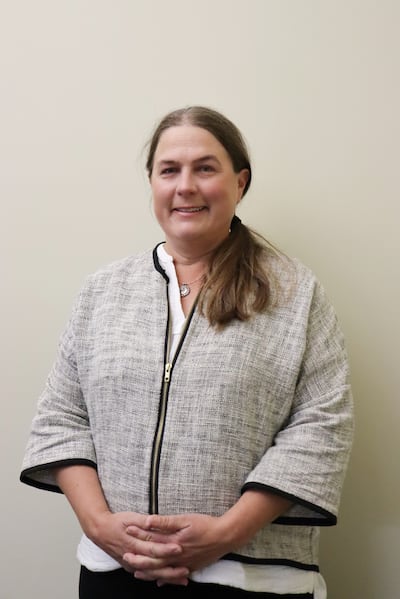
For our third choice, we’re taking a chance on Jayne Cronlund, a land preservationist, member of the Oregon State Bar, and owner of a small business that advises nonprofit organizations on staff retention and preventing burnout. For 12 years, she’s served as the executive director of the Three Rivers Land Conservancy, a nonprofit that has fought to preserve hundreds of acres of natural lands from development.
Cronlund, 57, articulated a compelling and specific vision focused on reviving empty storefronts, addressing the parks bureau’s deferred maintenance backlog, drilling into the budget and making sure the Portland Housing Bureau holds affordable housing organizations’ feet to the fire to keep their buildings safe and clean.
She also demonstrated policy positions that didn’t neatly fall into either the Peacock or non-Peacock voting blocs. She seemed supremely uninterested in taking sides on the 6–6 divide that plagues the City Council, but was at the same time not naive to the existing dynamic. We realize you’ve probably never heard of Cronlund, but she’s someone the council badly needs: an everyday, working Portlander who isn’t beholden to any powerful interest. As you’ll see below, that’s more than her better-known opponents can claim.
Those are the three candidates we advise installing in office. Two more merit ranking on your ballot.
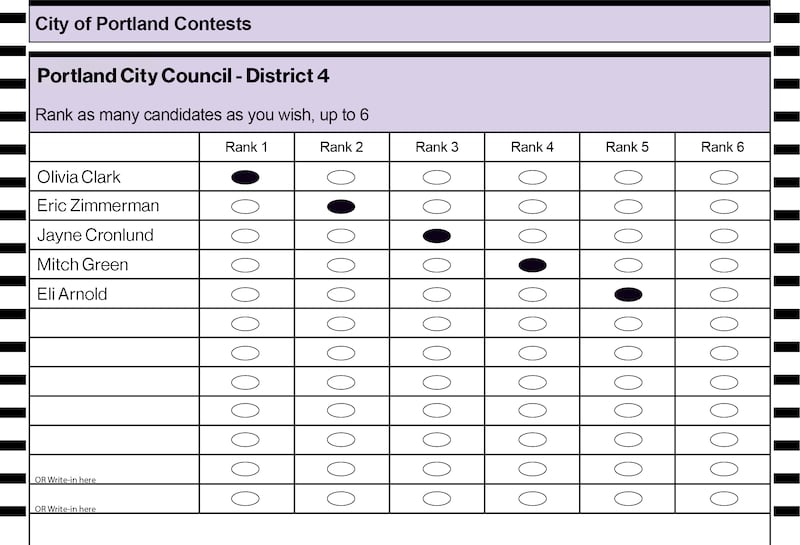
You’ve heard a lot this cycle about Mitch Green. That’s because business interests would love to expel him from office, and because he keeps giving them ammunition. Green has probably been the most vocal of the four socialist councilors about his allegiance to the DSA and his desire to remake the city into one that offers rent-controlled social housing, city-owned grocery stores, and other democratized programs. The revelation last month that Green once spewed online bile against police officers who were using indiscriminate force in 2020 could only shock those who hadn’t noticed that he wants to live in a world without police.
He championed using $17 million in unspent Housing Bureau money to acquire real estate for a social housing model and create a revolving loan fund for affordable housing developers; he also pushed the council to use some of that money for debt buy-downs to help stabilize affordable housing providers. And he fiercely defended the Preschool for All tax against Gov. Tina Kotek’s skepticism. We believe he has a genuine desire to help Portland’s working class, and he’s given attention to small district-specific projects, too.
An economist, Green fancies himself a policy and finance wonk, but he’s also spent a great deal of political capital on issues we think are secondary to the core needs of the city. That includes championing a ban on foie gras and pushing for an investigation into Zenith Energy and its management of the Northwest oil terminal, which in the end, found little of note. His amendments to this year’s budget at times seemed slapdash. And he threatened to withhold funding from Portland State University unless it dismissed student conduct cases against Gaza protesters who ransacked the school’s library. A strongman effort to dictate terms to a university should give Portlanders pause.
But perhaps more than anything, Green is a lawmaker who just can’t seem to follow the law. As WW first reported, he started a brush fire in his backyard in July—violating multiple burn bans—as more than a million acres of Oregon turned to ash in raging wildfires. And he forgot to pay a $7,000 tax bill until an Oregonian journalist told him about it.
Councilors must play by the rules they set. We find his blasé attitude toward those rules disqualifying for a top-three spot.
And yet we rank him above Eli Arnold, a longtime Portland bike cop who ran two years ago in this same district and was narrowly edged out of the third spot by Zimmerman. Our objection is not to his profession. We actually think Arnold’s experience as a police officer—one of the good apples, we hear—could be helpful on this council to bridge the gap between those who deeply distrust the Police Bureau and those who seem perhaps too trusting of the Police Bureau. But we’re not sure Arnold would offer anything different, or more, than what Zimmerman currently offers—a champion for preserving the public safety bureaus.
We were underwhelmed by how little Arnold’s platform has evolved since he ran two years ago. He brought nothing fresh to the conversation, and his backing by Portland’s wealthy class makes us worry he’d answer to them, not the average Portlander.
Still, there could be worse things than Arnold sitting on the council. He gets our fifth-place nod.
We didn’t rank Jeremy Beausoleil Smith, a construction project manager with PSU who parroted DSA talking points but could not articulate how he’d fund any of his big ideas. We also decided not to rank Jamey Evenstar, a longtime policy staffer both on the city’s administrative side and for councilors, including former City Commissioner Chloe Eudaly and, more recently, Councilor Candace Avalos. We doubt Evenstar would help bridge the divide on the council and, in fact, we think she might make it worse.
Silliest childhood fears: Clark was afraid of dogs because she got bitten, Zimmerman hated performing in school recitals and plays, and Cronlund was scared of drowning because, well, she almost drowned in a pool.
See the rest of Willamette Week’s Fall 2026 Endorsements here!